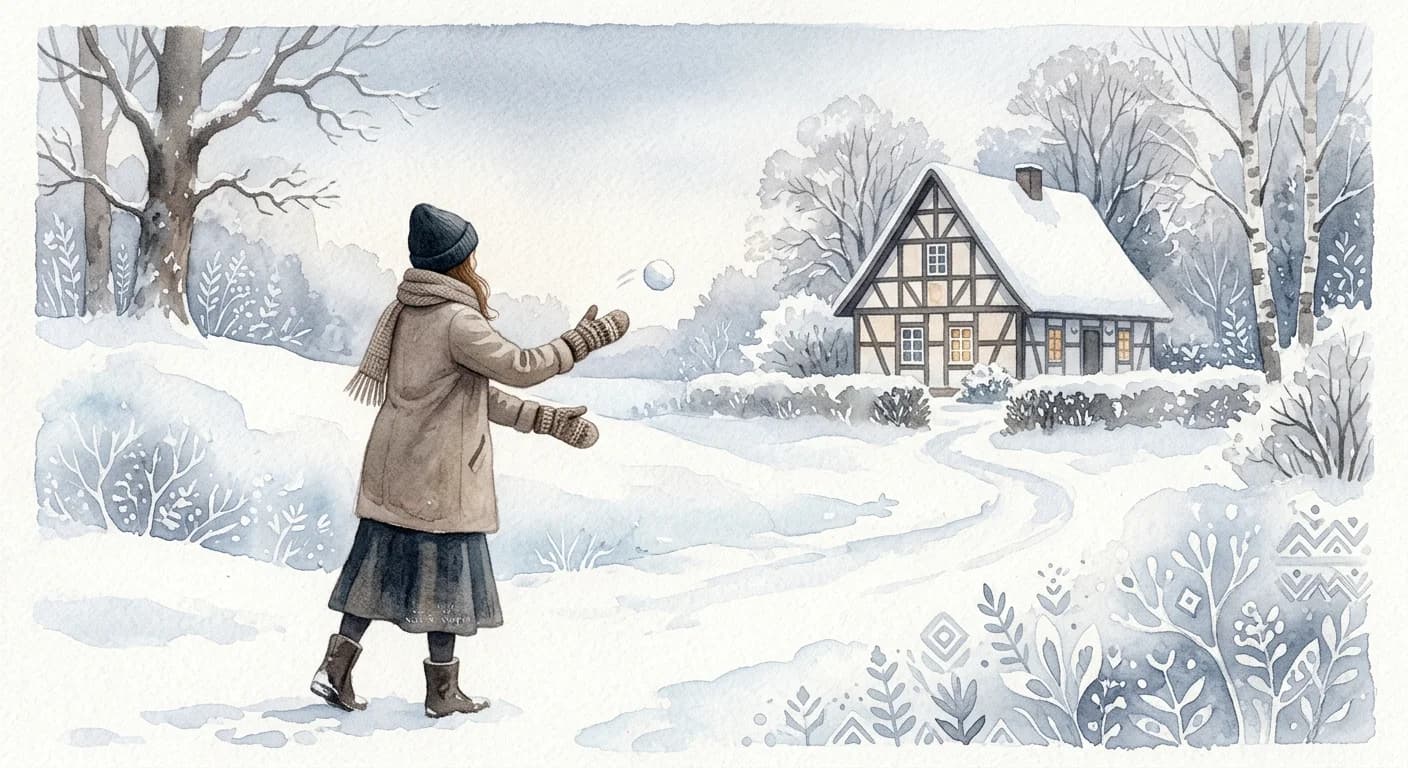
Handschuhschneeballwerfer
/HAHN-shoo-SHNAY-bal-VER-fer/
Meaning
A "Handschuhschneeballwerfer" is a German compound word that vividly paints a picture of someone who participates in a snowball fight, yet does so with a noticeable degree of detachment. It describes the individual who throws snowballs while meticulously keeping their gloves on, thereby avoiding the direct, cold, and often slightly painful sting of the snow on bare hands. This term subtly implies a person who enjoys the *idea* of playful engagement but prioritizes personal comfort and avoids full, enthusiastic immersion, suggesting a cautious, almost observational, approach rather than robust, unreserved participation.
Literal Translation
Glove snowball thrower
The Story Behind the Word
The existence of "Handschuhschneeballwerfer" in German culture speaks to a particular sensibility regarding commitment, practicality, and the often-subtle German penchant for precise categorization of human behavior. Germans value thoroughness and engagement; therefore, someone who approaches even a playful activity with a visible layer of detachment can be playfully, or sometimes critically, observed. It's not necessarily a harsh judgment but rather an astute, often humorous, observation of a character trait – someone who wants to be *part* of the fun but not fully *of* the fun. This word reveals a cultural appreciation for directness and full participation, even in leisure, while also acknowledging the human tendency towards self-preservation and comfort. It highlights a keen eye for detail in social interactions and a willingness to coin specific terms for nuanced human actions.
Experience It
Park Snowball Skirmish
During the first big snow, the kids in the park erupted in a snowball fight. Little Max, bundled head-to-toe with thick gloves, carefully packed and tossed his snowballs from a safe distance, never letting a flake touch his skin. His older brother playfully yelled, 'Look at the Handschuhschneeballwerfer! Come on, get in here properly!'
Team Project Delegate
In a team meeting, everyone was brainstorming wild, innovative ideas for the new project. Peter, however, offered only cautious, lukewarm suggestions, always prefacing them with 'Perhaps we could...' or 'It might be an option...' Later, a colleague muttered, 'He's such a Handschuhschneeballwerfer, never truly diving into the creative chaos.'
The Deeper Meaning
This word subtly touches upon a philosophical tension between comfort and commitment, between observation and immersion. It asks whether true participation necessitates a degree of vulnerability and discomfort. The "Handschuhschneeballwerfer" represents the individual who seeks the benefits or enjoyment of an activity without fully accepting its inherent challenges or messiness, reflecting a broader human tendency to seek control and minimize personal risk, even in play.
Did You Know?
This word perfectly exemplifies the German language's ability to create highly specific, descriptive compound nouns, often capturing an entire concept or character trait in a single, albeit lengthy, word.
How It's Used
Typically used humorously or derisively to describe someone who is not fully committed to a playful activity, particularly a snowball fight, due to a desire for comfort or a lack of robust engagement.