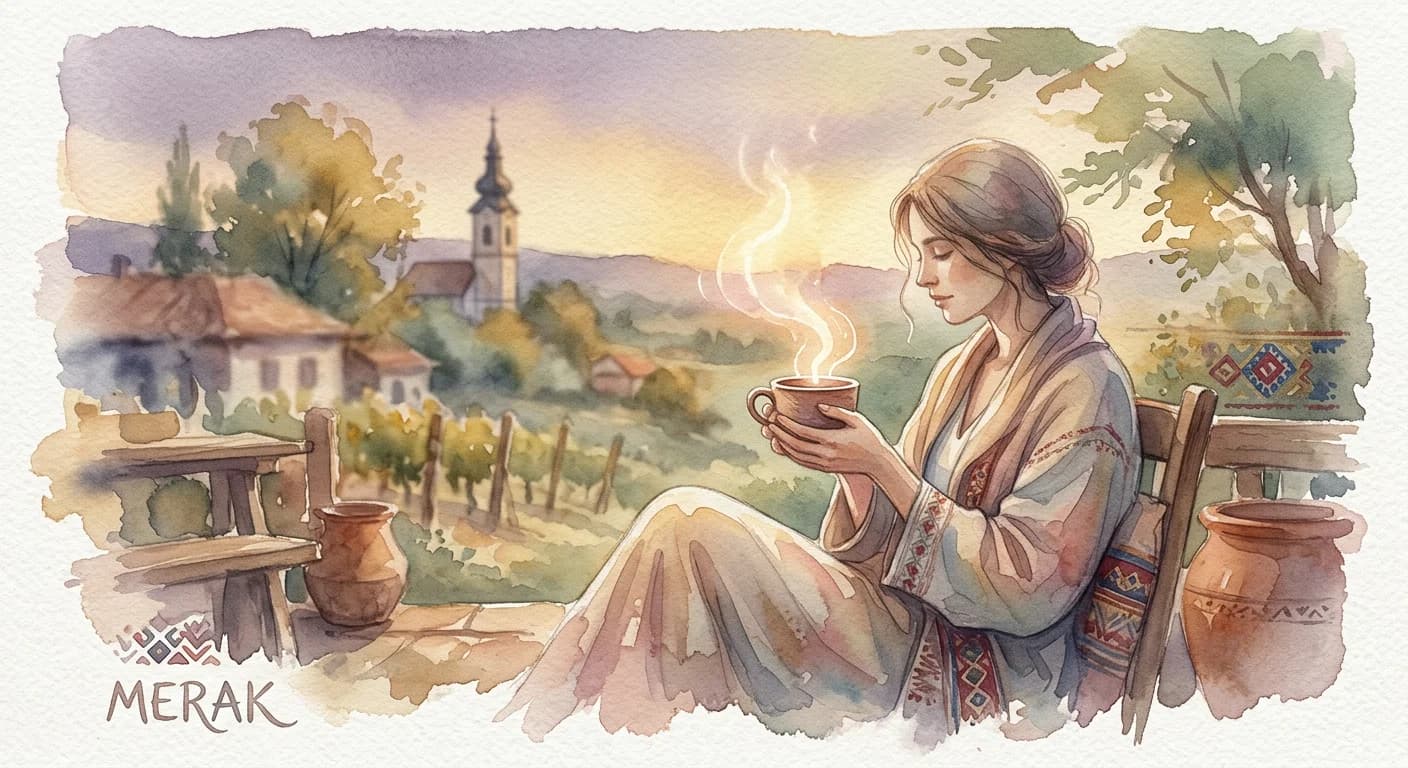
Merak
/MEH-rahk/
Meaning
Merak encapsulates a profound, almost spiritual absorption in the simple, often sensual, pleasures of daily life. It's an exquisite state of contentment where one is fully present, allowing a moment to unfold and envelop the senses, transforming the mundane into something deeply satisfying. This feeling transcends fleeting happiness, settling into a peaceful, grateful appreciation for the ordinary, whether it's the aroma of fresh coffee, the warmth of companionship, or the quiet beauty of a sunset.
Literal Translation
The literal meaning is debated, but it's often associated with 'desire' or 'longing' in older Slavic roots, which has evolved to encompass the profound satisfaction of fulfilling that desire through simple enjoyment.
The Story Behind the Word
The concept of merak is deeply woven into the fabric of Balkan and particularly Serbian culture, reflecting a historical resilience and an enduring appreciation for life's simple joys amidst often turbulent circumstances. Historically, in a region frequently marked by hardship and conflict, finding solace and profound pleasure in small, accessible moments became a vital coping mechanism and a cornerstone of cultural identity. It speaks to a philosophical outlook that values presence over material accumulation, and genuine connection over superficiality. Merak is not just a feeling; it's a practice of mindfulness and gratitude, a testament to the human spirit's capacity to extract beauty and meaning from the everyday, fostering a sense of community and shared well-being through unhurried enjoyment. It reveals a culture that understands the importance of slowing down and truly savoring life.
Experience It
Evening Coffee Merak
Grandpa Marko sits on his porch, slowly sipping his strong, dark Turkish coffee. The setting sun casts long shadows, and the scent of jasmine fills the air, bringing a deep sense of merak as he savors each sip and the quiet end of the day.
Friends’ Laughter Merak
A group of friends gathers around a table laden with meze, their conversation flowing easily, punctuated by genuine laughter. In that moment of shared joy, delicious food, and heartfelt connection, they all feel a profound merak, a blissful immersion in the present company.
The Deeper Meaning
Merak embodies a philosophy of mindful hedonism, where pleasure is found not in excess or grand gestures, but in the deliberate appreciation of the subtle, accessible aspects of existence. It champions present-moment awareness and emotional richness over constant striving, suggesting that true contentment lies in cultivating an inner disposition to savor and be grateful for life's unadorned offerings. It's a quiet rebellion against the relentless pursuit of more, advocating for the profound satisfaction of enough.
Did You Know?
The word 'merak' is thought to have Ottoman Turkish origins, deriving from 'merak' (desire, curiosity), which then evolved in Serbian to signify the fulfillment and deep enjoyment of that desire.
How It's Used
Merak is used to describe the feeling of deep enjoyment and contentment derived from simple pleasures or experiences. It can be applied to activities like enjoying a leisurely meal, spending time with loved ones, or appreciating a moment of quiet reflection.