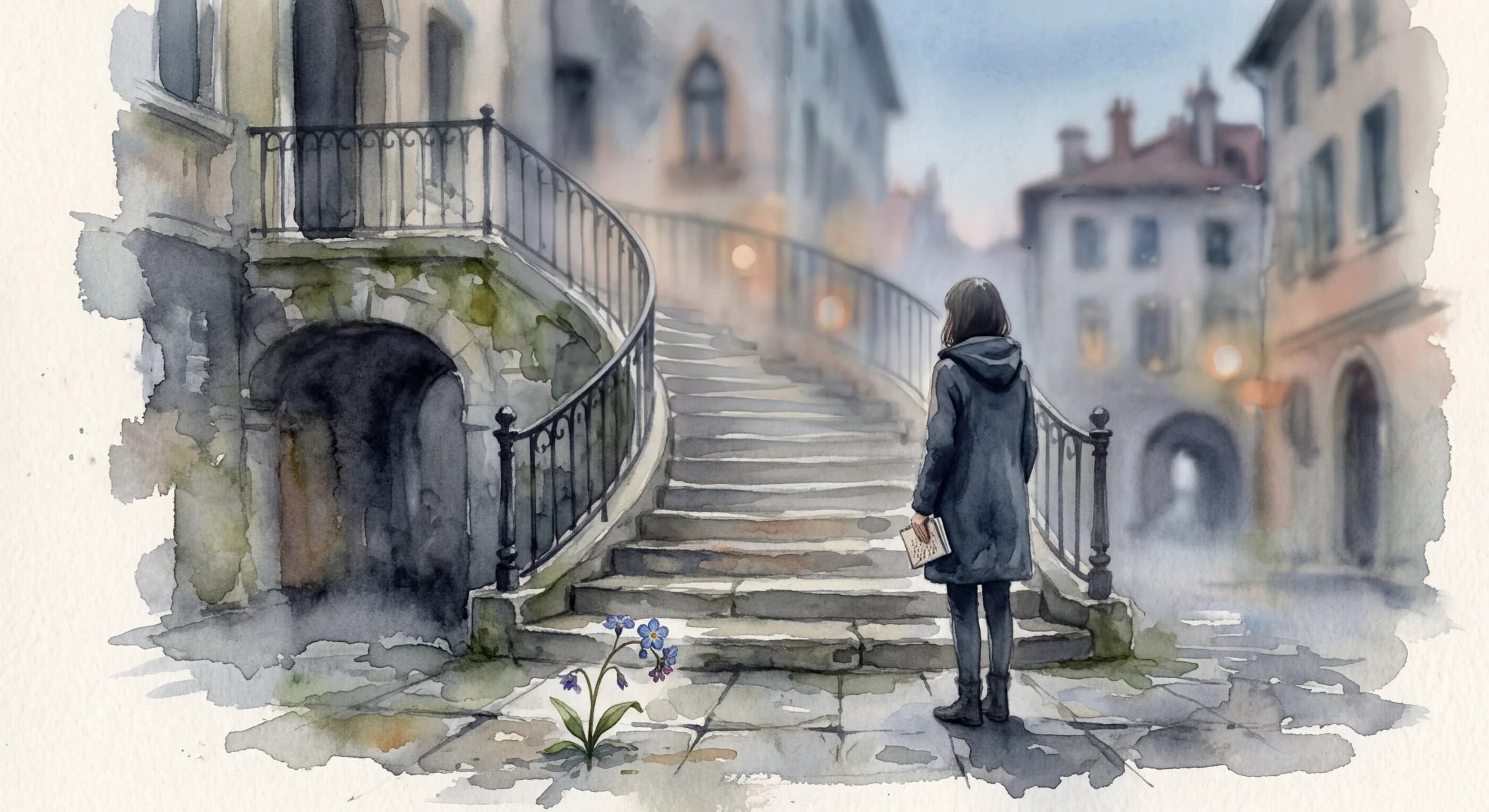
Treppenwitz
/TREP-pen-vits/
Meaning
Treppenwitz, literally 'staircase wit,' encapsulates the universal and often frustrating experience of conceiving the perfect, unassailable retort or brilliant bon mot only after a conversation has concluded. It’s that moment of sharp, belated clarity, often as one is physically departing the scene (metaphorically, descending the 'staircase'), realizing precisely what *should* have been said to win an argument or deliver a memorable punchline. This word perfectly articulates the sting of missed verbal opportunities, highlighting the poignant gap between spontaneous thought and delayed, yet superior, wit.
Literal Translation
staircase wit
The Story Behind the Word
The existence of a dedicated word like Treppenwitz in German speaks volumes about a cultural appreciation for wit, intellectual sparring, and the precise use of language. German culture, with its strong philosophical traditions and emphasis on clarity and argumentation, values the well-articulated thought. The frustration embedded in Treppenwitz suggests that intellectual prowess and rhetorical skill are highly regarded, and the failure to deploy them effectively in the moment is a source of genuine, albeit minor, regret. It reflects a society where intellectual engagement is taken seriously, and the ability to command language is a sign of intelligence and respect. The word highlights a human vulnerability: the mind's often-delayed processing of the perfect response, particularly when under pressure.
Experience It
The Boardroom Blunder
After a heated board meeting where his proposal was unfairly dismissed, Michael walked out feeling defeated. As he rode the elevator down, the perfect, irrefutable counter-argument crystallized in his mind, complete with a witty jab that would have silenced his opponent. He muttered, 'Ach, Treppenwitz!'
Dinner Party Regret
Sarah left the dinner party feeling flustered after a condescending guest made a snide remark about her career. Only as she was unlocking her front door did the devastatingly clever and polite put-down form in her head. She sighed, recognizing the familiar feeling of Treppenwitz.
The Deeper Meaning
Treppenwitz offers a poignant insight into the nature of human cognition and social interaction. It underscores our desire for intellectual mastery and the often-unpredictable timing of our mental processes, especially under pressure. Philosophically, it touches upon the 'ideal self' versus the 'actual self' in verbal combat, revealing a universal yearning for perfect expression and the inherent frustration when our spontaneous faculties fall short of our intellectual potential.
Did You Know?
The French equivalent, 'l'esprit de l'escalier,' coined by Denis Diderot, refers to the same phenomenon, suggesting this specific kind of belated wit is a shared human experience across cultures valuing intellectual discourse.
How It's Used
Used to describe the specific, often humorous or frustrating, experience of belatedly formulating a witty remark or comeback after a conversation has concluded.