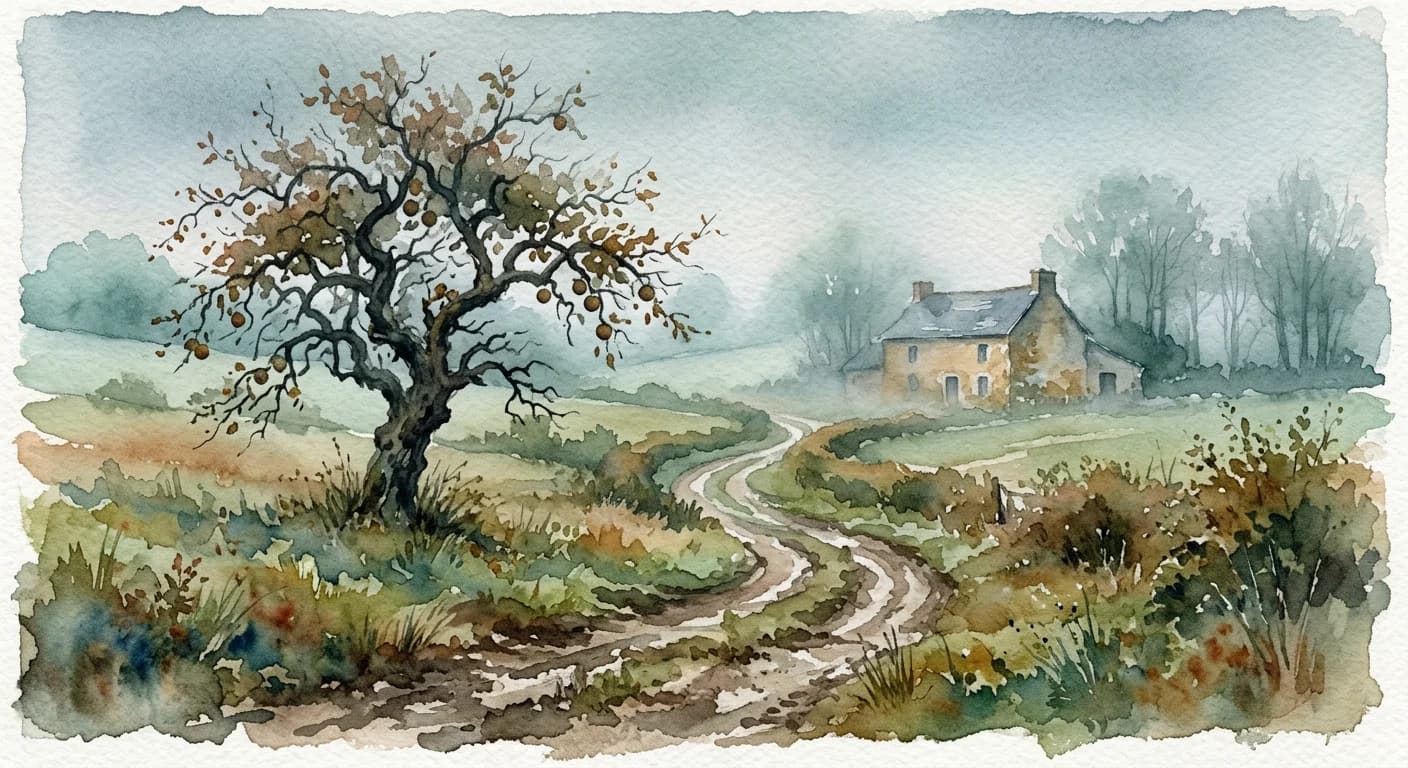
Nostalgie de la boue
/nos-tal-ZHEE duh lah BOO/
Meaning
This poignant French phrase describes a peculiar, often bittersweet yearning for a past existence that, while perhaps challenging, raw, or even unpleasant, felt more authentic or foundational. It's not a desire to relive hardship, but rather a complex emotional attachment to the grit and struggle that shaped one's identity. This feeling acknowledges that even difficult times forge character and hold a strange, magnetic pull, a connection to a past self that might feel distant or lost amidst present comfort and sophistication.
Literal Translation
Nostalgia for the mud
The Story Behind the Word
The phrase "nostalgie de la boue" emerged in the 19th century, a period of rapid industrialization and social stratification in France. It reflects a certain romanticized view of a pre-industrial or working-class past, often held by those who had ascended socially but felt a disconnect from their roots. It can be linked to a broader French intellectual tradition that values authenticity, even in its rougher forms, and questions the superficiality of bourgeois comfort. The expression reveals a cultural appreciation for the formative power of struggle and a nuanced understanding of human memory, where even adversity can become a source of identity and a subject of complex emotional attachment.
Experience It
The Chef's Old Kitchen
A renowned Parisian chef, now running Michelin-starred restaurants, often finds himself thinking of the chaotic, greasy kitchen of his first job as a young apprentice. Despite the long hours, low pay, and constant pressure, he sometimes feels a "nostalgie de la boue" for that raw, unrefined environment that truly forged his passion and resilience.
Artist's Bohemian Past
An acclaimed artist, living comfortably in her spacious studio, gazes at an old, faded photograph of her cramped, unheated attic flat from her student days. She remembers the hunger and uncertainty, yet feels a strange "nostalgie de la boue" for the intense creative focus and unburdened freedom of that challenging period.
The Deeper Meaning
This phrase encapsulates a profound truth about human experience: that our identity is often forged in the crucible of challenge and adversity. It suggests that true self-knowledge and a sense of belonging can sometimes be found not in comfort, but in the raw, unpolished moments of our past. It challenges the simplistic notion that happiness solely resides in ease, instead highlighting the complex interplay between struggle, memory, and self-definition.
Did You Know?
While often applied to personal journeys, "nostalgie de la boue" can also describe a collective societal longing for a simpler, perhaps more 'authentic' past, even if that past was rife with difficulties.
How It's Used
Used to describe a complex emotional longing for a past, even if that past involved difficult or unpleasant circumstances that one has since overcome or left behind.