Volta
/VOL-tah/
Meaning
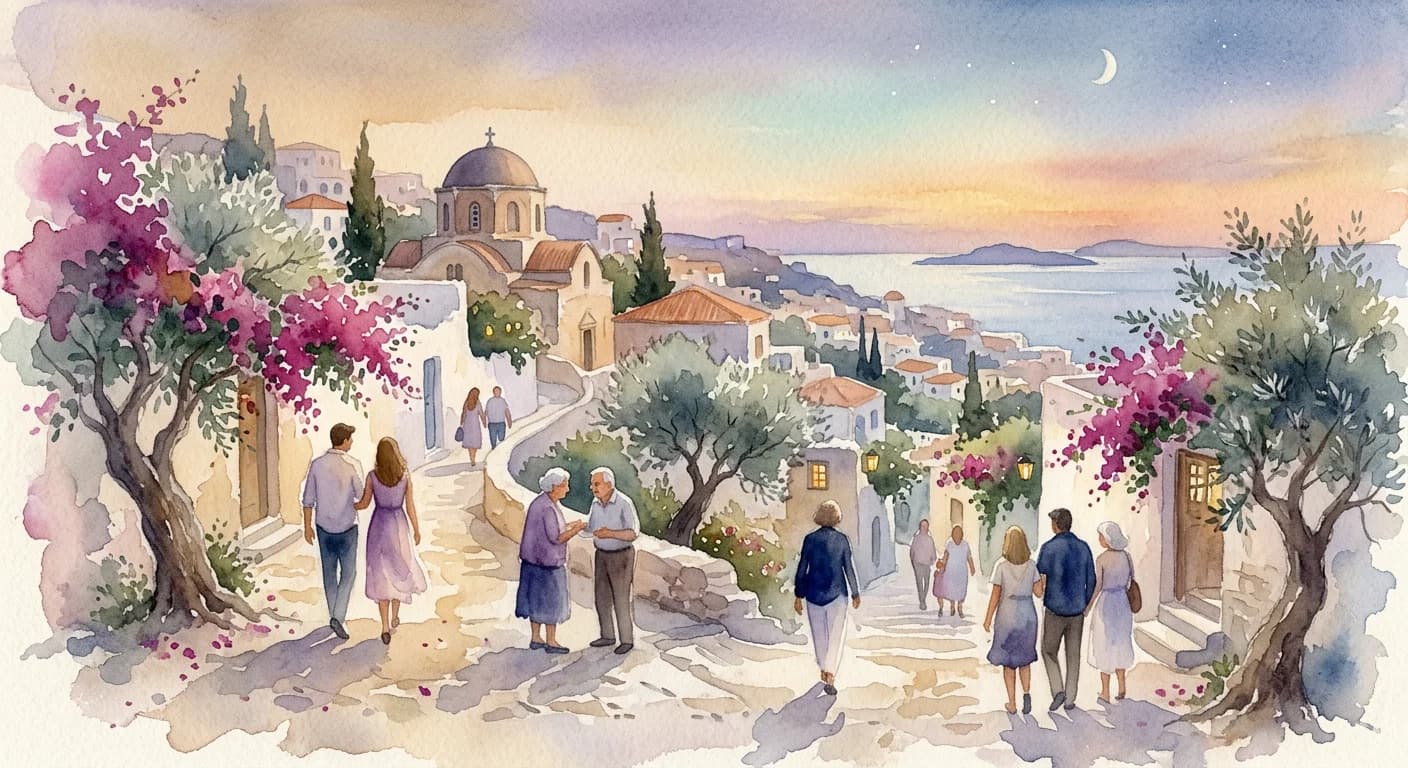
In Greek culture, a 'volta' transcends a mere physical walk; it is a cherished social ritual, a leisurely promenade often taken in the cool of the evening. It signifies a deliberate slowing down, an opportunity for unhurried conversation, keen observation of one's surroundings, and a profound reconnection with community. Far from being about reaching a destination, the volta is an immersive experience, fostering a sense of belonging and shared life within the vibrant tapestry of Greek towns and villages.
Literal Translation
turn, walk, stroll
The Story Behind the Word
The concept of the 'volta' is deeply woven into the fabric of Greek life, reflecting a culture that values human connection, public space, and the unhurried enjoyment of life's simple pleasures. Rooted in the ancient Greek tradition of the 'peripatos' (a walk taken for philosophical discussion), the modern volta retains this intellectual and social dimension, evolving into a daily communal practice. It exists because Greek society prioritizes face-to-face interaction and the vitality of the public square. It reveals a worldview where time is not solely a commodity to be optimized, but a resource to be savored, especially in the company of others. The evening volta, when the day's heat subsides, symbolizes a collective exhale, a moment for the community to breathe, interact, and reinforce its bonds.
Experience It
Evening Volta in the Plaka
As the Athenian sun dipped below the Acropolis, Eleni and her family joined the stream of people on their evening volta through the bustling Plaka. They greeted neighbors, admired the colorful shops, and paused for an impromptu chat with an old friend, the gentle murmur of voices filling the air.
Village Square Stroll
In a small Cycladic village, Yiannis and his wife took their daily volta around the main square. They watched children play, exchanged news with the kafenion owner, and simply enjoyed the cool breeze, feeling completely at one with their community.
The Deeper Meaning
The 'volta' embodies a philosophy of 'being' over 'doing,' a deliberate rejection of modern life's relentless pace. It underscores the Greek appreciation for the present moment, the importance of human connection, and the belief that true well-being is found in shared experiences and the cultivation of community ties, rather than in solitary pursuits or material accumulation.
Did You Know?
The word 'volta' itself comes from the Italian 'volta' meaning 'turn' or 'round,' highlighting the circular, unhurried nature of these traditional strolls.
How It's Used
Typically used to describe an evening walk or promenade, often taken with family or friends, to socialize and enjoy the atmosphere of a town or village.