U.
HomeRegionsLanguagesEmotionsCollections
Find Your Word

“The limits of my language mean the limits of my world.”

— Ludwig Wittgenstein, Philosopher

Untranslatable

A curated collection of the world's most beautiful expressions—words that remind us language is humanity's greatest invention.

  • Home
  • Collections
  • Regions
  • Countries
  • Emotions
  • Tags
  • Contexts
  • Finder
  • Europe
  • Asia
  • Americas
  • Africa
  • Middle East
  • About
  • Contact
  • Privacy Policy
  • Terms of Service

2026 © Untranslatable. All rights reserved.

    /
    /
    1. Home
    2. /
    3. Asia
    4. /
    5. Bol
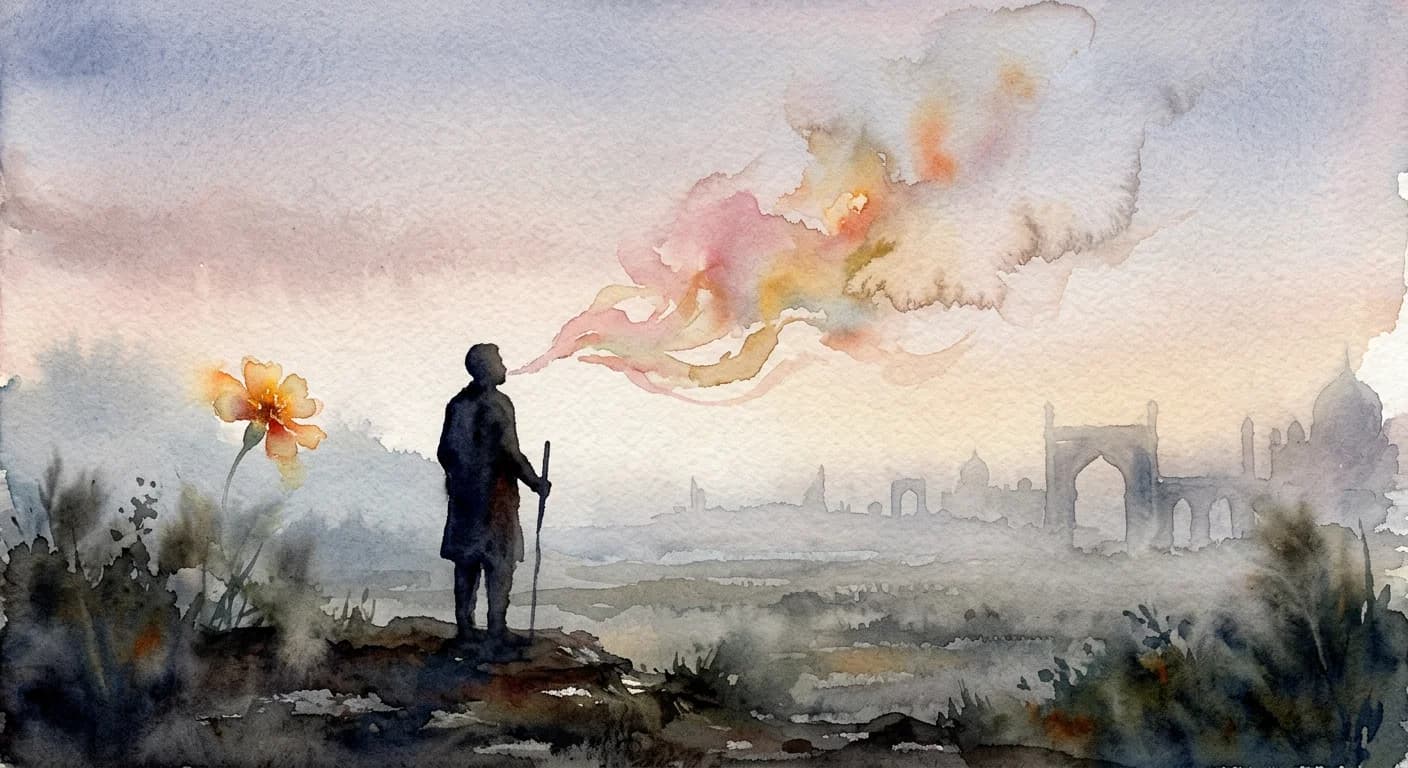
    Artistic representation of Bol
    Hindi•
    🇮🇳India

    Bol

    /BOH-l/

    Meaning

    In Hindi, 'Bol' transcends the simple act of speaking; it embodies the very essence and power of articulation. It implies a direct, often assertive, and unvarnished communication, demanding attention and cutting through superficialities to reach the heart of a matter. Whether urging someone to 'seedha bol' (speak directly) or inquiring 'kya bolta hai?' (what do you say/what's up?), 'Bol' underscores the weight and intention behind uttered words, highlighting the speaker's agency and the impactful nature of their statement.

    Literal Translation

    Speak/Say

    The Story Behind the Word

    The significance of 'Bol' in Indian culture is deeply rooted in ancient philosophical traditions that revere 'Vak' (speech) as a divine creative force. From Vedic chants to philosophical debates, the spoken word has always been seen as a potent instrument for creation, understanding, and even spiritual realization. This reverence imbues 'Bol' with an inherent authority; it's not just making sounds, but manifesting thought and intent. The cultural emphasis on direct communication, particularly in situations requiring clarity or conviction, reflects a value system where ambiguity can be perceived as evasiveness. Thus, 'Bol' isn't just a verb; it's an invocation to express oneself authentically and powerfully, a reflection of a culture that values the profound impact of well-chosen words.

    Experience It

    Demanding Clarity

    During a heated family discussion about a future plan, the patriarch slams his hand on the table and declares, 'Seedha bol! Kya chahte ho?' (Speak directly! What do you want?). He's not just asking them to talk, but to state their true intentions without equivocation.

    A Friendly Greeting

    Two friends meet unexpectedly at the market. One grins and exclaims, 'Arre yaar, kya bolta hai?' (Hey friend, what do you say/what's up?). It's a casual, intimate way of asking how the other is doing, implying a desire for genuine connection beyond mere pleasantries.

    The Deeper Meaning

    The word 'Bol' reveals a worldview where speech is not merely a tool for conveying information but an active force that shapes reality and relationships. It underscores a cultural emphasis on authenticity and directness in communication, suggesting that true understanding stems from unvarnished expression. This philosophy values the courage to articulate one's truth, even when it's challenging, believing that clear 'Bol' is essential for resolution and progress.

    Did You Know?

    In Indian classical music and dance, 'Bol' also refers to mnemonic syllables used to vocalize rhythmic patterns (taal) or dance movements, demonstrating its connection to structured, expressive articulation.

    How It's Used

    Used in everyday conversation to refer to speaking, saying something, or making a statement. It can also be used in idiomatic expressions related to communication.

    Emotion
    resilience
    Context
    conversation
    🇮🇳India

    by Annelise Dubois·Written Mar 14, 2026·Updated Apr 3, 2026

    Related Words

    Explore more
    Wabi-sabiJapanese

    Wabi-sabi is the profound appreciation for the ephemeral, the imperfect, and the incomplete aspects of existence. It is about discovering beauty in the subtle textures of age, the unique character of flaws, and the gentle decay that marks the passage of time. This philosophy encourages a quiet acceptance of impermanence and a mindful connection to the natural world, finding elegance in simplicity and authenticity.

    IkigaiJapanese

    Ikigai is more than just a reason to get out of bed; it's a deeply personal and evolving sense of purpose that brings genuine fulfillment and joy to one's life. It represents the sweet spot where your passions, talents, needs of the world, and what you can be paid for beautifully converge. Discovering your ikigai often leads to a life lived with intentionality, resilience, and a profound connection to one's contributions. It's the intrinsic motivation that fuels a meaningful existence, regardless of external circumstances.

    NunchiKorean

    Nunchi is the sophisticated, almost telepathic, ability to instantly grasp the unspoken dynamics of any social situation, anticipating others' thoughts and feelings, and then responding with impeccable grace and timing. It's an acute form of social intuition, allowing one to navigate complex interpersonal landscapes by reading subtle cues like body language, tone, and context. Possessing good nunchi means effortlessly understanding the underlying emotional currents and adjusting one's behavior to maintain harmony and effectiveness, often without a single word exchanged.

    JugaadHindi

    Jugaad is more than just a quick fix; it embodies the spirit of resourceful, ingenious improvisation in the face of scarcity or systemic challenges. It's the art of bending rules, repurposing materials, and thinking outside the box to achieve a desired outcome, often with limited financial or technological resources. This approach celebrates clever workarounds and innovative adaptations, turning constraints into catalysts for creative problem-solving. It's about making do and making something work, brilliantly.