U.
HomeRegionsLanguagesEmotionsCollections
Find Your Word

“The limits of my language mean the limits of my world.”

— Ludwig Wittgenstein, Philosopher

Untranslatable

A curated collection of the world's most beautiful expressions—words that remind us language is humanity's greatest invention.

  • Home
  • Collections
  • Regions
  • Countries
  • Emotions
  • Tags
  • Contexts
  • Finder
  • Europe
  • Asia
  • Americas
  • Africa
  • Middle East
  • About
  • Contact
  • Privacy Policy
  • Terms of Service

2026 © Untranslatable. All rights reserved.

    /
    /
    1. Home
    2. /
    3. Asia
    4. /
    5. Chindōgu
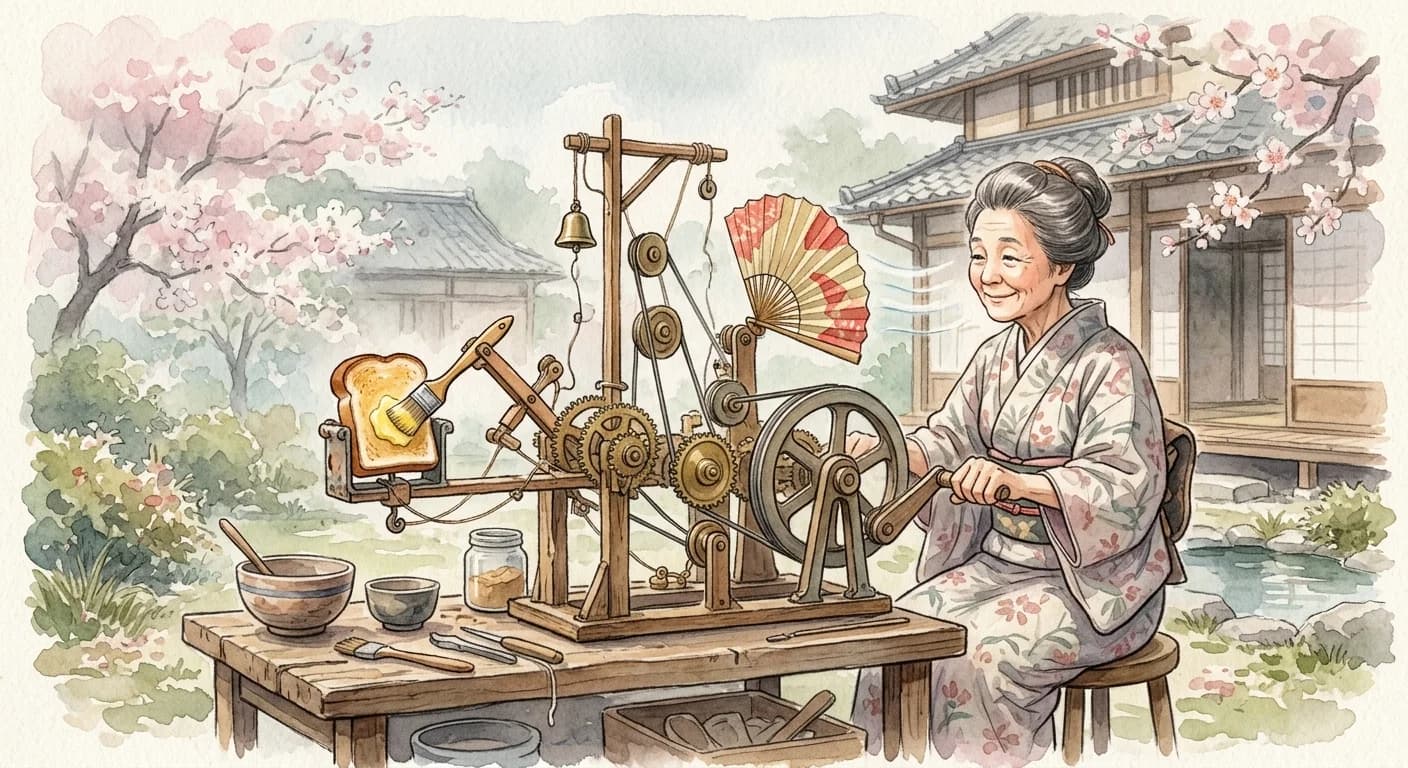
    Artistic representation of Chindōgu
    Japanese•
    🇯🇵Japan

    Chindōgu

    /chin-DOH-goo/

    Meaning

    Chindōgu describes whimsical inventions that appear to offer solutions but are, in practice, utterly impractical, often creating more problems than they solve. These aren't merely useless gadgets; they are ingenious, albeit absurd, creations born from a playful desire to innovate. Through their exaggerated impracticality, Chindōgu acts as a subtle, humorous social commentary, highlighting the often-overlooked complexities and absurdities embedded within modern life and our relentless pursuit of technological convenience.

    Literal Translation

    special tool / strange device

    The Story Behind the Word

    The concept of Chindōgu emerged in Japan in the 1990s, largely popularized by Kenji Kawakami, who articulated its ten tenets. It reflects a uniquely Japanese blend of meticulous craftsmanship, an appreciation for the absurd, and a subtle critique of consumerism and over-engineering. In a society that values efficiency and innovation, Chindōgu playfully subverts these ideals by creating objects that are technically advanced but functionally useless. It's a form of artistic expression and social commentary, suggesting that not every problem needs an elaborate solution and that sometimes, simplicity is better. This phenomenon reveals a cultural comfort with paradox and a quiet rebellion against the pressures of relentless progress, valuing the creative process and the humorous observation of human foibles over pure utility.

    Experience It

    The Noodle Fan

    A man carefully attaches a tiny, battery-operated fan to his chopsticks, aiming to cool his ramen before each bite. While technically innovative, the fan splatters broth everywhere, making a mess and barely cooling the noodles. This gadget is a perfect Chindōgu.

    Automated Tissue Dispenser

    During allergy season, a woman invents a wearable helmet that detects sneezes and automatically dispenses a tissue to her nose. However, the detection is unreliable, often missing actual sneezes or dispensing tissues unnecessarily, making it more cumbersome than helpful. It's a classic Chindōgu.

    The Deeper Meaning

    Chindōgu embodies a philosophical stance that questions the uncritical embrace of progress and efficiency. It suggests that not all problems require technological fixes, and sometimes, the 'solution' itself can expose deeper absurdities in human behavior or societal expectations. It champions a playful detachment from materialism and a celebration of human ingenuity for its own sake, even when it leads to delightful futility.

    Did You Know?

    There are ten official tenets of Chindōgu, including that it must be an actual, usable (though impractical) object, not for sale, and must embody the spirit of anarchy.

    How It's Used

    The term is used to describe a specific category of invented objects, often presented humorously or ironically, that are intentionally impractical or serve a purpose that is easily addressed by existing means.

    Emotions
    joy,wonder
    Contexts
    daily life,humor
    🇯🇵Japan

    by Anya Petrova·Written Mar 14, 2026·Updated Apr 3, 2026

    Related Words

    Explore more
    Wabi-sabiJapanese

    Wabi-sabi is the profound appreciation for the ephemeral, the imperfect, and the incomplete aspects of existence. It is about discovering beauty in the subtle textures of age, the unique character of flaws, and the gentle decay that marks the passage of time. This philosophy encourages a quiet acceptance of impermanence and a mindful connection to the natural world, finding elegance in simplicity and authenticity.

    IkigaiJapanese

    Ikigai is more than just a reason to get out of bed; it's a deeply personal and evolving sense of purpose that brings genuine fulfillment and joy to one's life. It represents the sweet spot where your passions, talents, needs of the world, and what you can be paid for beautifully converge. Discovering your ikigai often leads to a life lived with intentionality, resilience, and a profound connection to one's contributions. It's the intrinsic motivation that fuels a meaningful existence, regardless of external circumstances.

    NunchiKorean

    Nunchi is the sophisticated, almost telepathic, ability to instantly grasp the unspoken dynamics of any social situation, anticipating others' thoughts and feelings, and then responding with impeccable grace and timing. It's an acute form of social intuition, allowing one to navigate complex interpersonal landscapes by reading subtle cues like body language, tone, and context. Possessing good nunchi means effortlessly understanding the underlying emotional currents and adjusting one's behavior to maintain harmony and effectiveness, often without a single word exchanged.

    JugaadHindi

    Jugaad is more than just a quick fix; it embodies the spirit of resourceful, ingenious improvisation in the face of scarcity or systemic challenges. It's the art of bending rules, repurposing materials, and thinking outside the box to achieve a desired outcome, often with limited financial or technological resources. This approach celebrates clever workarounds and innovative adaptations, turning constraints into catalysts for creative problem-solving. It's about making do and making something work, brilliantly.

    Featured in 1 collection

    😄Humor Across Cultures