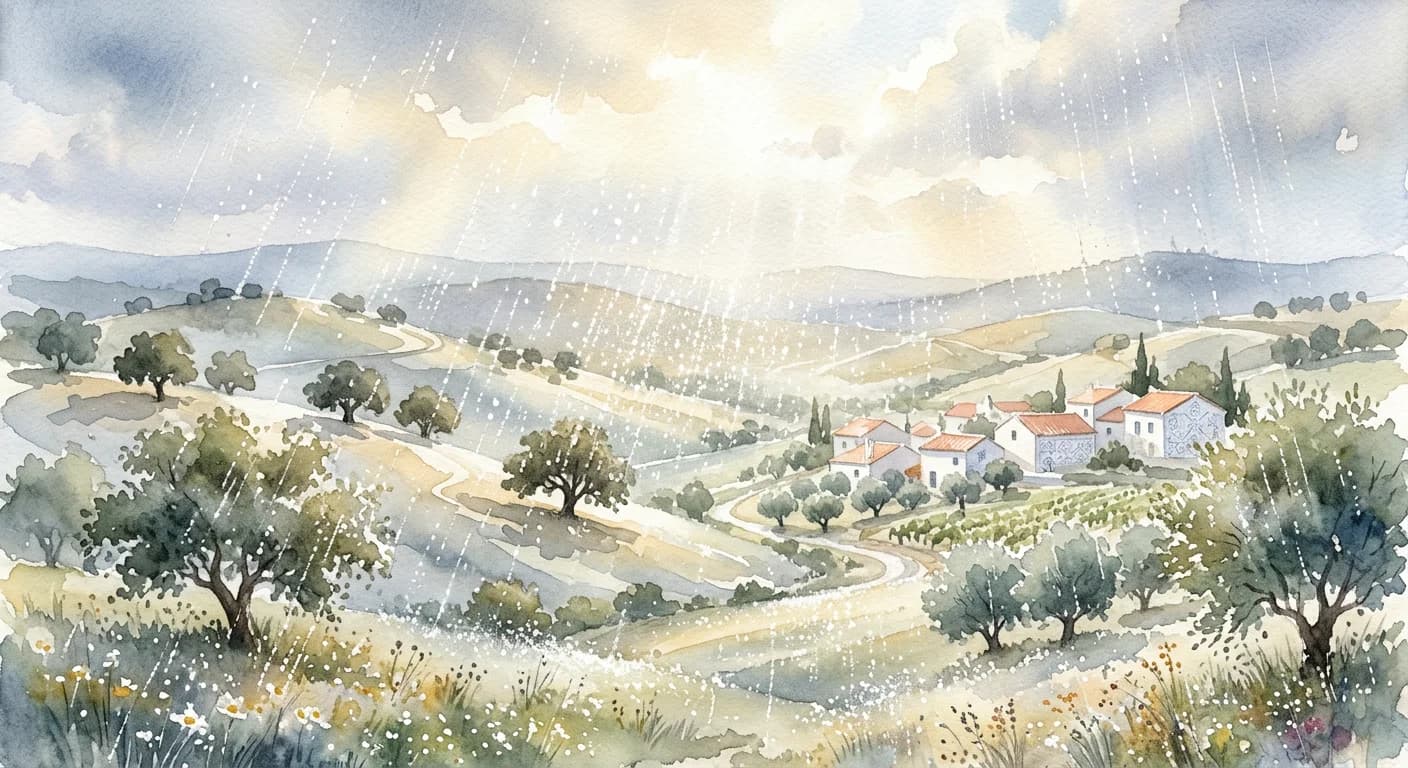
Chuva de prata
/SHOO-vah dee PRAH-tah/
Meaning
Literally translating to 'rain of silver,' this enchanting Portuguese phrase vividly captures the ephemeral spectacle of a heavy downpour occurring under a sunlit sky. As the raindrops descend, they catch the light, transforming the ordinary phenomenon of rain into a dazzling, shimmering curtain of liquid silver. It evokes a moment of profound natural wonder, where the landscape is momentarily bathed in a precious, almost ethereal glow, instilling a sense of awe and fleeting beauty.
Literal Translation
rain of silver
The Story Behind the Word
The existence of 'chuva de prata' in Portuguese culture speaks to a deep appreciation for the subtle, transient beauty found in nature, particularly the interplay of light and water. Portugal, with its Atlantic climate and frequent, often sudden, rain showers, provides ample opportunity for such phenomena. This phrase reflects a cultural tendency to imbue natural occurrences with poetic and almost magical qualities, elevating everyday experiences into moments of wonder. It highlights an attentiveness to sensory detail and an inclination to find preciousness in the fleeting and ungraspable.
Experience It
Coastal Afternoon Shower
The afternoon sun, though low, pierced through the breaking clouds. Suddenly, a heavy shower swept across the beach, and for a few breathtaking moments, the air shimmered with a dazzling *chuva de prata* before disappearing as quickly as it came.
City Street Glitter
Driving through Lisbon, a quick summer storm erupted, yet the sun insisted on shining. The windshield became a canvas for a magnificent *chuva de prata*, turning the bustling street into a glittering, momentary dreamscape.
What Gets Lost in Translation
English speakers might simply translate 'rain of silver' and miss the specific visual nuance. It's not just any 'shiny rain' but specifically implies the sun's interaction, creating a glittering, almost metallic effect. The metaphor extends beyond mere abundance to suggest a precious, almost magical quality, which a direct translation might not convey.
Across Cultures
While many cultures have terms for rain, the specific poetic imagery of 'silver rain' is less common. Japanese 'kitsune no yomeiri' (fox's wedding) describes sunshower, but its cultural context is mythological. English has 'sunshower,' but it lacks the vivid, precious visual metaphor. Some Slavic languages might use 'diamond rain' for sleet, but it's distinct from the liquid 'silver' of *chuva de prata*.
The Deeper Meaning
This phrase encapsulates a philosophy of finding wonder in the transient and often overlooked aspects of the natural world. It suggests that beauty is not always grand or permanent but can be found in fleeting moments, inviting an appreciative pause. It speaks to a worldview that values sensory experience and the poetic transformation of the mundane into the magical.
Did You Know?
The phrase is sometimes used metaphorically in Portuguese literature and music to describe a shower of blessings, confetti, or even tears, emphasizing abundance and a precious, shimmering quality.
How It's Used
Used to describe a specific type of rain, often a sudden, intense shower that appears to 'glitter' or 'shine' due to sunlight interacting with the falling water. It can also be used metaphorically to describe anything that falls in abundance and has a shiny or precious quality.