Drang
/DRAHNG/
Meaning
Drang encapsulates an intense, almost visceral urge or impulse that compels one to act or move towards a specific goal or state. It's far more than a fleeting desire; it's a powerful, often unyielding inner drive, a yearning that can feel both exhilarating in its potential and overwhelming in its insistence. This profound feeling frequently emerges in moments of deep personal aspiration, artistic necessity, or when confronted with an undeniable need for change or self-expression, signifying a fundamental human striving that transcends mere intention.
Literal Translation
urge, impulse, drive
The Story Behind the Word
The concept of 'Drang' is deeply embedded in German intellectual and cultural history, reflecting a worldview that values inner depth, striving, and the pursuit of ideals. It resonates with philosophical movements like Romanticism, where the individual's inner world, emotions, and yearning for the sublime were paramount. Thinkers like Goethe, with his concept of 'Sturm und Drang' (Storm and Stress), articulated a period of intense emotionality and individual genius, highlighting a rebellious 'Drang' against societal norms. This word reveals a cultural appreciation for the profound, often tumultuous, inner life and the conviction that true purpose often springs from an irresistible inner calling, driving individuals to overcome obstacles and manifest their unique potential. It speaks to a society that understands the power of the subconscious and the compelling force of an individual's destiny and ambition.
Experience It
Artist's Creative Urge
Despite exhaustion, the painter felt an undeniable 'Drang' to finish the canvas before dawn. The colors and forms were swirling in her mind, demanding to be brought to life, an impulse too strong to ignore.
Explorer's Inner Call
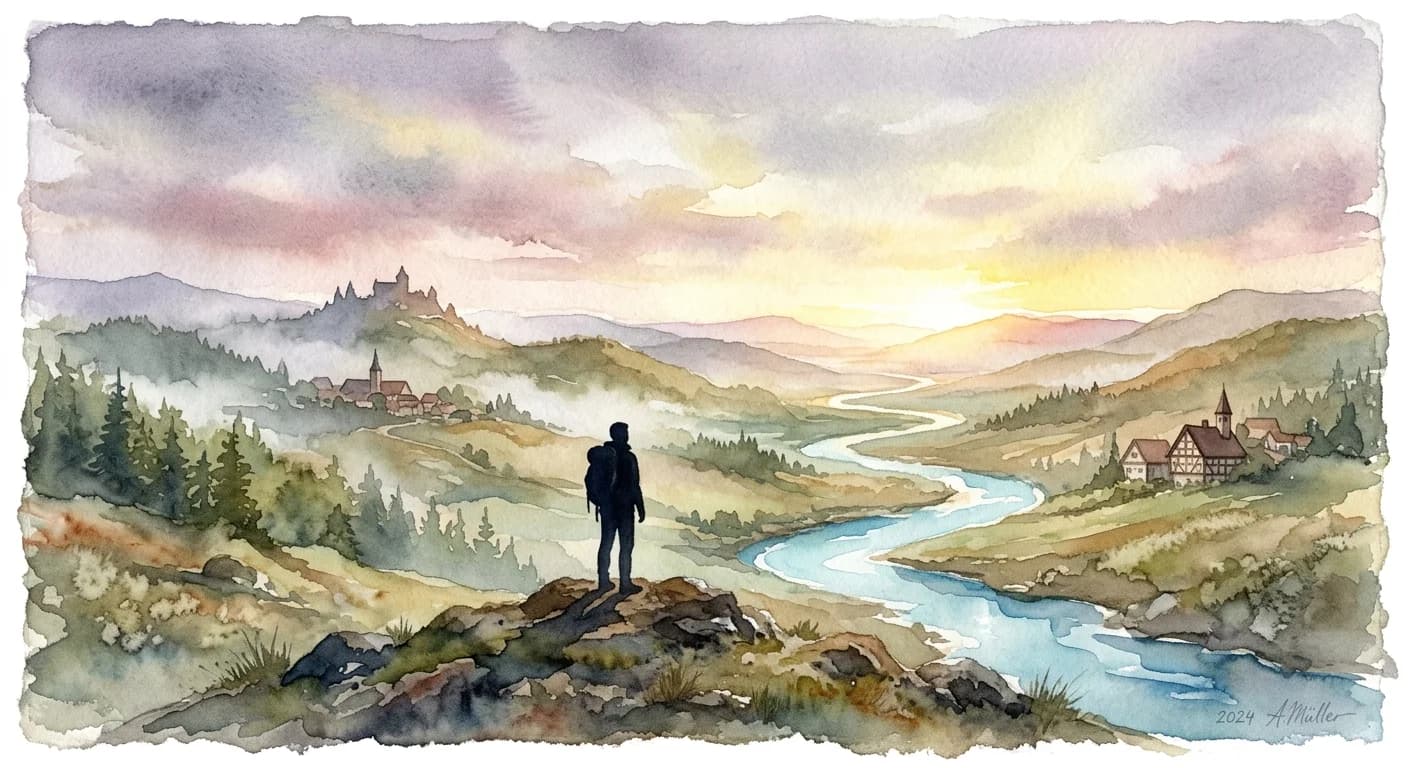
For years, a deep 'Drang' to explore the uncharted wilderness had consumed him. It wasn't just curiosity; it was an elemental pull, a profound need to experience the raw, untamed world that pulsed within his very being.
The Deeper Meaning
Drang reveals a philosophical inclination towards recognizing the profound, often irrational, forces that drive human action and creativity. It suggests that true fulfillment isn't solely a product of rational choice but also of an innate, compelling inner necessity. This concept highlights a worldview where the individual's inner world and its powerful urgings are central to identity and purpose, often pushing against external constraints in a quest for authentic expression.
Did You Know?
The literary movement 'Sturm und Drang' (Storm and Stress) in the late 18th century, led by figures like Goethe and Schiller, explicitly used 'Drang' to describe a period of intense emotionality and individualistic rebellion.
How It's Used
Used to describe a strong inner drive, urge, or impulse towards something, often a goal, a feeling, or an action. It can be used in contexts of ambition, artistic creation, or even a deep-seated psychological need.