Erlebnis
/AIR-leb-nis/
Meaning
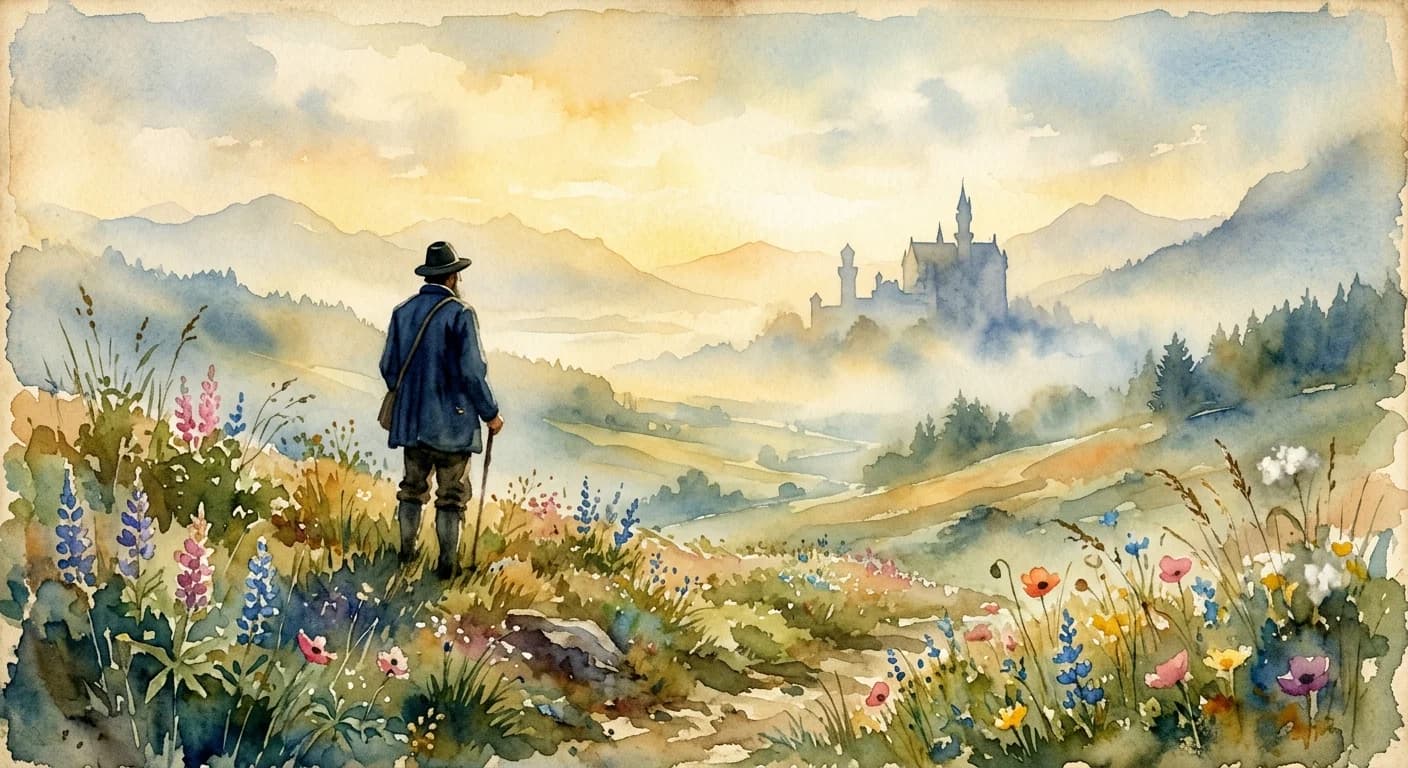
Erlebnis transcends a mere event; it is a profound, transformative encounter that deeply imprints itself upon one's inner world. It's not just what happened, but how it was lived, felt, and integrated, leaving an indelible mark on one's identity and memory. This concept captures the subjective richness of a moment, emphasizing its emotional resonance and capacity to shape understanding or personal growth, distinguishing it from a fleeting occurrence. An Erlebnis is a lived experience, imbued with lasting significance and often a sense of wonder or revelation.
Literal Translation
experience
The Story Behind the Word
The prominence of 'Erlebnis' in German culture speaks to a deep-seated appreciation for introspection, personal growth, and the subjective interpretation of reality, rooted in Romanticism and philosophical traditions like phenomenology. It reflects a cultural emphasis on inner life and Bildung (self-cultivation), where experiences are not just collected but are actively processed and integrated to form a richer self. This word underscores a worldview where genuine understanding comes from lived, felt encounters, not just intellectual accumulation, highlighting a reverence for moments that shape the soul and provide profound insight into existence.
Experience It
Mountain Summit Revelation
After a grueling climb, reaching the peak of the Zugspitze and gazing across the vast Alpine panorama was an absolute Erlebnis. The sheer scale of nature, the silence, and the feeling of accomplishment washed over her, fundamentally altering her perception of her own limits and the world's grandeur.
First Love's Impact
Their first shared kiss under the cherry blossoms wasn't just an event; it was an Erlebnis. The intensity of the emotions, the sudden connection, and the feeling that her world had irrevocably shifted made it a moment she would forever carry within her, shaping her understanding of intimacy and joy.
Concert's Transformative Power
Attending the symphony, the crescendo of the orchestra swelled, enveloping him completely. It wasn't just listening to music; it was an Erlebnis that transported him beyond his everyday concerns, connecting him to something sublime and universal, leaving him with a profound sense of awe and emotional catharsis.
What Gets Lost in Translation
English speakers often translate 'Erlebnis' simply as 'experience,' losing its profound depth. It's not just any experience, like 'I had an experience at the store.' Rather, it signifies an impactful, often singular event that fundamentally changes one's perspective or leaves a deep emotional and psychological imprint. The nuance of personal transformation and lasting significance is frequently overlooked.
Across Cultures
While direct equivalents are scarce, some cultures have concepts that touch upon aspects of Erlebnis. The Japanese concept of 'mono no aware' (the pathos of things, a gentle sadness at the transient nature of beauty) can evoke a profound emotional resonance with an experience, though it differs in its focus. French 'vécu' refers to something lived or experienced personally, but lacks the same emphasis on transformative impact. English 'epiphany' or 'watershed moment' might describe an Erlebnis, but aren't standalone words for the concept itself.
The Deeper Meaning
Erlebnis reveals a philosophical orientation that prioritizes subjective, lived experience as a primary mode of knowing and being. It champions the idea that true understanding and personal development emerge not merely from facts or external events, but from the internal processing and emotional integration of significant moments. This emphasizes the individual's active role in constructing meaning and shaping their inner world through profound encounters.
Did You Know?
The term 'Erlebnis' gained significant philosophical weight in the late 19th and early 20th centuries, particularly through thinkers like Wilhelm Dilthey, who used it to describe the immediate, lived experience as the foundation of human understanding.
How It's Used
Used to describe a significant life event, a memorable journey, or any profound personal experience that has left a lasting impression.