Kogovica
/koh-GOH-vee-tsah/
Meaning
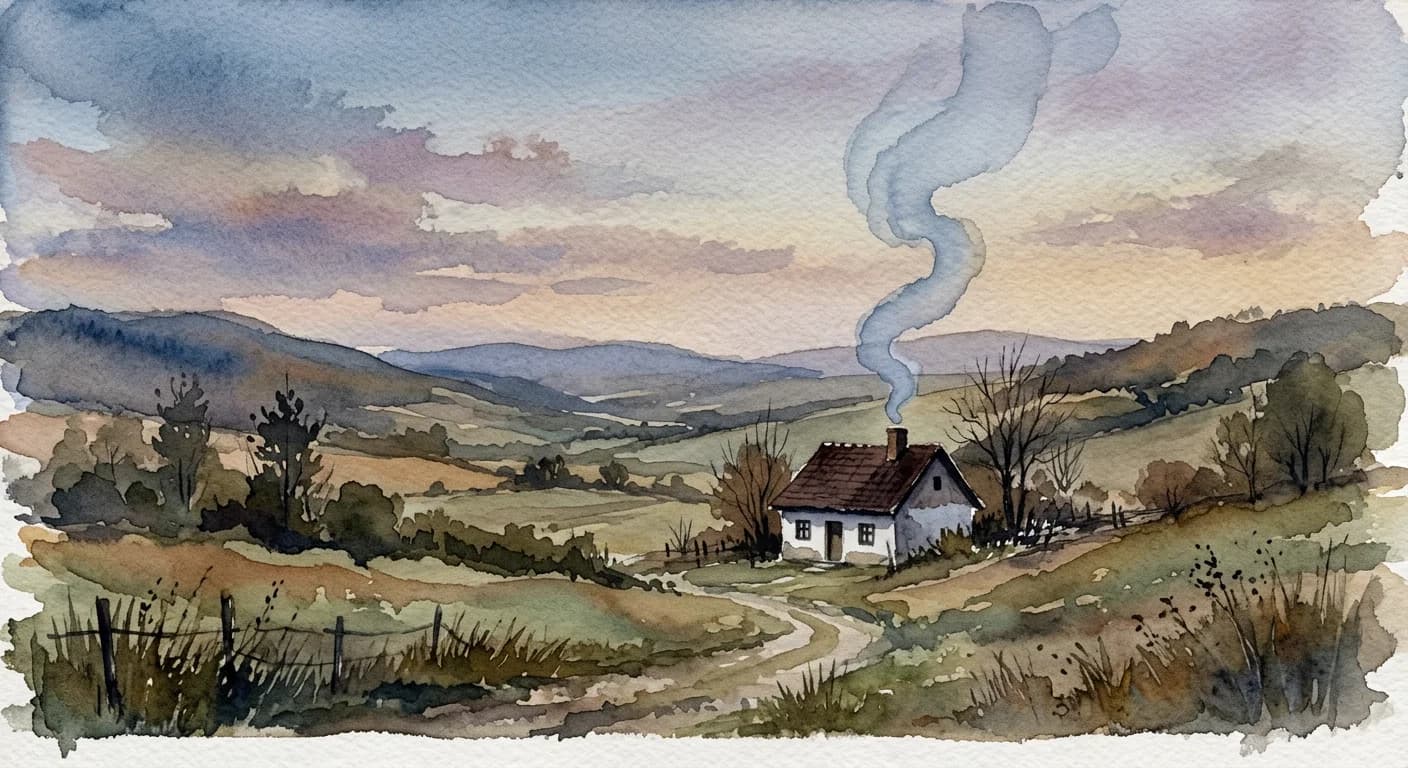
Kogovica encapsulates the specific, often tenderly melancholic, sensation experienced when observing smoke gracefully ascending from a distant chimney, particularly within a serene rural landscape. It’s a moment of quiet, almost voyeuristic contemplation of the unseen domestic life unfolding within that faraway dwelling – a life both intimately familiar in its human rhythms and yet utterly inaccessible. This feeling is deeply rooted in a profound connection to the land and the simple, enduring cadences of village existence, frequently carrying a subtle, yearning appreciation for the warmth, sustenance, and community implied by the rising plume. It's a peaceful introspection, where the mundane transforms into a source of gentle, profound wonder.
Literal Translation
This word does not have a direct literal translation; it is an evocative term.
The Story Behind the Word
The existence of 'kogovica' in Serbian culture speaks volumes about a deep-seated connection to agrarian roots and the rhythms of nature that historically defined life in the Balkans. For centuries, the chimney smoke was not just a sign of warmth, but a beacon of life, family, and survival against harsh winters. This word emerged from a society where communities were tightly knit, yet individual homesteads maintained a sacred, private space. 'Kogovica' reflects a cultural appreciation for quiet observation, a respect for the privacy of others, and a subtle longing for the simple, fundamental comforts of home and hearth. It embodies a reflective temperament, valuing contemplation over overt action, and finding beauty and meaning in the subtle signs of human presence within a vast natural world. It underscores a collective memory of a time when the scent of woodsmoke was a constant, comforting presence, symbolizing not just a house, but a living, breathing family unit.
Experience It
Winter's Embrace
Standing by his window as the first snow fell, Marko watched a thin wisp of smoke curl from his neighbor's distant cottage. A wave of kogovica washed over him, a gentle ache of shared humanity in the quiet, cold landscape, imagining the family gathered by the fire.
Evening Reflection
After a long day in the fields, Jelena paused on the hill overlooking the valley. As dusk settled, she saw smoke rising from several distant homes. The kogovica she felt was a contemplative peace, a silent acknowledgment of life's simple continuities and the solace of community, even from afar.
The Deeper Meaning
Kogovica reveals a philosophical appreciation for the unseen and the inferred. It suggests that profound meaning can be found in subtle indicators of life, fostering a sense of interconnectedness with others even when physically separate. It's a testament to the human capacity for empathy and imagination, projecting warmth and narrative onto a simple natural phenomenon, thus valuing introspection and the quiet beauty of ordinary existence.
Did You Know?
The feeling of 'kogovica' is often strongest during colder months or at dusk, when the smoke's warmth and the domestic scene it implies are most contrasted with the chill of the outside world.
How It's Used
Used to describe the specific feeling evoked by observing smoke rising from a distant chimney, often in a rural or natural setting, prompting contemplation.