Lùchdadh
/LOO-khuh(ch)/
Meaning
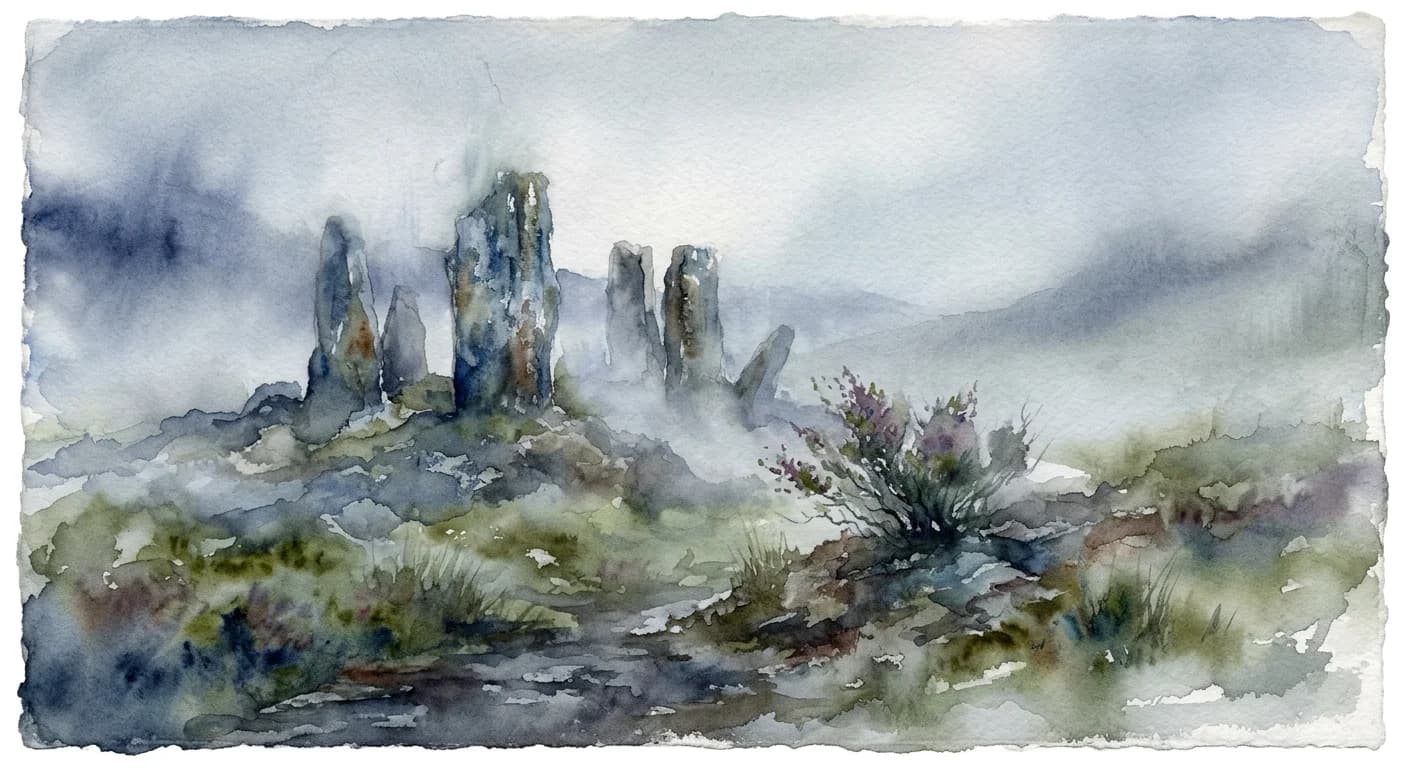
Lùchdadh describes a pervasive, insidious dampness and chill that permeates the very atmosphere, often felt deep within one's bones rather than just on the skin. It's the sensation of a house perpetually clammy, clothes that never quite dry, and a subtle cold that clings to everything, born from the unique interplay of Scotland's climate. More than mere wetness, it evokes a profound sense of discomfort and a longing for the respite of true warmth and dryness, deeply influencing mood and daily life.
Literal Translation
Dampness, chill
The Story Behind the Word
The existence of 'lùchdadh' in Scottish Gaelic is a testament to the profound influence of the Scottish climate on its people and culture. For generations, Scots have lived with a persistent damp, cool environment, leading to a deep understanding and articulation of its specific nuances. This word isn't just descriptive; it reflects a cultural resilience and a pragmatic acceptance of their surroundings, while also highlighting the constant battle against the elements. It underscores a worldview where comfort is often hard-won, and the appreciation for true warmth and shelter is heightened. The word reveals how deeply intertwined the physical environment is with the emotional and practical aspects of daily life, shaping traditions, architecture, and even a certain stoicism.
Experience It
Coastal Morning Chill
Waking up in the croft, a shiver ran down her spine before she even left the bed. The lùchdadh had settled in overnight, making the stone walls feel cold to the touch and her wool blanket seem insufficient against the pervasive, atmospheric dampness.
Post-Walk Discomfort
After a long hike through the misty glens, he peeled off his jacket, but the lùchdadh seemed to have soaked into his very core. Despite being indoors, a clammy chill clung to his skin, making him yearn for a roaring fire and a hot dram to truly banish the cold.
The Deeper Meaning
Lùchdadh embodies a deep connection to the natural world, revealing a culture that acknowledges and articulates the subtle yet profound ways environment shapes human experience. It speaks to a philosophy of adaptation and resilience, where discomfort is a constant companion, fostering a heightened appreciation for warmth, shelter, and community. It suggests that true comfort is not merely an absence of cold, but an active, often challenging, pursuit.
Did You Know?
The persistent lùchdadh in Scotland historically influenced the design of traditional homes, like blackhouses, which were built thick-walled and often without windows to retain heat and combat the pervasive dampness.
How It's Used
Used to describe the pervasive dampness and chill in the air, especially in Scotland, and the resulting feeling of discomfort.