Matsuri
/MAHT-soo-ree/
Meaning
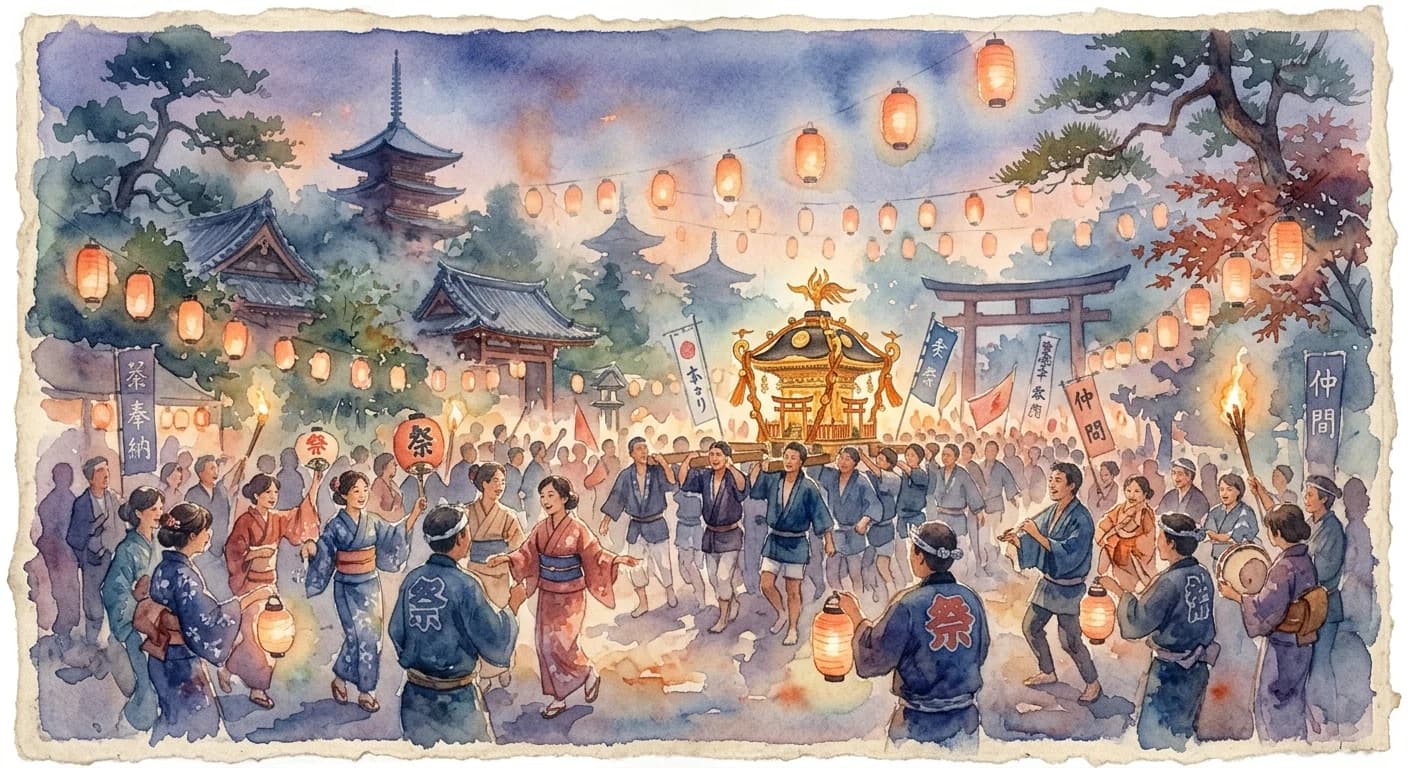
A "matsuri" is far more than a simple festival; it is a vibrant, collective celebration deeply woven into the fabric of Japanese community life, often centered around Shinto shrines or Buddhist temples. It embodies a powerful outpouring of spiritual devotion, communal solidarity, and joyous revelry. Characterized by elaborate processions with mikoshi (portable shrines), traditional music, dance, and bustling food stalls, a matsuri creates an immersive atmosphere of shared excitement and connection, reaffirming cultural identity and the bond between people and their spiritual heritage.
Literal Translation
Festival
The Story Behind the Word
The roots of matsuri are deeply embedded in Japan's agrarian past and Shinto animism, where rituals were performed to appease kami (deities), pray for bountiful harvests, or ward off misfortune. These events served as crucial communal gatherings, reinforcing social bonds and a shared understanding of the sacred. The evolution of matsuri reflects Japan's history, from ancient agricultural rites to grand urban spectacles like the Gion Matsuri, which emerged from prayers to repel plagues. They reveal a worldview where the spiritual and the mundane are intertwined, and where collective participation in ritual is essential for community well-being and maintaining harmony with the natural and supernatural worlds. Matsuri are living traditions that bridge the past and present, providing a powerful sense of continuity and cultural identity.
Experience It
Village Harvest Matsuri
The entire village bustles with activity as children in happi coats chase each other, the rhythmic beat of taiko drums echoing through the air. Farmers hoist a heavy mikoshi through the main street, their shouts of 'wasshoi, wasshoi!' synchronizing with the cheers of onlookers, celebrating a successful rice harvest and giving thanks to the local kami.
City Summer Night
Couples stroll hand-in-hand through lantern-lit temple grounds, the air thick with the aroma of yakisoba and takoyaki from countless food stalls. Young women in colorful yukata gather to watch a traditional dance performance on a makeshift stage, their laughter mingling with the festive music, enjoying the cool evening breeze during the Obon matsuri.
The Deeper Meaning
Matsuri embody the Japanese philosophy of "wa" (harmony) and the cyclical nature of life. They are not merely entertainment but vital acts of community building and spiritual renewal, where individuals transcend their daily lives to participate in a larger, collective experience. This communal devotion reinforces the interconnectedness of people, nature, and the divine, fostering a sense of belonging and continuity across generations.
Did You Know?
Many matsuri feature "mikoshi" – ornate portable shrines carried on the shoulders of participants. It's believed that the kami (deity) temporarily resides in the mikoshi, parading through the community to bless it or purify it.
How It's Used
Used to refer to any festival or holiday in Japan, from large, famous events like the Gion Matsuri in Kyoto to smaller, local shrine festivals.