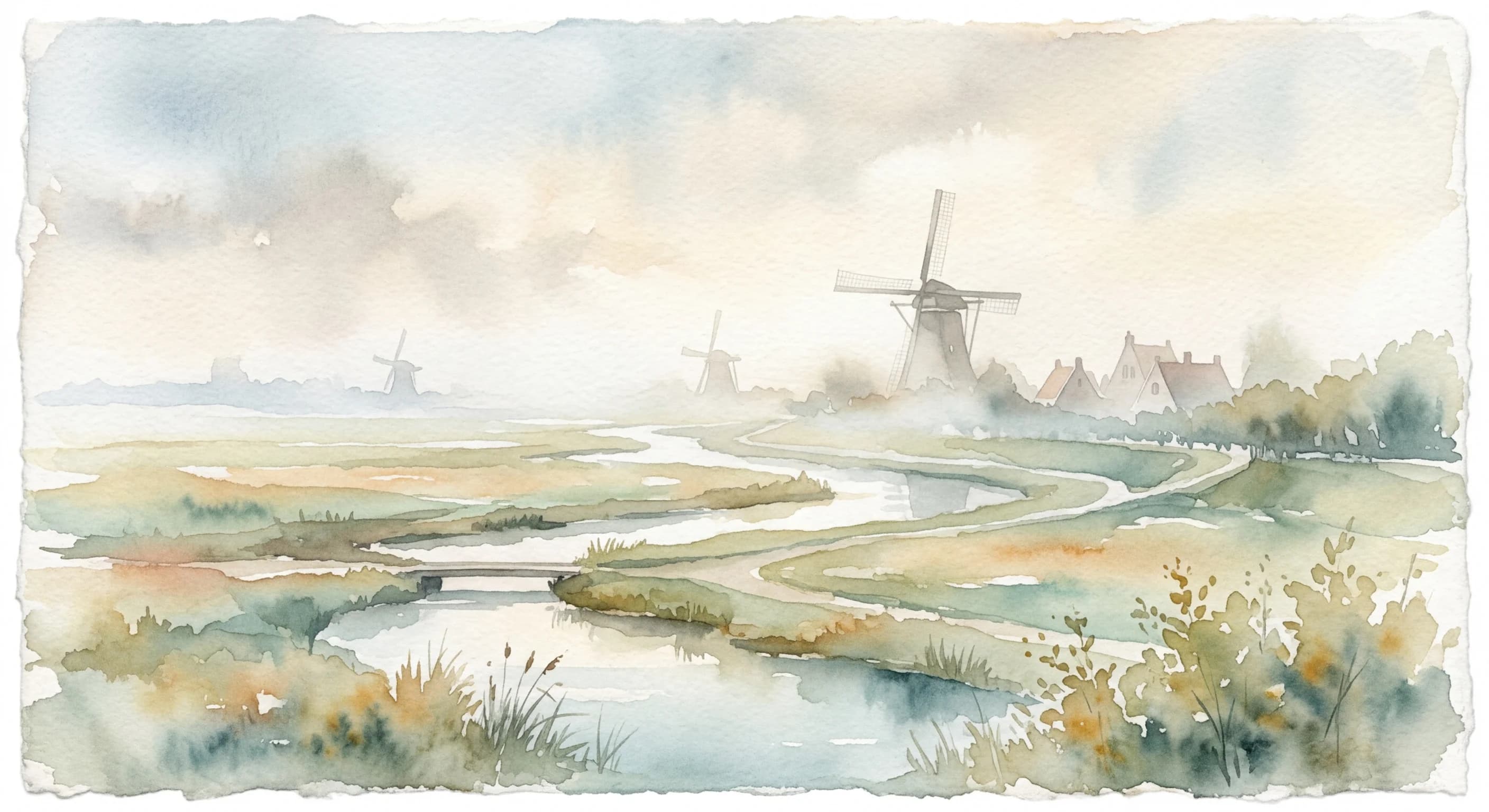
Poldermodel
/POHL-duh-model/
Meaning
The Poldermodel is the quintessential Dutch art of achieving societal harmony through relentless, often painstaking, consensus-building. It describes a unique socio-economic system where government, employers' organizations, and trade unions, known as the 'social partners,' engage in continuous, tripartite dialogue and negotiation. This collaborative dance aims to forge agreements on everything from wages and working conditions to broad economic policy, meticulously balancing economic vitality with robust social welfare, even if it means sacrificing speed for widespread acceptance.
Literal Translation
Polder model
The Story Behind the Word
The Poldermodel's roots are deeply intertwined with the Netherlands' physical geography and historical necessity. Living in a low-lying delta, the Dutch learned centuries ago that collective action was paramount for survival – building and maintaining dikes required universal cooperation, transcending individual interests. This 'polder mentality' fostered a pragmatic, non-hierarchical approach to problem-solving, where every voice, no matter how small, has a stake in the outcome. It reflects a cultural aversion to direct confrontation and a profound belief that sustainable solutions emerge from broad agreement, valuing stability and long-term societal cohesion over quick, divisive decisions. This mindset permeates Dutch society, from national policy to local community initiatives, proving that even fundamental disagreements can be navigated through persistent dialogue.
Experience It
Wage Negotiation Success
After months of intense discussions, representatives from the national trade unions, major employer federations, and the Ministry of Social Affairs finally emerge with a new collective labor agreement. Though neither side got everything they wanted, the negotiated compromise, a testament to the Poldermodel, provides a stable framework for the next three years, averting strikes and ensuring economic predictability.
Climate Policy Debate
A parliamentary committee is drafting new climate legislation. Rather than dictating terms, they invite environmental NGOs, industrial leaders, agricultural associations, and energy companies to a series of roundtables. The resulting policy, while perhaps not the most radical, gains broad societal support because all key stakeholders felt heard and contributed to its formation, embodying the Poldermodel's inclusive spirit.
The Deeper Meaning
The Poldermodel embodies a profound philosophy of pragmatic solidarity and collective responsibility. It suggests that true progress isn't achieved through adversarial battles or top-down decrees, but through the patient, often arduous, process of seeking common ground. It reflects a deep-seated belief in the power of dialogue and compromise to build a resilient society, where individual prosperity is inextricably linked to the well-being of the collective, emphasizing stability and social cohesion over radical change.
Did You Know?
The term 'Poldermodel' only gained widespread recognition in the 1990s, after the 'Wassenaar Agreement' of 1982, which involved concessions from both unions and employers, was credited with revitalizing the Dutch economy.
How It's Used
Used to describe the Dutch socio-economic model, particularly in discussions about labor relations, economic policy, and political negotiation.