Rire dans sa barbe
/REER DAHN SAHN BARB/
Meaning
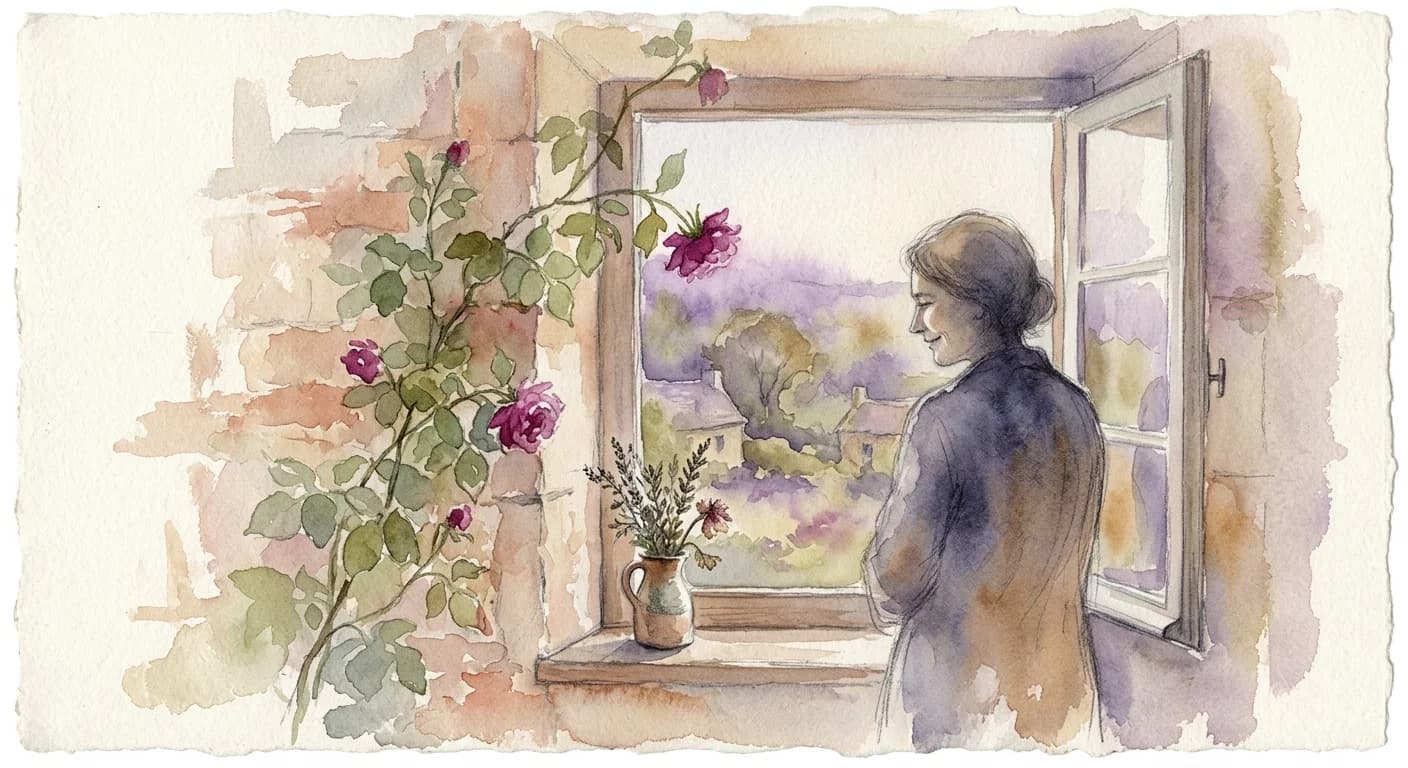
This phrase captures the subtle, often private amusement one feels when witnessing a foolish or ironic situation unfold, but choosing not to express it outwardly. It's the silent chuckle, the suppressed giggle that dances behind a closed mouth, perhaps accompanied by a slight twinkle in the eye. It speaks to a certain social grace or perhaps a touch of mischievousness, acknowledging the humor without disrupting the scene or revealing one's own amusement to others. This nuanced expression of inner mirth is difficult to convey directly in English, which often requires more explicit descriptions of outward laughter.
Literal Translation
To laugh in one's beard
The Story Behind the Word
The concept of 'rire dans sa barbe' is deeply rooted in French social etiquette and a historical appreciation for discretion and wit. In a society that values observation and intellectual humor, this phrase reflects a cultural inclination towards subtle expressions and an understanding that not all amusement needs to be loudly declared. It also hints at a certain intellectual superiority, where one's private amusement stems from a keen perception of others' follies, a common theme in French satire from Molière to modern caricaturists. The 'beard' itself evokes an image of an older, wiser, perhaps patriarchal figure, observing the world with a knowing, understated amusement.
Experience It
The Pompous Orator
During a particularly long-winded and self-important speech, Jean-Pierre caught the eye of his colleague. As the speaker fumbled a key statistic, Jean-Pierre merely lowered his gaze slightly, a barely perceptible twitch at the corner of his mouth – he was clearly 'rire dans sa barbe'.
Unaware Fashion Faux Pas
At a chic Parisian café, a tourist walked by wearing a mismatched outfit that defied all fashion norms. Madame Dubois, sipping her espresso, simply raised an eyebrow, a flicker of amusement in her eyes, choosing to 'rire dans sa barbe' rather than cause a scene.
The Deeper Meaning
This phrase reveals a worldview that values internal reflection and a nuanced understanding of social dynamics. It suggests that true wit lies not just in perceiving humor, but in the self-control to internalize it, maintaining decorum while privately savoring the absurdity of life. It speaks to a subtle, almost intellectual form of pleasure derived from observation.
Did You Know?
While literally 'to laugh in one's beard,' the phrase is used regardless of whether the person actually has a beard, highlighting its metaphorical nature for suppressed, private amusement.
How It's Used
Used when someone finds something amusing but chooses to conceal their laughter, often out of politeness, discretion, or a sense of superiority.