Vazduh
/VAZ-dooh/
Meaning
Beyond merely 'air,' "Vazduh" encapsulates the palpable essence and character of an environment, whether physical or emotional. It describes the invisible yet deeply felt quality that defines a space or moment, from the invigorating crispness of mountain air to the heavy, expectant silence before a storm. It's the intangible 'feel' that shapes our perception, influencing mood and imbuing a place with its unique spirit, making it integral to understanding the 'vibe' of a situation or locale.
Literal Translation
air
The Story Behind the Word
The concept of "Vazduh" in Serbian culture extends beyond a simple atmospheric condition, touching upon a holistic perception of well-being and environment. In a region where history has often been turbulent and connection to land deeply spiritual, the 'vazduh' of a place can carry the weight of generations, memories, and collective experience. It reflects a worldview where the environment is not just a backdrop but an active participant in human experience, subtly influencing health, mood, and even destiny. The phrase 'change of vazduh' (promena vazduha) often refers to a physical relocation for health or mental refreshment, highlighting the belief in the profound impact of one's surroundings. This emphasis on the ambient quality reveals a culture attuned to the subtle, invisible forces that shape daily life and personal well-being.
Experience It
Village Morning Vazduh
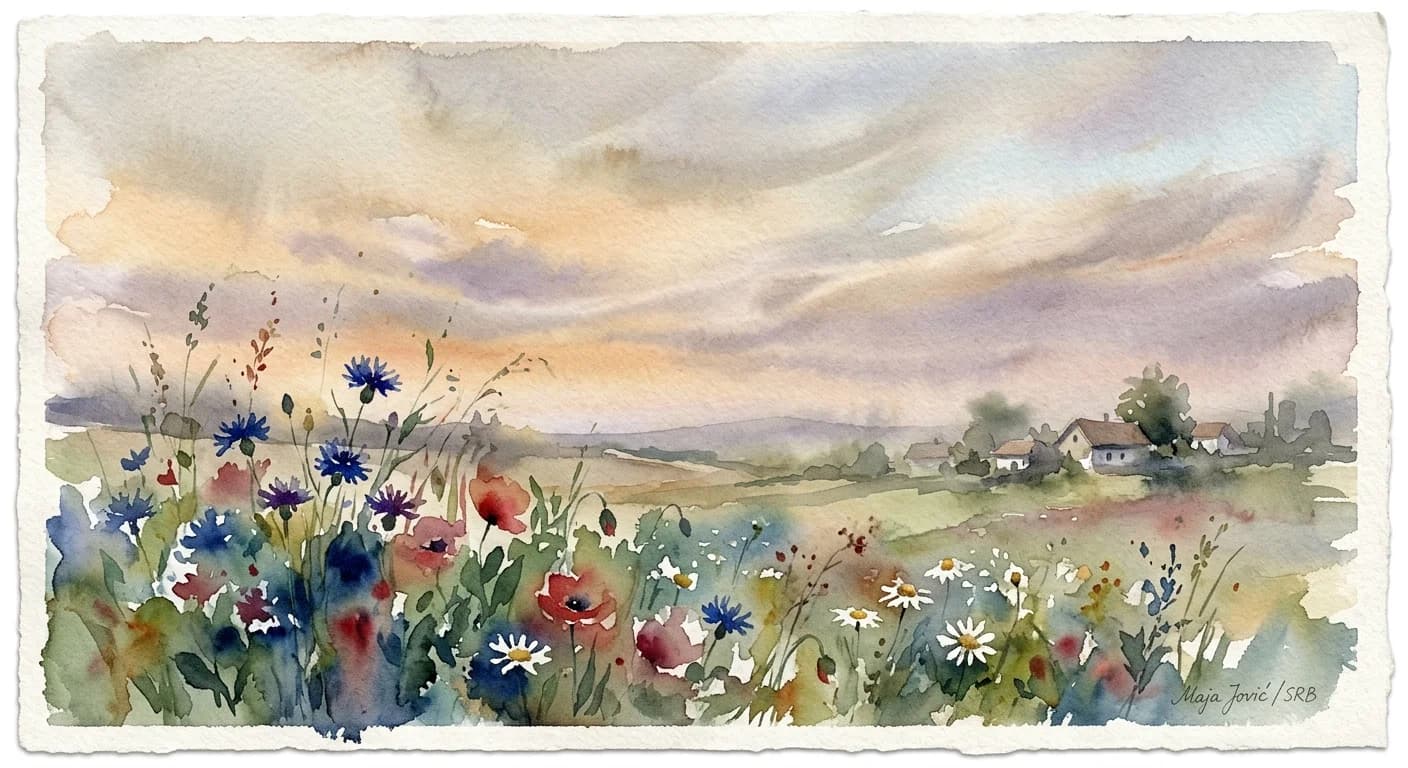
Waking up in her grandmother's village, Ana inhaled deeply. The 'vazduh' here was different – clean, scented with woodsmoke and damp earth, carrying the distant sound of church bells. It immediately brought a sense of peace and nostalgia, a stark contrast to the city's hurried energy.
Tense Meeting Vazduh
As the director entered the room, the 'vazduh' immediately shifted. It became heavy, charged with unspoken tension and apprehension. Every word felt measured, every glance scrutinised, reflecting the difficult decisions that lay ahead for the team.
The Deeper Meaning
The word "Vazduh" reveals a philosophical inclination towards an interconnectedness between humans and their environment. It suggests that the 'spirit' of a place is not merely an abstract concept but a tangible, breathable quality that actively influences human experience and emotion. This holistic view implies that true well-being is deeply intertwined with the quality of one's surroundings, recognizing the subtle yet profound impact of the unseen on the felt reality.
Did You Know?
The Serbian phrase 'nema vazduha' (there's no air) can be used metaphorically to describe a claustrophobic or suffocating social situation, not just a physical lack of oxygen.
How It's Used
Used to describe the general atmosphere of a place, the quality of the air, or the mood of a situation. It can be used literally to talk about the air itself, or metaphorically to describe the 'vibe' of a place or event.