Whanaungatanga
/fah-nah-oo-nga-TAHN-gah/
Meaning
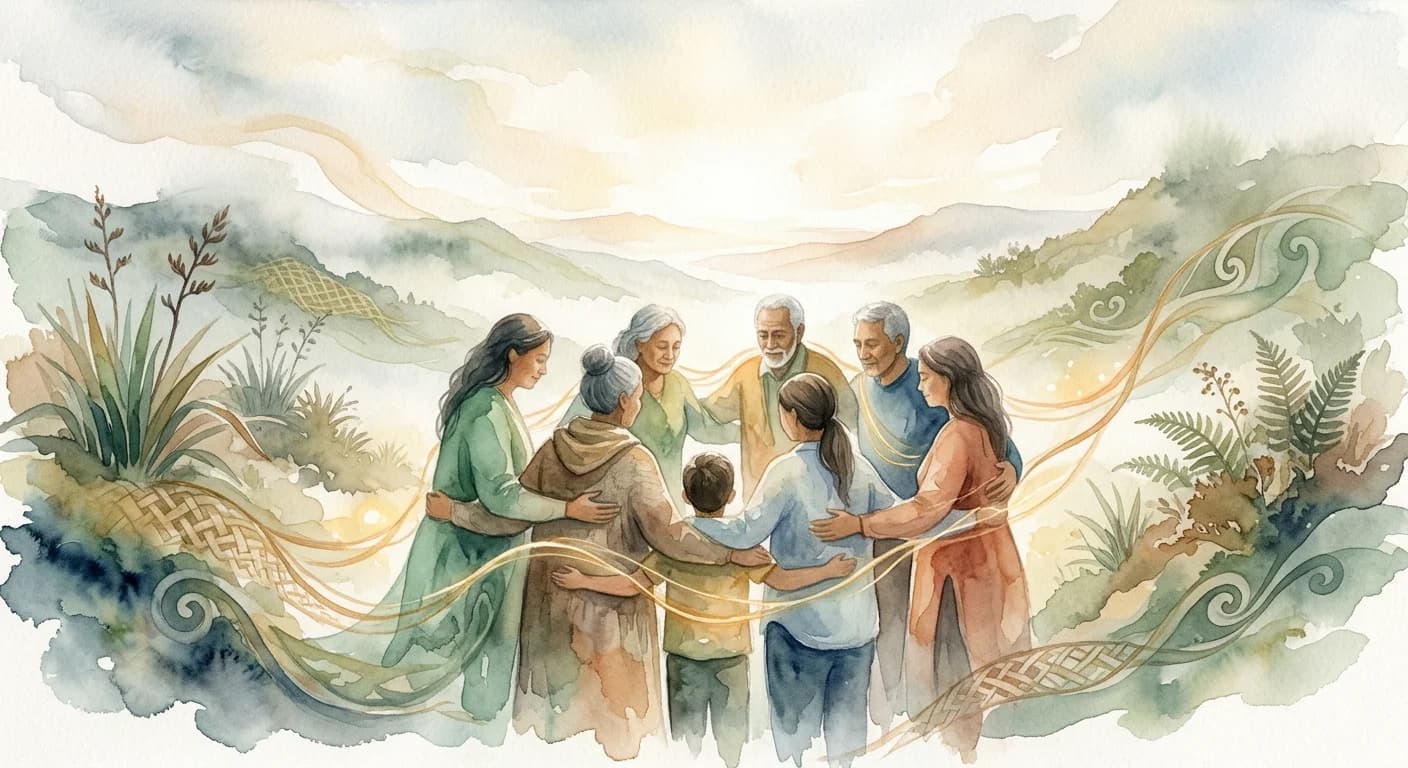
Whanaungatanga is the lifeblood of Māori society, a dynamic principle of kinship that weaves individuals into an intricate tapestry of relationships. It extends far beyond immediate family, embracing wider community, ancestral connections, and even the natural world, forging a profound sense of belonging and collective identity. This concept emphasizes the reciprocal responsibilities and mutual support inherent in these bonds, where one's identity and well-being are intrinsically linked to the strength and health of their collective. It is a living, breathing philosophy that shapes interactions and underpins the very fabric of Māori existence.
Literal Translation
Kinship, relationship, family connection
The Story Behind the Word
Whanaungatanga is deeply rooted in Māori cosmological beliefs and societal structure, where whakapapa (genealogy) is paramount, tracing lineage back to creation and linking all living things. This word exists because Māori society traditionally functioned as interconnected hapū (sub-tribes) and iwi (tribes), requiring strong, reciprocal relationships for survival, resource management, and collective defense. It reveals a worldview where individualism is secondary to collective well-being, and personal identity is defined by one's place within this vast network of relationships. The land (whenua) and ancestors are integral to this web, meaning these connections are not just social but spiritual and environmental, emphasizing stewardship and intergenerational responsibility. It's a foundational principle that has endured through colonization, adapting to modern contexts while retaining its core essence.
Experience It
Community Marae Build
A local marae (meeting house) needs renovations. Families from across the region, even those distantly related or simply connected through shared history, arrive with tools and food. The work is shared, meals are communal, and decisions are made collectively, embodying the spirit of whanaungatanga as everyone contributes to the well-being of the shared cultural space.
Supporting a Grieving Family
When a member of an iwi passes away, the entire community mobilizes. Relatives, friends, and even extended community members bring kai (food), offer support, and share stories at the tangihanga (funeral). This collective outpouring of care and shared grief demonstrates whanaungatanga, reinforcing that no one grieves alone.
The Deeper Meaning
This concept reveals a holistic worldview where existence is fundamentally relational and interdependent. It challenges Western notions of atomistic individualism, positing that true identity and well-being are found not in isolation, but in the reciprocal responsibilities and deep connections one shares with others, ancestors, and the natural world. It underscores a philosophy of collective flourishing over individual gain, where the strength of the whole empowers each part.
Did You Know?
Whanaungatanga isn't just about people; it extends to the land (whenua) and even inanimate objects, recognizing their intrinsic connection and role within the wider network of relationships.
How It's Used
Used to describe the concept of kinship, family, and community within Māori culture, emphasizing the importance of relationships and shared identity.