Lúchdadh
/LOO-khuh-thuhk/
Meaning
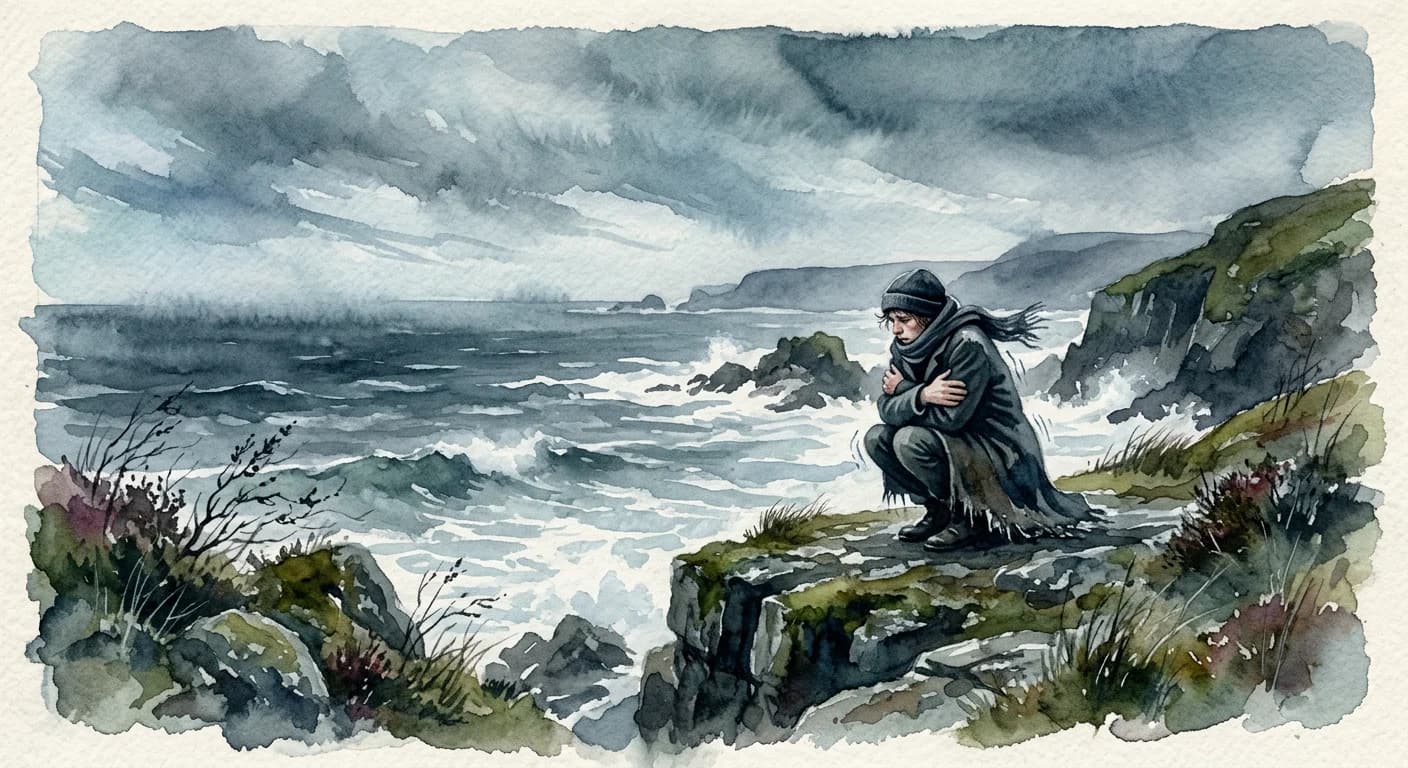
Lúchdadh encapsulates the profound, almost aching sensation of a sudden, penetrating cold that seems to bypass clothing and burrow deep into one's very bones. It's an invasive chill, often married with dampness or a biting wind, that provokes involuntary shivers and a deep-seated discomfort. More than mere coldness, lúchdadh is a visceral experience, reflecting the body's raw, instinctive protest against the harsh, untamed elements of the Scottish landscape.
Literal Translation
chill, cold
The Story Behind the Word
The existence of 'lúchdadh' in Scottish Gaelic speaks volumes about the intimate relationship between the Highland people and their environment. In a land where weather can shift dramatically within minutes, and dampness is a constant companion, a precise word for this specific type of bone-chilling cold is not a luxury but a necessity for accurate communication and shared experience. It highlights a culture accustomed to enduring and observing nature's raw power, where survival often depended on recognizing and preparing for such conditions. The word reveals a worldview that doesn't just acknowledge the weather but internalizes its effects, making the environment an integral part of daily life and language. It underscores a deep connection to the land and its often-unforgiving climate, shaping both resilience and a unique lexicon.
Experience It
Hill Walk's Sudden Turn
One moment, the sun dappled the glen, the next, a thick mist rolled in, bringing with it a sharp, damp breeze. Despite his waterproofs, a deep lúchdadh settled into Iain's shoulders, making his teeth chatter uncontrollably as he hurried down the path.
Coastal Evening Fishing
The fishing boat swayed gently, but as dusk fell, a cold, cutting wind swept across the water, carrying the sea spray. A profound lúchdadh crept into the fisherman's hands, making them stiff and clumsy as he reeled in his line, despite his thick gloves.
The Deeper Meaning
This word embodies a philosophy of intimate engagement with the natural world, rather than detachment. It suggests that the environment is not merely a backdrop but an active participant in human experience, capable of physically and emotionally penetrating one's being. 'Lúchdadh' reflects a culture that understands and respects nature's power, fostering a sense of resilience and a profound attunement to the subtle, yet impactful, shifts in the elements.
Did You Know?
Did you know that 'lúchdadh' can also refer to the intense cold felt after falling into icy water, highlighting its connection to extreme, sudden temperature drops?
How It's Used
Used to describe a sudden, penetrating, and uncomfortable chill, often associated with damp weather or strong winds in Scotland.