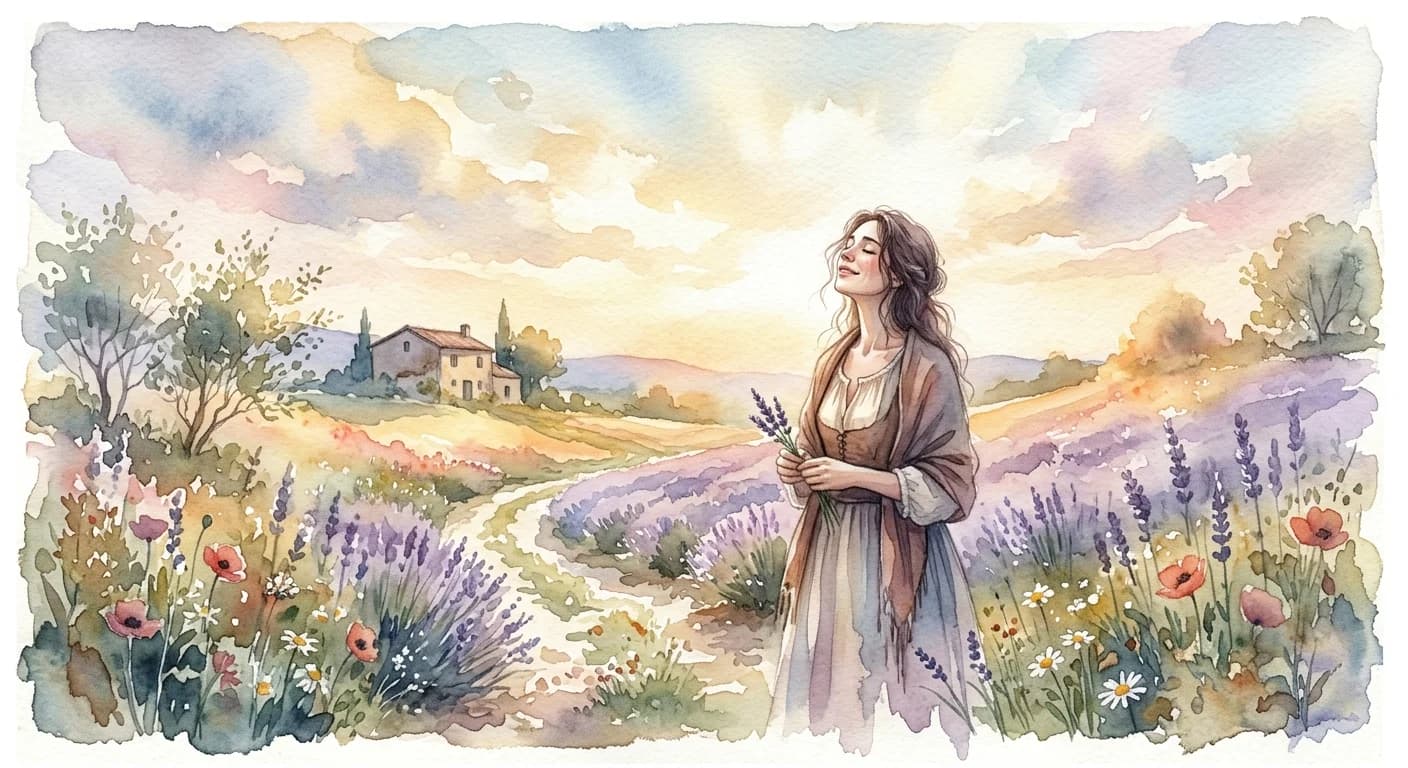
Chantepleurer
/shahn-tuh-plur-AY/
Meaning
Chantepleurer encapsulates the profound, almost cathartic experience of simultaneously laughing and crying, where tears stream down one's face not from sorrow, but from an overwhelming surge of joy or amusement. It's a moment when mirth becomes so intense that it overflows into physical tears, blurring the conventional lines between happiness and sadness. This complex emotional state signifies a complete surrender to the present emotion, often stemming from deep connection, unexpected humor, or a poignant memory that evokes both delight and a touch of tender sentimentality.
Literal Translation
To sing-cry
The Story Behind the Word
The existence of "chantepleurer" in the French lexicon speaks to a culture that appreciates and acknowledges the nuanced, often contradictory, nature of human emotion. French culture, with its rich literary and artistic traditions, frequently explores the subtleties of the human condition, valuing authenticity and emotional depth over simplistic categorizations. This word suggests a societal comfort with emotional complexity, where extreme joy isn't necessarily a stoic, dry experience, but one that can manifest with the same physical expression as profound sadness. It reveals a worldview that doesn't shy away from the messy, intertwined aspects of feeling, recognizing that life's most impactful moments often blend seemingly opposite sensations into a singular, powerful experience. It highlights a certain romanticism in the French sensibility, where emotions are felt fully, without restraint, and their paradoxical expressions are embraced as part of the human tapestry.
Experience It
Wedding Vows
During her best friend's wedding, as the groom recited his heartfelt, slightly goofy vows, Marie found herself chantepleurer. Tears of pure happiness and laughter streamed down her face, a testament to years of shared memories and the overwhelming joy of the moment.
Reunion Laughter
Catching up with old college friends, one of them recounted a particularly embarrassing, hilarious anecdote from their youth. The entire group began to chantepleurer, wiping tears from their eyes as their bellies ached from uncontrolled laughter, reliving the golden days.
The Deeper Meaning
Chantepleurer offers a glimpse into a philosophy that embraces emotional paradox, suggesting that the human experience is rarely black and white. It challenges the notion that emotions must be neatly categorized, instead highlighting the profound interconnectedness of joy and sorrow, laughter and tears. This word posits that true emotional depth often lies in these liminal spaces, where seemingly opposite feelings converge to create a richer, more authentic experience of life.
Did You Know?
The word's literal components, 'chanter' (to sing) and 'pleurer' (to cry), hint at an almost musical or poetic quality to this emotional outpouring, suggesting a harmonious blend rather than a conflict of feelings.
How It's Used
Used to describe a moment of intense, simultaneous laughter and tears, often brought on by extreme joy, a funny memory, or a poignant, humorous situation.