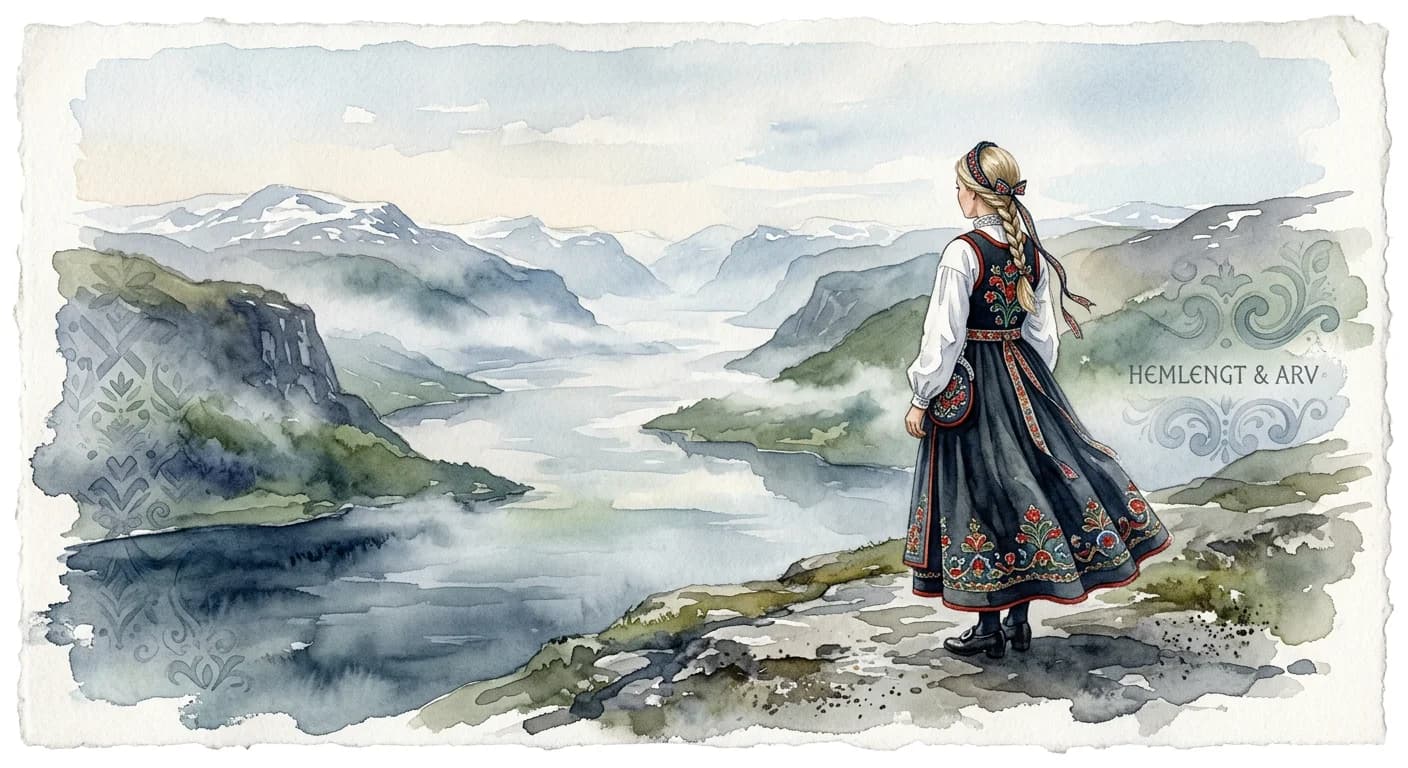
Bunad
/BOO-nahd/
Meaning
A Bunad is far more than a costume; it's a living tapestry woven from threads of Norwegian history, identity, and profound regional pride. Each meticulously handcrafted Bunad serves as a wearable emblem, eloquently narrating the unique heritage, dramatic landscapes, and intricate artistry of its specific district. Donning a Bunad is a powerful, almost sacred, act of belonging, universally reserved for the most significant national holidays, cherished celebrations, and pivotal community gatherings, thereby forging a palpable link to shared history and an enduring sense of cultural continuity.
Literal Translation
Traditional folk costume
The Story Behind the Word
The Bunad's resurgence and standardization in the late 19th and early 20th centuries were deeply intertwined with Norwegian romantic nationalism and the quest for a distinct national identity separate from Danish and Swedish influences. It became a powerful symbol of independence and unity, consciously elevating folk traditions to national status. The existence of the Bunad reveals a society that deeply values its roots, local identity, and the tangible preservation of history. It reflects a worldview where individual identity is often reinforced by collective heritage, and where expressing pride in one's origins is a celebrated act, particularly in a country with such diverse regional topographies and traditions.
Experience It
May 17th Parade
Little Ingrid, clutching her Norwegian flag, beams as her grandmother adjusts the silver buckles on her Vest-Agder Bunad. Walking in the Constitution Day parade, she feels a profound connection to her family's history and the hundreds of other Norwegians proudly displaying their regional heritage alongside her.
Wedding Day Heirloom
As Elara prepared for her wedding, she carefully put on her great-grandmother's intricately embroidered Telemark Bunad. The weight of the fabric and the glint of the silver jewelry felt like a warm embrace from generations past, signifying not just a marriage, but a continuation of family legacy.
The Deeper Meaning
The Bunad embodies the philosophy of 'stedstilhørighet' – belonging to a place. It articulates a worldview where identity is not solely individual but deeply rooted in geographical and ancestral heritage. It suggests that true self-expression often involves honoring collective history and that cultural continuity is a deliberate, cherished act, not merely a passive inheritance.
Did You Know?
There are over 450 officially recognized Bunad variations in Norway, each with specific designs, colors, and accessories that denote the wearer's ancestral region or even specific valleys and parishes.
How It's Used
Worn during national holidays like Constitution Day (May 17th), weddings, confirmations, and other significant cultural events.