U.
HomeRegionsLanguagesEmotionsCollections
Find Your Word

“The limits of my language mean the limits of my world.”

— Ludwig Wittgenstein, Philosopher

Untranslatable

A curated collection of the world's most beautiful expressions—words that remind us language is humanity's greatest invention.

  • Home
  • Collections
  • Regions
  • Countries
  • Emotions
  • Tags
  • Contexts
  • Finder
  • Europe
  • Asia
  • Americas
  • Africa
  • Middle East
  • About
  • Contact
  • Privacy Policy
  • Terms of Service

2026 © Untranslatable. All rights reserved.

    /
    /
    1. Home
    2. /
    3. Europe
    4. /
    5. Hoselupf
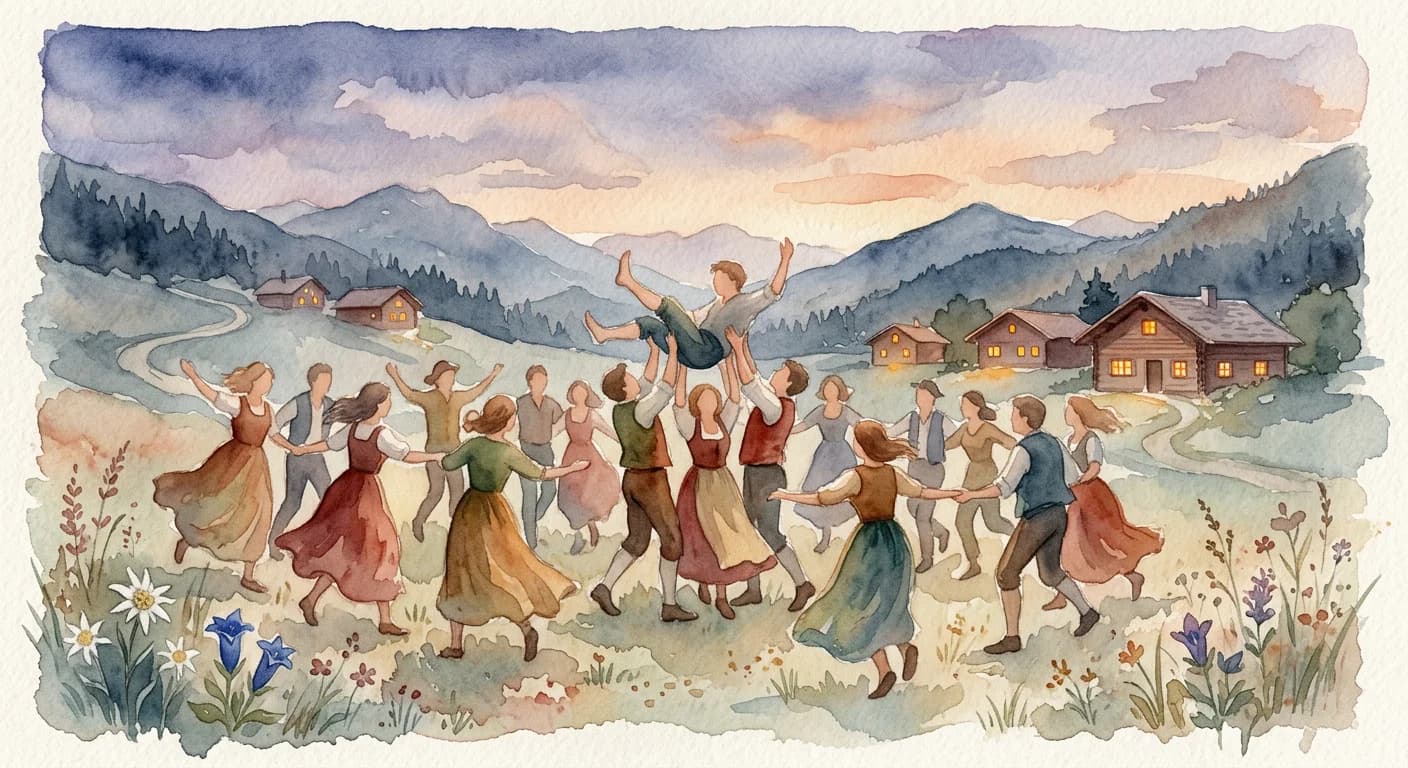
    Artistic representation of Hoselupf
    Swiss German•
    🇨🇭Switzerland

    Hoselupf

    /HO-zel-upf/

    Meaning

    Hoselupf, literally 'trouser lift,' describes a vibrant traditional Swiss folk dance characterized by energetic, often humorous leg movements that playfully involve or mimic lifting one's trousers. More than just a sequence of steps, it embodies a spirit of boisterous rural festivity, community joy, and a deep connection to Swiss alpine heritage. This lively dance is a staple at folk festivals and local gatherings, showcasing a robust, lighthearted aspect of Swiss culture deeply rooted in communal celebration and uninhibited expression.

    Literal Translation

    trouser lift

    The Story Behind the Word

    The 'Hoselupf' is intrinsically linked to Switzerland's agrarian past and the celebratory customs of its rural communities, particularly in the alpine and pre-alpine regions. It emerged from a culture where physical exertion was part of daily life, and celebrations were opportunities for vigorous, uninhibited expression after hard work. The dance reflects a pragmatic yet joyful worldview, where humor and physical prowess intertwine. It's not about elegant, refined movements but rather a boisterous, down-to-earth display of vitality and camaraderie. The 'Hoselupf' reveals a Swiss appreciation for tradition, community cohesion, and a healthy dose of self-deprecating humor, demonstrating how even the most mundane actions (like adjusting trousers) can be transformed into a joyful, shared cultural experience. It signifies a collective release and affirmation of shared identity.

    Experience It

    Alpine Festival Revelry

    At the annual Alpaufzug festival, after the cows were safely in their summer pastures, old Hans grabbed young Fritz's hand. 'Come on, boy! Time for a proper Hoselupf!' he bellowed, kicking his leg high with a laugh, inviting everyone to join the infectious, joyful dance.

    Wedding Celebration Fun

    During the wedding reception in the village hall, the band struck up a lively tune. Soon, the dance floor was filled with guests, young and old, all attempting their best Hoselupf. Laughter erupted as one uncle playfully 'lifted' his imaginary trousers with an extra high kick, much to the delight of the bride and groom.

    The Deeper Meaning

    The 'Hoselupf' embodies a philosophy of joy found in simplicity, shared experience, and unpretentious vitality. It reflects a culture that values genuine, earthy expression over formal elegance, and communal bonding through playful physical engagement. It suggests that true celebration comes from within a community, often through boisterous, lighthearted traditions that connect people to their heritage and to each other in an immediate, joyful way.

    Did You Know?

    While 'Hoselupf' refers to the dance, the term 'Hosenlupf' (with an 'n') is also used in Swiss German to mean a wrestling match, specifically Schwingen, where wrestlers grab each other's trousers!

    How It's Used

    Used to refer to the traditional Swiss folk dance involving energetic leg movements, often performed at folk festivals and social gatherings.

    Emotions
    belonging,joy,warmth
    Contexts
    celebration,dining,seasons
    🇨🇭Switzerland

    by Sofia Rossi·Written Mar 14, 2026·Updated Apr 3, 2026

    Related Words

    Explore more
    HyggeDanish

    Hygge is more than mere coziness; it's a holistic embrace of comfort, warmth, and belonging that nourishes the soul. It describes the intentional creation of an intimate atmosphere where simple pleasures, genuine connection, and mindful presence converge, fostering a profound sense of contentment and well-being. It's about finding joy and peace in the small, everyday moments, often shared with loved ones.

    SaudadePortuguese

    Saudade encapsulates a profound, melancholic longing for something or someone cherished that is absent, often with the bittersweet knowledge that it may never return. It's a deep emotional state tinged with nostalgia, evoking a sense of loss for past experiences, places, or people, yet also holding a tender appreciation for the beauty of what once was. This yearning is not merely sadness, but a complex tapestry of desire, memory, and a poignant acceptance of absence, holding the beloved in a warm, persistent embrace within the heart.

    GezelligDutch

    Gezellig encapsulates a profound sense of warmth, belonging, and convivial comfort, extending beyond mere coziness to embrace the social and emotional atmosphere. It's the feeling of being truly at ease, surrounded by good company, laughter, and a shared sense of contentment. This untranslatable term describes not just a physical space, but a holistic experience where time seems to slow down, fostering genuine connection and a deep sense of well-being.

    Dolce far nienteItalian

    Dolce far niente captures the profound joy and effortless pleasure derived from simply existing without obligation or purpose. It's the art of savoring moments of pure, unadulterated idleness – lying in the sun, watching the clouds drift, or enjoying a leisurely coffee – not as a break from work, but as a valuable state in itself. This 'sweetness of doing nothing' is a conscious embrace of stillness and contentment, allowing the soul to breathe and the senses to fully engage with the present.