Padu
/PA-doo/
Meaning
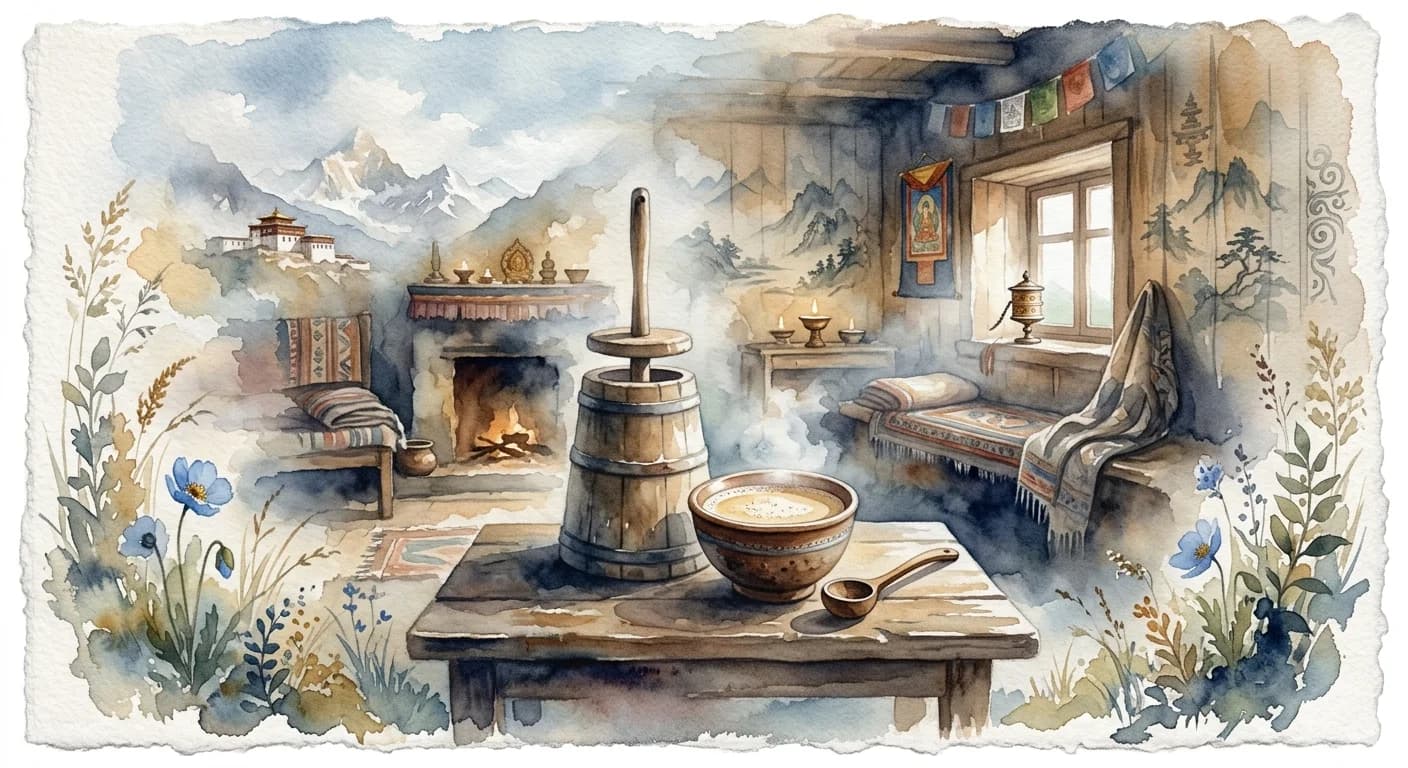
Padu is the lifeblood of Tibetan culture, a rich, savory tea traditionally churned with yak butter and salt. Far more than a simple beverage, it embodies hospitality, offering profound warmth and vital sustenance against the formidable Himalayan cold. Its preparation is a cherished ritual, connecting individuals to their ancestral heritage and the rugged environment, while its offering to guests symbolizes deep respect, welcome, and the forging of communal bonds.
Literal Translation
Butter tea
The Story Behind the Word
Padu's existence is deeply rooted in the practical necessities and spiritual life of the Tibetan people. Historically, the harsh, high-altitude environment of the Tibetan Plateau demanded a high-calorie, energy-rich diet, and padu, with its significant fat content from yak butter, perfectly fulfills this need, providing essential warmth and sustenance. Beyond its nutritional value, padu is interwoven with Tibetan Buddhist philosophy, symbolizing impermanence and the cyclical nature of existence through its daily preparation and consumption. It fosters a sense of community and interdependence; sharing padu is a fundamental act of generosity and welcome, reflecting the interconnectedness central to Tibetan social structures. The ritual of its making, often in a wooden 'dongmo' churn, is a mindful act, connecting present generations to centuries of tradition and the very land that sustains them. It reveals a worldview where sustenance, community, and tradition are inextricably linked.
Experience It
Welcome to the tent
After a long journey across the high plains, a traveler is ushered into a nomad's yak-hair tent. The first gesture of welcome is a steaming bowl of padu, offered with both hands, its warmth instantly dispelling the chill and the host's silent invitation to rest and share stories.
Morning Ritual
As dawn breaks over the monastery, the monks begin their day not with coffee, but with padu. The rich, salty tea fuels their meditations and prayers, providing the necessary energy for their spiritual practices and connecting them to the daily rhythm of their ancestors.
The Deeper Meaning
Padu embodies the Tibetan philosophy of 'sufficiency' and 'interconnectedness.' It highlights how simple, natural resources (yak, tea leaves) are transformed through mindful effort into a life-sustaining element, fostering community and survival. It underscores the profound link between sustenance, hospitality, and the harsh yet beautiful environment, revealing a world where daily rituals are deeply spiritual acts.
Did You Know?
Tibetans often drink dozens of cups of Padu a day! The high-calorie, high-fat content is essential for energy and warmth in the extreme altitude and cold climate.
How It's Used
This word is used to refer to the traditional Tibetan butter tea, a staple drink in Tibetan culture, often offered to guests or consumed throughout the day.