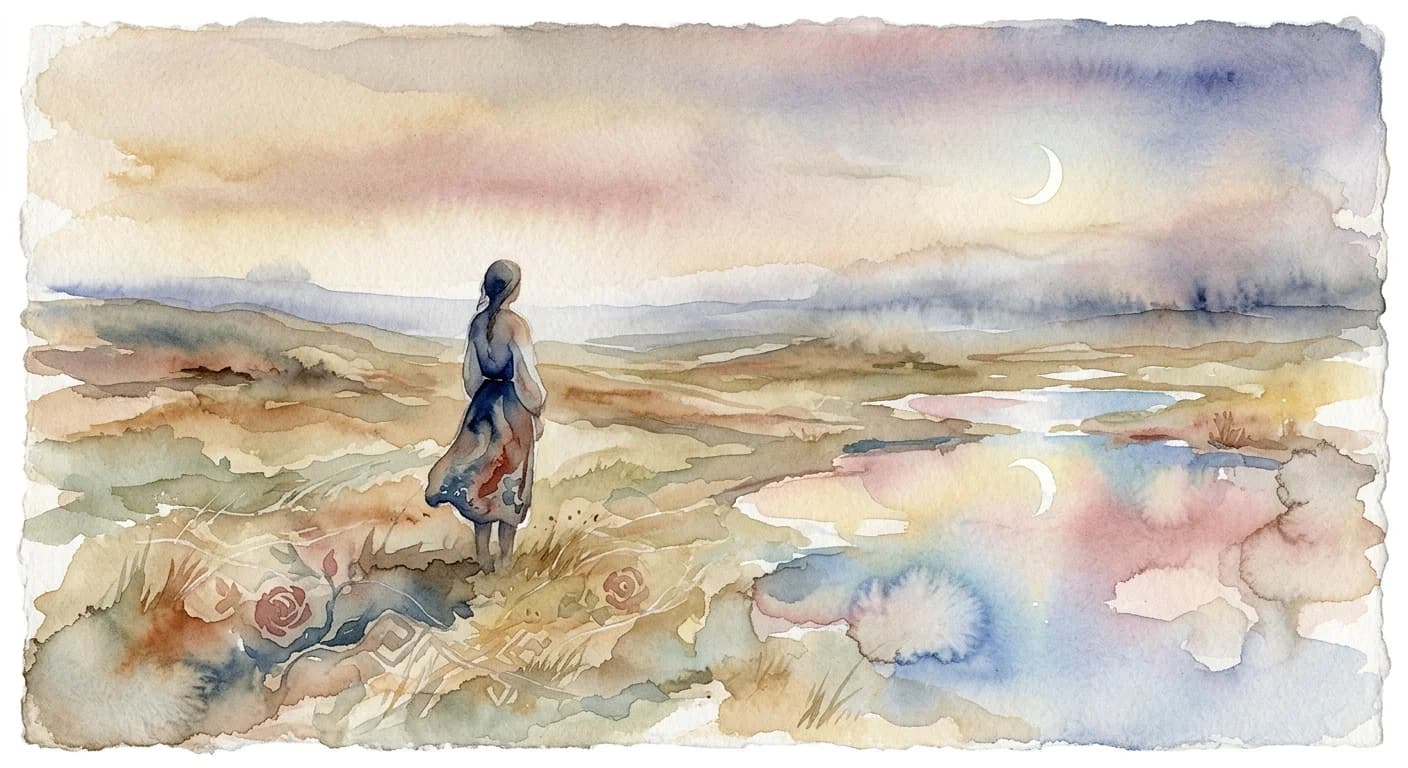
Pragnienie
/PRAHG-nyeh-nyeh/
Meaning
"Pragnienie" transcends simple thirst or desire, embodying a profound, almost primal yearning that resonates deep within. It signifies an intense, often aching craving for something essential, whether a physical necessity like water after a long journey or an abstract longing for connection, purpose, or a return to a cherished homeland. This word captures a potent, visceral hunger, suggesting an intrinsic need that, when unfulfilled, leaves an undeniable void in one's existence, driving a persistent search for completion.
Literal Translation
thirst, craving, yearning
The Story Behind the Word
The concept of "pragnienie" in Polish culture is deeply intertwined with historical experiences of struggle, loss, and resilience. Poland's turbulent past, marked by partitions, wars, and periods of occupation, fostered a collective consciousness of longing – for freedom, sovereignty, and the preservation of national identity. This constant striving against adversity instilled a profound appreciation for what is yearned for, often elevating it to a spiritual level. "Pragnienie" thus reflects a national psyche accustomed to enduring hardship while maintaining an unwavering hope and deep-seated desire for a better future, whether personal or collective. It speaks to a profound capacity for enduring hope and a romanticized view of striving for ideals.
Experience It
A Wanderer's Thirst
After days lost in the arid mountains, Jan felt a crushing "pragnienie" not just for water, but for the cool, clear stream he remembered from his childhood village. Each step was fueled by this intense, almost hallucinatory craving for liquid and home.
Artist's Creative Hunger
Ewa, a painter, stared at her blank canvas, a powerful "pragnienie" for expression bubbling within her. It wasn't merely a wish to paint, but a burning need to translate the tumultuous emotions of her soul into form and color, a hunger that demanded release.
What Gets Lost in Translation
English speakers might mistake "pragnienie" as merely a strong desire or a physical thirst. However, it carries a much deeper emotional and often existential weight. It's less about simply wanting something and more about a fundamental need or an aching void that demands fulfillment, often connected to one's core being or identity, not just fleeting wants.
Across Cultures
While English uses "thirst" or "yearning," neither fully captures the visceral depth of "pragnienie." German's "Sehnsucht" comes close in expressing a deep, often melancholic longing, particularly for an ideal or a distant place, sharing a similar emotional intensity and spiritual dimension. Spanish's "ansia" can convey a strong, sometimes anxious, desire or craving.
The Deeper Meaning
"Pragnienie" reveals a worldview that acknowledges the profound depths of human longing as a driving force. It suggests that identity and purpose are often forged in the crucible of what we intensely crave but do not yet possess. This word underscores a philosophy where the unfulfilled desire is not merely a lack, but a powerful motivator and a fundamental aspect of the human condition, hinting at a constant striving for completeness or transcendence.
Did You Know?
Did you know that "pragnienie" is often used in Polish poetry and songs to describe an unfulfilled love or a deep, melancholic longing for something unattainable, adding a layer of poignant beauty to the emotion?
How It's Used
Used to describe a strong desire or craving, whether it be for water when extremely thirsty, or for something more abstract like love, success, or a homeland.