Saeta
/SAH-eh-tah/
Meaning
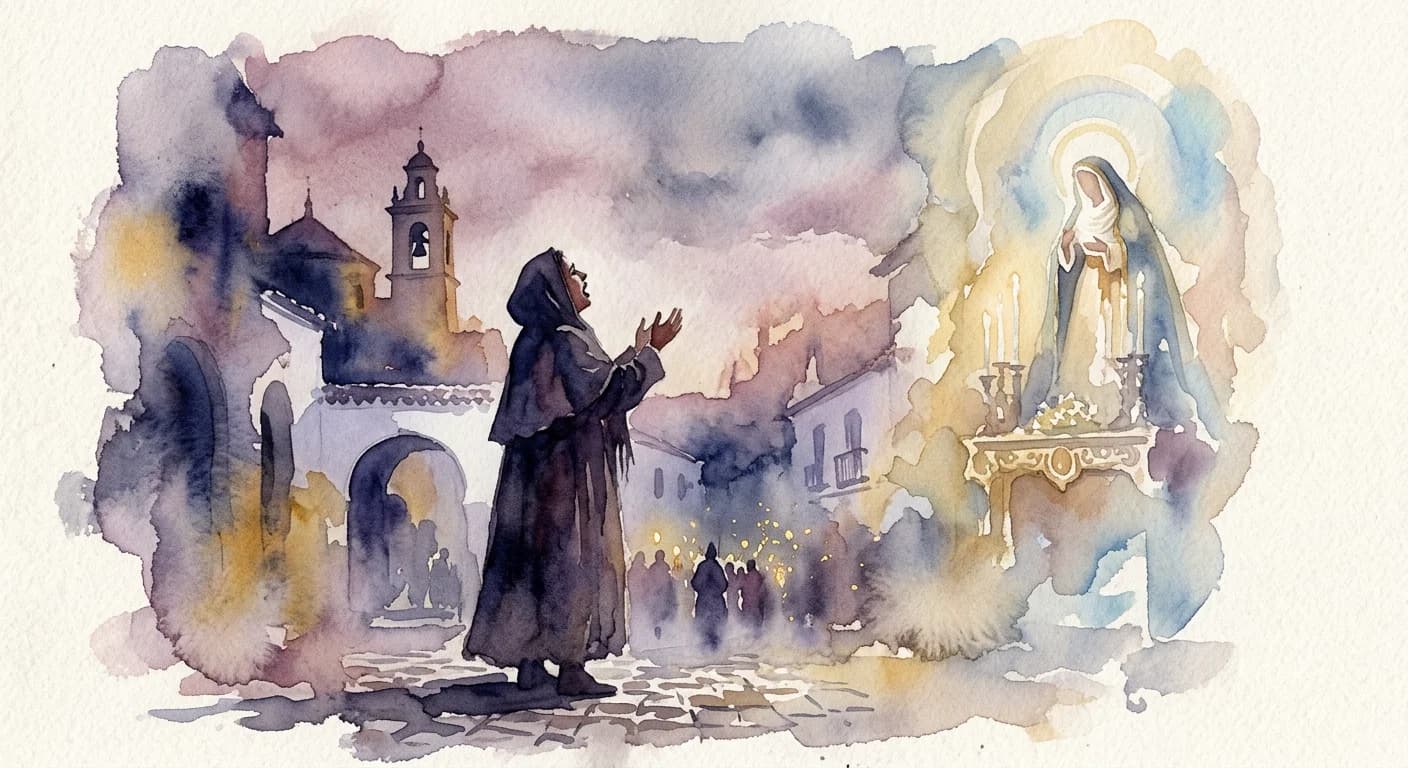
A "saeta" is a raw, spontaneous, and deeply emotional flamenco-style chant, often improvised, sung with profound passion during the Holy Week processions in Andalusia, Spain. It acts as a piercing, vocal arrow of devotion, sorrow, or longing, directed from a balcony or street corner towards a passing religious icon, most often the Virgin Mary. This intensely personal offering transcends mere performance, forging a visceral connection between singer, icon, and audience in a shared moment of spiritual catharsis and communal grief.
Literal Translation
Arrow
The Story Behind the Word
The "saeta" is deeply embedded in the spiritual and cultural fabric of Andalusia, emerging from a confluence of Catholic devotion and the expressive power of flamenco. Its origins are often traced back to medieval religious chants, Moorish calls to prayer, and Jewish liturgical laments, all fused with the improvisational and emotional intensity of Gypsy flamenco. The word 'saeta' (arrow) perfectly captures its essence: a sudden, direct, and often sharp vocal offering aimed straight at the heart of the sacred image. It reflects a worldview where faith is not just intellectual assent but a deeply felt, often sorrowful, and publicly expressed experience, a direct dialogue between the individual soul and the divine, particularly during the solemnity of Christ's Passion.
Experience It
Midnight Saeta
The Procession of the Macarena moved slowly through the narrow streets of Seville. Suddenly, from a darkened balcony above, an elderly woman's voice, raspy with emotion, cut through the silence. Her saeta, a wail of devotion and sorrow, stopped the entire procession, her gaze fixed solely on the Virgin's sorrowful face, moving many to tears.
Impromptu Offering
A young man, unexpectedly overcome with feeling as the Cristo de los Gitanos passed, stepped forward from the crowd. He closed his eyes, his voice cracking initially, then soaring into a powerful saeta, a raw, spontaneous prayer that seemed to hang in the night air, a testament to his profound faith.
The Deeper Meaning
The "saeta" reveals a profound understanding of faith as an embodied, visceral experience, not merely an intellectual or ritualistic one. It speaks to the human need for direct emotional expression in the face of the sacred, a belief that profound feeling, even agony, can be a form of prayer and connection. It underscores the communal yet deeply personal nature of devotion, where individual suffering and hope are woven into the collective tapestry of faith.
Did You Know?
While often improvised, some saeteros (saeta singers) are legendary figures, their voices capable of moving thousands. The saeta is so powerful that a single one can halt an entire Holy Week procession for several minutes.
How It's Used
Sung spontaneously during religious processions, especially during Holy Week in Andalusia, Spain, often as a personal devotional offering.