U.
HomeRegionsLanguagesEmotionsCollections
Find Your Word

“The limits of my language mean the limits of my world.”

— Ludwig Wittgenstein, Philosopher

Untranslatable

A curated collection of the world's most beautiful expressions—words that remind us language is humanity's greatest invention.

  • Home
  • Collections
  • Regions
  • Countries
  • Emotions
  • Tags
  • Contexts
  • Finder
  • Europe
  • Asia
  • Americas
  • Africa
  • Middle East
  • About
  • Contact
  • Privacy Policy
  • Terms of Service

2026 © Untranslatable. All rights reserved.

    /
    /
    1. Home
    2. /
    3. Europe
    4. /
    5. Escangalhar
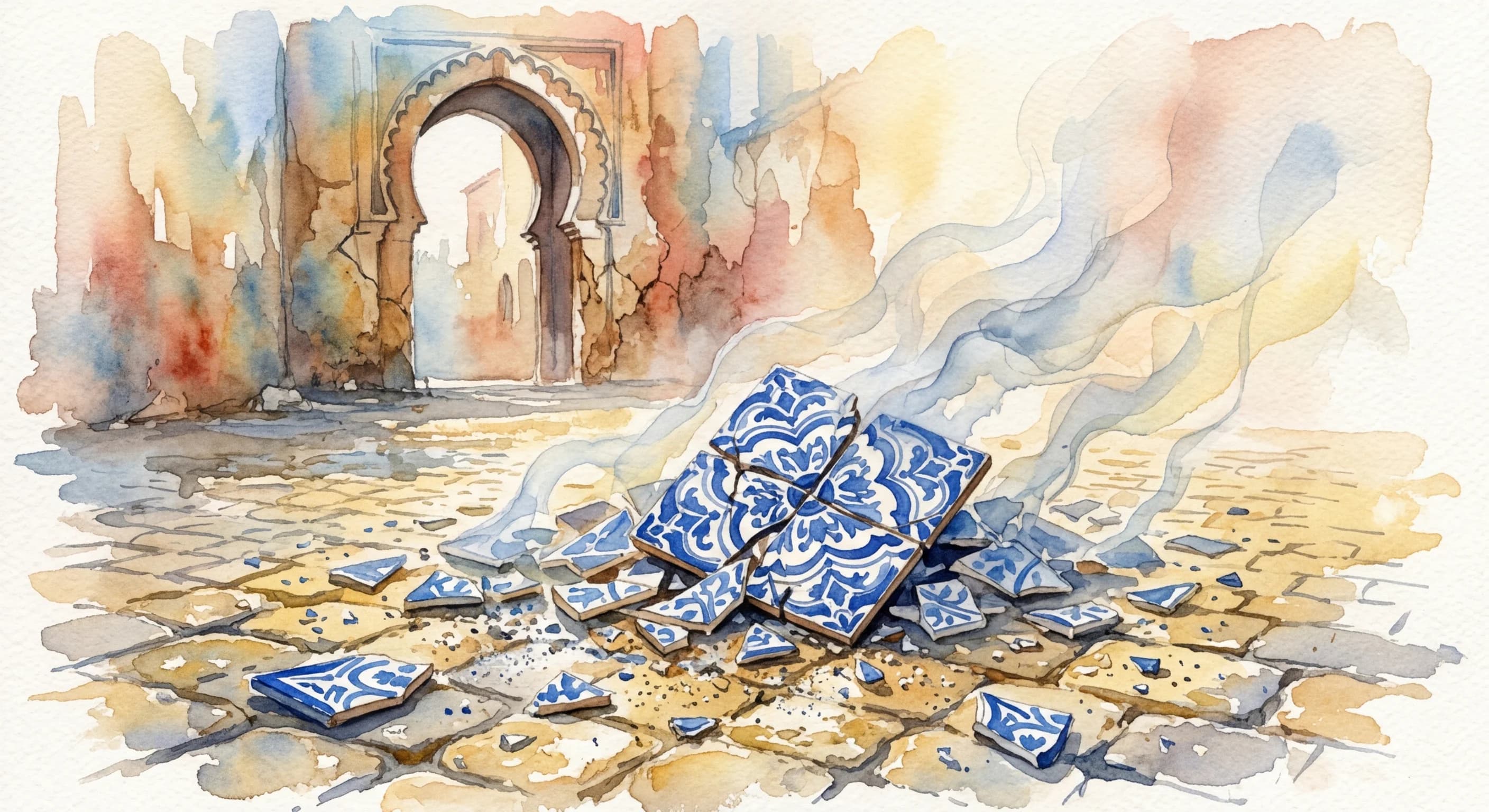
    Artistic representation of Escangalhar
    Portuguese•
    🇦🇴Angola🇧🇷Brazil🇲🇿Mozambique🇵🇹Portugal

    Escangalhar

    /es-can-ga-LYAR/

    Meaning

    To "escangalhar" signifies a state of utter and irreversible destruction, where something is not merely broken but completely dismantled, shattered beyond any hope of repair. It evokes the image of an object or system collapsing into a chaotic mess, often implying a forceful or perhaps even comical act of ruination. This word captures the essence of irreparable damage, where the integrity of the item is utterly compromised, leaving it in a state of disarray and uselessness.

    Literal Translation

    To break apart, to shatter

    The Story Behind the Word

    The existence of "escangalhar" in Portuguese culture reflects a nuanced appreciation for the spectrum of destruction, distinguishing between simple breakage and total, chaotic ruination. It speaks to a society that understands the difference between a fixable problem and an absolute disaster, often with a touch of fatalism or dark humor. The word's emphasis on irreversible damage suggests a recognition of life's unpredictability and the suddenness with which things can fall apart. It embodies a pragmatic, sometimes resigned, view of material possessions and even abstract situations, acknowledging that some things are simply beyond repair, leading to the colloquial phrase 'está tudo escangalhado' to describe a situation gone utterly pear-shaped.

    Experience It

    Machine Breakdown

    The old washing machine, after years of faithful service, finally decided to escangalhar mid-cycle. Water and suds gushed out, gears ground to a halt, and now it sat a mangled, useless heap in the laundry room.

    Project Failure

    After months of work, the entire project plan began to escangalhar when the main investor pulled out. All the meticulous planning and effort crumbled, leaving the team in disarray and their efforts completely wasted.

    The Deeper Meaning

    The word "escangalhar" embodies a subtle acceptance of entropy and the ephemeral nature of order. It highlights a worldview that acknowledges the inevitability of decay and the often-chaotic forces that lead to irreversible breakdown. It suggests a certain Portuguese pragmatism, recognizing that some things are beyond fixing and that sometimes, all one can do is observe the utter collapse.

    Did You Know?

    While often applied to objects, "escangalhar" can also humorously describe someone who is completely exhausted or 'falling apart' from fatigue, suggesting a breakdown of their personal functioning.

    How It's Used

    Used to describe the complete destruction or breaking of an object, or metaphorically, to describe a situation that has gone terribly wrong and is beyond repair.

    Emotions
    anger,fear,melancholy
    Context
    daily life
    🇦🇴Angola🇧🇷Brazil🇲🇿Mozambique🇵🇹Portugal

    by Anya Petrova·Written Mar 10, 2026·Updated Apr 3, 2026

    Related Words

    Explore more
    HyggeDanish

    Hygge is more than mere coziness; it's a holistic embrace of comfort, warmth, and belonging that nourishes the soul. It describes the intentional creation of an intimate atmosphere where simple pleasures, genuine connection, and mindful presence converge, fostering a profound sense of contentment and well-being. It's about finding joy and peace in the small, everyday moments, often shared with loved ones.

    SaudadePortuguese

    Saudade encapsulates a profound, melancholic longing for something or someone cherished that is absent, often with the bittersweet knowledge that it may never return. It's a deep emotional state tinged with nostalgia, evoking a sense of loss for past experiences, places, or people, yet also holding a tender appreciation for the beauty of what once was. This yearning is not merely sadness, but a complex tapestry of desire, memory, and a poignant acceptance of absence, holding the beloved in a warm, persistent embrace within the heart.

    GezelligDutch

    Gezellig encapsulates a profound sense of warmth, belonging, and convivial comfort, extending beyond mere coziness to embrace the social and emotional atmosphere. It's the feeling of being truly at ease, surrounded by good company, laughter, and a shared sense of contentment. This untranslatable term describes not just a physical space, but a holistic experience where time seems to slow down, fostering genuine connection and a deep sense of well-being.

    Dolce far nienteItalian

    Dolce far niente captures the profound joy and effortless pleasure derived from simply existing without obligation or purpose. It's the art of savoring moments of pure, unadulterated idleness – lying in the sun, watching the clouds drift, or enjoying a leisurely coffee – not as a break from work, but as a valuable state in itself. This 'sweetness of doing nothing' is a conscious embrace of stillness and contentment, allowing the soul to breathe and the senses to fully engage with the present.