U.
HomeRegionsLanguagesEmotionsCollections
Find Your Word

“The limits of my language mean the limits of my world.”

— Ludwig Wittgenstein, Philosopher

Untranslatable

A curated collection of the world's most beautiful expressions—words that remind us language is humanity's greatest invention.

  • Home
  • Collections
  • Regions
  • Countries
  • Emotions
  • Tags
  • Contexts
  • Finder
  • Europe
  • Asia
  • Americas
  • Africa
  • Middle East
  • About
  • Contact
  • Privacy Policy
  • Terms of Service

2026 © Untranslatable. All rights reserved.

    /
    /
    1. Home
    2. /
    3. Asia
    4. /
    5. Taraka
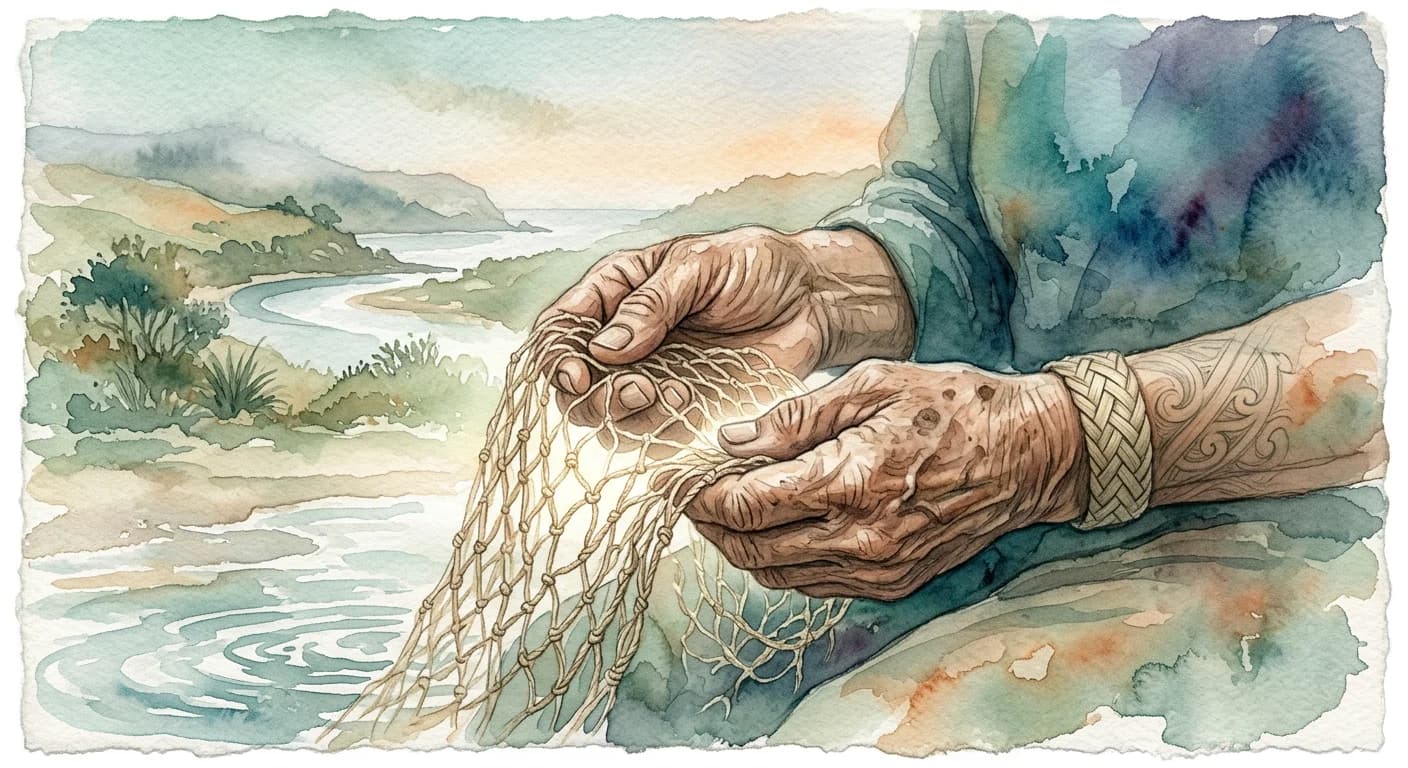
    Artistic representation of Taraka
    Maori•
    🇳🇿New Zealand

    Taraka

    /TAH-rah-kah/

    Meaning

    In Maori, 'taraka' transcends the simple definition of a fishing net; it embodies a sophisticated traditional fishing net, meticulously woven from natural fibers like harakeke (flax). This intricate tool represents a profound connection to Tangaroa (the god of the sea) and the abundant marine ecosystem, reflecting a sustainable way of life passed down through generations. The 'taraka' is a testament to ancestral ingenuity, resourcefulness, and the vital role of fishing in sustaining Maori communities and reinforcing their cultural identity and spiritual bond with the environment.

    Literal Translation

    fishing net

    The Story Behind the Word

    The existence of 'taraka' speaks volumes about the Maori worldview, where the natural world is not merely a resource but a living entity imbued with mauri (life force) and spiritual significance. The crafting of a 'taraka' was an art form, often accompanied by karakia (incantations) to ensure a bountiful catch and respect for the ocean's bounty. It reflects a deep understanding of ecological cycles and a commitment to kaitiakitanga (guardianship) of the environment. The 'taraka' wasn't just owned; it was often considered to have its own mana (prestige and power), connecting the community to their ancestors and the spiritual realm. Its usage reinforced tribal unity, as large nets often required communal effort to deploy and retrieve, fostering a sense of collective responsibility and shared sustenance.

    Experience It

    Communal Net Haul

    As the morning sun kissed the water, the elders directed the younger generation, their voices harmonizing with the rhythmic pull. Together, they heaved on the ropes, slowly drawing the heavy 'taraka' towards the shore, its mesh glinting with the silver of a plentiful catch. It was a scene of intergenerational knowledge sharing and communal sustenance, a practice as old as their ancestors.

    Weaving the Legacy

    Nanny Hine's gnarled fingers expertly twisted the flax strands, her eyes focused on the intricate knots of the 'taraka' she was repairing. Each weave was a story, each knot a connection to her tupuna (ancestors) who had taught her this ancient craft. It was more than mending; it was preserving a legacy, ensuring the community's future harvests.

    The Deeper Meaning

    The 'taraka' embodies the Maori philosophical concept of 'whanaungatanga' – kinship and connection – not just among people but with the natural world. It illustrates that sustenance is not an individual pursuit but a collective endeavor deeply intertwined with respect for resources and ancestral knowledge. It reveals a worldview where humanity is an integral part of the ecosystem, not separate from it, emphasizing reciprocity and guardianship.

    Did You Know?

    Some traditional 'taraka' were so massive they could stretch for hundreds of meters and required dozens of people to operate, highlighting the communal effort inherent in Maori fishing practices.

    How It's Used

    Used to refer to a traditional Maori fishing net.

    Emotions
    belonging,comfort,gratitude
    Contexts
    dining,nature,work
    🇳🇿New Zealand

    by Anya Petrova·Written Mar 14, 2026·Updated Apr 3, 2026

    Related Words

    Explore more
    SobremesaSpanish

    Sobremesa is the cherished, often extended period immediately following a meal, particularly lunch or dinner, where diners remain seated at the table to enjoy conversation, coffee, and digest not just the food, but the company itself. It’s a dedicated time for unhurried social bonding, storytelling, and shared laughter, transforming a simple meal into a profound communal experience. Far from just clearing the dishes, sobremesa is an integral part of Spanish social life, often lasting for hours.

    Wabi-sabiJapanese

    Wabi-sabi is the profound appreciation for the ephemeral, the imperfect, and the incomplete aspects of existence. It is about discovering beauty in the subtle textures of age, the unique character of flaws, and the gentle decay that marks the passage of time. This philosophy encourages a quiet acceptance of impermanence and a mindful connection to the natural world, finding elegance in simplicity and authenticity.

    IkigaiJapanese

    Ikigai is more than just a reason to get out of bed; it's a deeply personal and evolving sense of purpose that brings genuine fulfillment and joy to one's life. It represents the sweet spot where your passions, talents, needs of the world, and what you can be paid for beautifully converge. Discovering your ikigai often leads to a life lived with intentionality, resilience, and a profound connection to one's contributions. It's the intrinsic motivation that fuels a meaningful existence, regardless of external circumstances.

    NunchiKorean

    Nunchi is the sophisticated, almost telepathic, ability to instantly grasp the unspoken dynamics of any social situation, anticipating others' thoughts and feelings, and then responding with impeccable grace and timing. It's an acute form of social intuition, allowing one to navigate complex interpersonal landscapes by reading subtle cues like body language, tone, and context. Possessing good nunchi means effortlessly understanding the underlying emotional currents and adjusting one's behavior to maintain harmony and effectiveness, often without a single word exchanged.