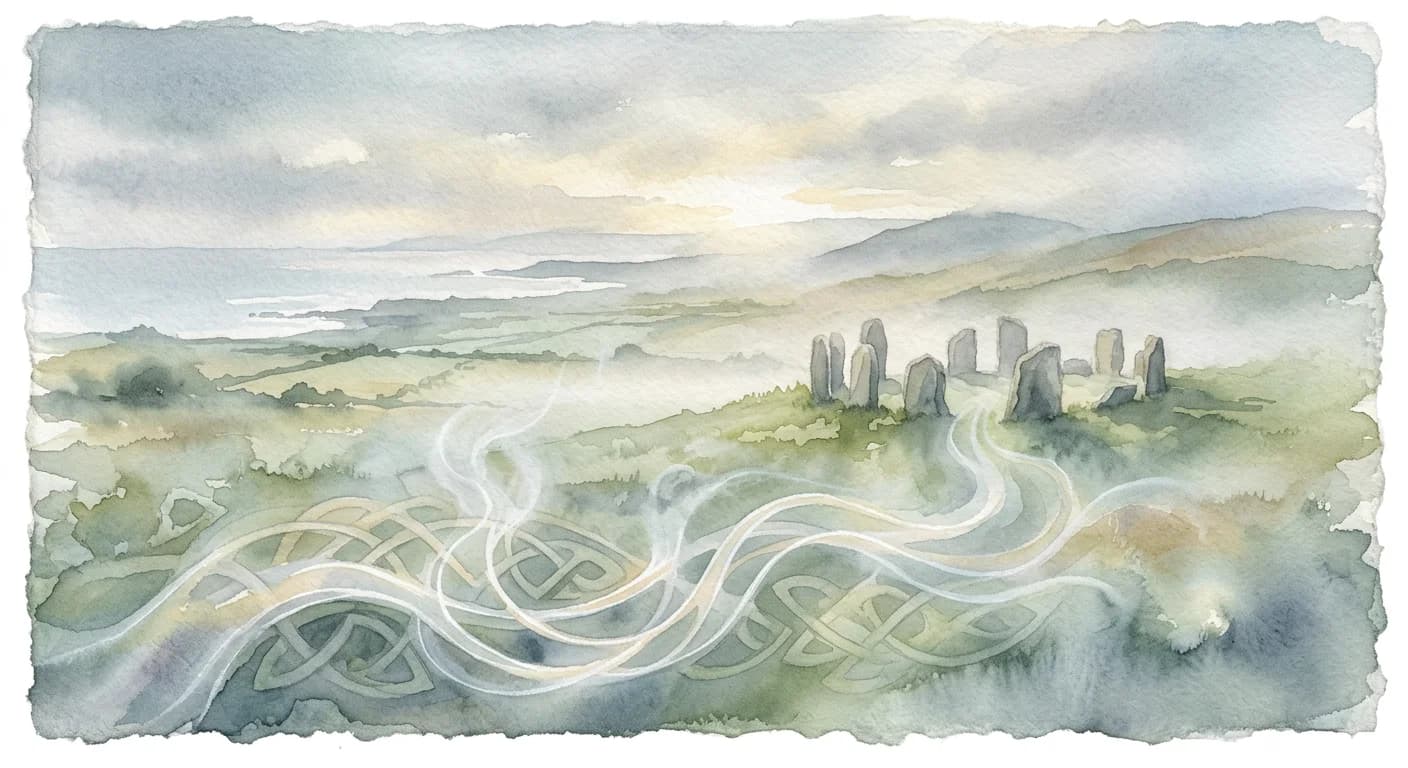
Anáil
/AH-nil/
Meaning
Anáil transcends the simple act of breathing in Irish, embodying the very breath of life, the soul, and the animating spirit that vitalizes all existence. It signifies the profound connection between the physical and the spiritual realms, a core essence that sustains being. To lose one's anáil is not merely to stop breathing, but to lose one's life force, the vital spark that defines consciousness and vitality, deeply rooted in ancient Celtic worldviews.
Literal Translation
Breath
The Story Behind the Word
The concept of 'anáil' is deeply embedded in ancient Irish pagan beliefs, where breath was considered the primary link between the mortal body and the immortal soul, a direct gift from the divine. Early Celtic mythology often featured deities associated with wind and breath, symbolizing life-giving and life-taking powers. This worldview persisted through the Christianization of Ireland, as 'anáil' continued to denote the spirit, often conflated with biblical concepts of 'spiritus' or 'ruach'. It reveals a culture that inherently understood life as more than just biological function, but as an energetic, spiritual presence. The emphasis on 'anáil' reflects a profound respect for life's ephemeral nature and its sacred origins, seeing the world as interconnected through this shared, vital breath.
Experience It
A Mother's Gentle Touch
A young mother cradles her newborn, watching the tiny chest rise and fall. She whispers, 'Mo leanbh, mo anáil,' understanding that this fragile breath is the very essence of her child's life, a sacred gift she pledges to protect.
Facing the Storm
A fisherman, battered by a sudden squall, fights to keep his small currach afloat. He gasps for air, feeling the cold spray, and thinks, 'Níl ach anáil amháin fágtha,' understanding that each hard-won breath is a struggle for survival, a testament to his will to live.
The Deeper Meaning
Anáil reveals a philosophy where life is not merely a biological process but an intricate dance between the physical and spiritual. It suggests that consciousness and vitality are not solely products of the brain, but are infused by an external, divine or universal life force. This perspective fosters a deep appreciation for the fragility and sacredness of existence, viewing every breath as a connection to something greater than oneself, and every living being as animated by this shared, vital essence.
Did You Know?
In ancient Irish folklore, it was believed that a person's last 'anáil' could carry messages or blessings to the spirit world, making the moment of death a powerful spiritual transition.
How It's Used
Used to refer to the act of breathing, the life force, or spirit.