Calacas
/kah-LAH-kahs/
Meaning
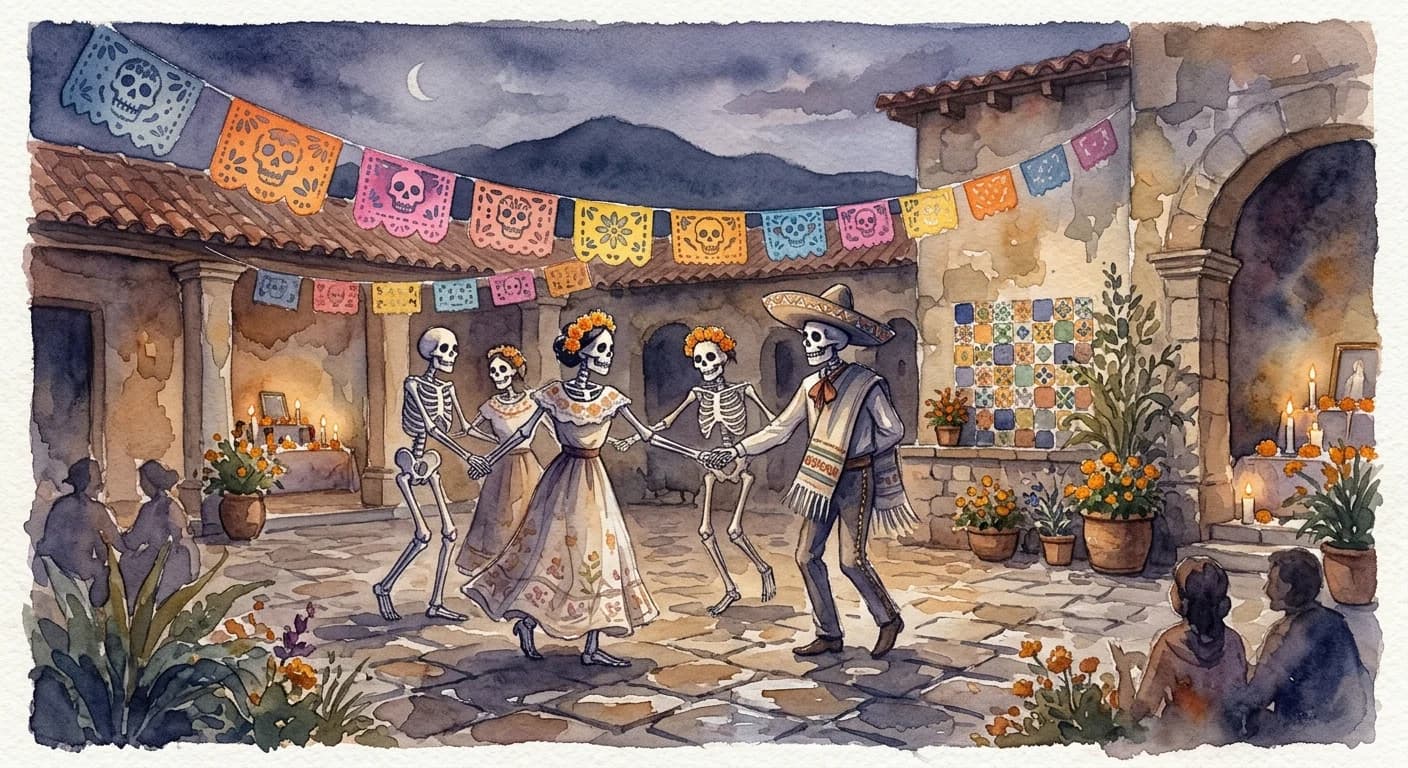
Calacas refers to the vibrant and often humorous skeletal figures that are emblematic of Mexico's Día de Muertos. Far from being macabre, these artistic representations of skeletons embody a joyous, celebratory acceptance of death as an integral part of life's continuous cycle. They are frequently depicted in lively poses—dancing, playing instruments, or engaged in everyday activities—symbolizing the belief that deceased loved ones remain present in spirit, participating in the festivities. This cultural perspective transforms what might be a somber occasion into a vivid, playful commemoration of life and memory.
Literal Translation
Skeletons
The Story Behind the Word
The existence of 'calacas' is deeply rooted in Mexico's pre-Hispanic indigenous beliefs, which viewed death not as an end, but as a transition and a vital part of the life-death cycle. When combined with Catholic traditions brought by the Spanish, this evolved into the unique syncretism of Día de Muertos. Calacas, often depicted as elegant 'Catrinas' or playful figures, serve as a cultural bridge, allowing Mexicans to confront mortality with humor and familiarity rather than fear. They reveal a worldview where the veil between the living and the dead is thin, and where ancestors are honored guests, not forgotten spirits, reflecting a profound respect for heritage and the continuity of generations.
Experience It
Ofrenda Decoration
María carefully placed a small, intricately painted calaca mariachi band on her family's ofrenda. Its cheerful, skeletal musicians seemed to play a silent tune, inviting her grandparents' spirits to join the feast and enjoy the music, just as they did in life.
Parade Spectacle
During the Día de Muertos parade, a group of dancers, their faces painted as calacas, twirled gracefully down the street. Their vibrant costumes and joyful movements transformed the traditional symbol of death into a lively celebration, eliciting cheers and smiles from the onlookers.
The Deeper Meaning
The concept of 'calacas' embodies a profound philosophical acceptance of mortality. It suggests that by personifying and even playfully engaging with death, one can diminish its power and fear. This perspective highlights the interconnectedness of life and death, positing that one cannot truly appreciate life without acknowledging its inevitable end, fostering a culture of remembrance, resilience, and joyful celebration even in the face of loss.
Did You Know?
The iconic 'Catrina' calaca, a well-dressed female skeleton, was originally a satirical cartoon by José Guadalupe Posada, mocking Mexicans who adopted European customs and denied their indigenous heritage.
How It's Used
Used to refer to the artistic representations of skeletons, particularly those associated with Day of the Dead celebrations, often seen in crafts, decorations, and costumes.