Capoeira
/KAH-poh-EH-rah/
Meaning
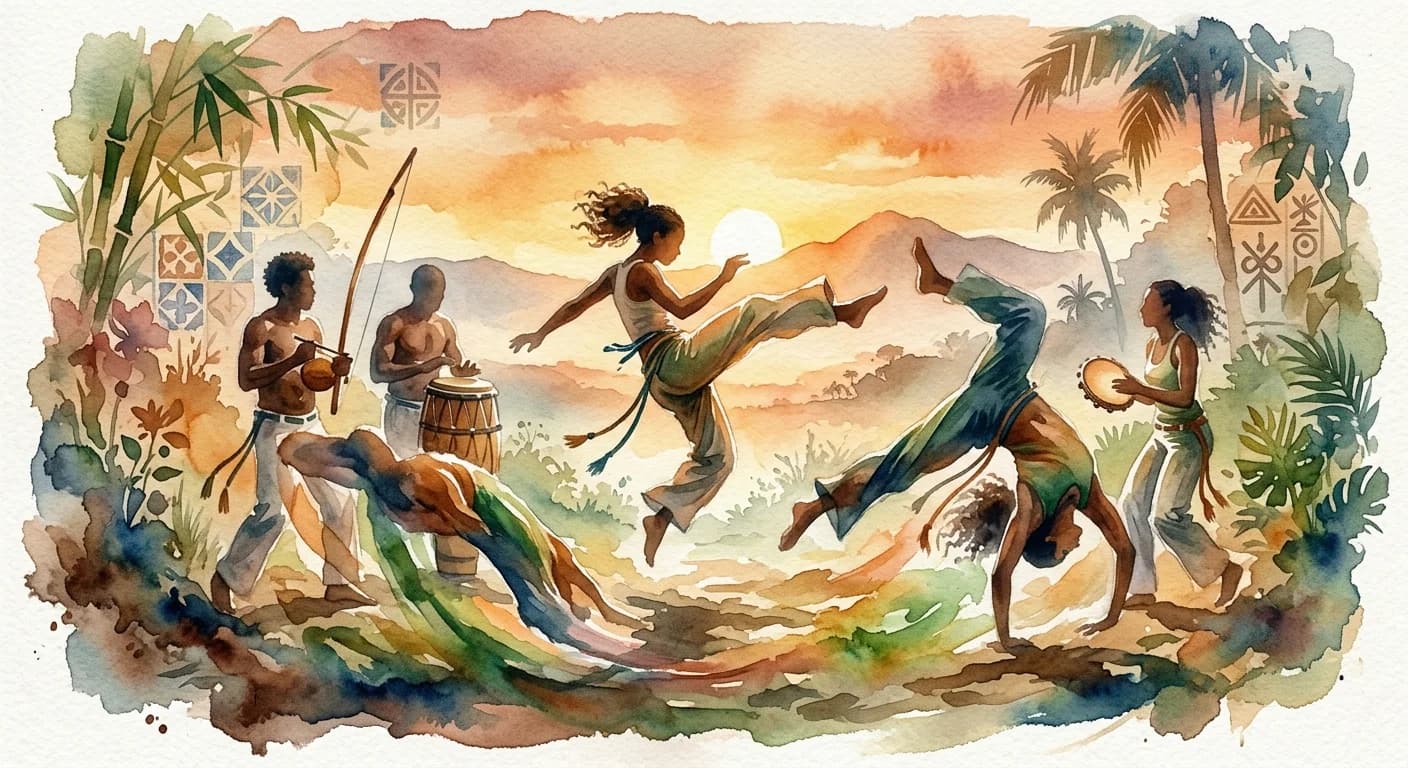
Capoeira is an electrifying Afro-Brazilian art form that transcends mere martial arts, embodying a profound cultural synthesis. It seamlessly interweaves fluid, acrobatic movements with rhythmic music, percussive instruments, and communal singing, creating a dynamic dialogue between participants. More than just a fight or a dance, it's a strategic game, a ritualized expression of resistance, and a celebration of resilience, deeply ingrained in the nation's identity.
Literal Translation
The exact etymology is debated, but it is often linked to the Tupi word 'ka'a' (forest, bush) and 'põera' (that which was), possibly referring to areas of secondary forest where enslaved people might have practiced it.
The Story Behind the Word
Capoeira emerged from the brutal realities of slavery in Brazil, where enslaved Africans secretly developed it as a means of self-defense disguised as dance. This ingenious camouflage allowed them to hone fighting skills under the watchful eyes of their oppressors, transforming oppression into a crucible for cultural innovation. It embodies the spirit of 'ginga' – a constant, fluid motion that is both evasive and preparatory for attack, reflecting a philosophy of adaptability and strategic survival against overwhelming odds. The 'roda' (circle) in which capoeira is played symbolizes community, equality, and a sacred space where individuals challenge each other within a framework of mutual respect and shared heritage. It reveals a worldview where art, struggle, and community are intrinsically linked, offering a powerful narrative of cultural preservation and empowerment.
Experience It
The Roda's Energy
The beat of the berimbau fills the air, drawing a crowd. Two capoeiristas enter the 'roda,' their bodies flowing in a mesmerizing 'ginga,' feigning, dodging, and striking in a playful yet intense dance of skill and strategy. The energy is palpable as the crowd claps and sings, fueling their movements.
Cultural Festival Performance
At a Brazilian cultural festival, a group of capoeiristas captivates the audience with their synchronized movements, acrobatic flips, and powerful kicks. Their performance isn't just entertainment; it's a vibrant display of history and tradition, educating and inspiring onlookers about Afro-Brazilian heritage.
The Deeper Meaning
Capoeira encapsulates a philosophy of 'malícia' – strategic cunning and quick wit – essential for navigating life's challenges. It teaches that strength isn't just brute force, but also adaptability, rhythm, and the ability to turn disadvantage into opportunity, reflecting a profound resilience born from historical adversity.
Did You Know?
Capoeira was once outlawed in Brazil, with practitioners facing severe penalties, highlighting its subversive power and the fear it instilled in authorities.
How It's Used
Used to refer to the martial art itself, its associated music and dance, or the community and philosophy surrounding it. It's a central element of Brazilian cultural identity, often performed at festivals, gatherings, and cultural events.