Chelm
/KHELL-m/
Meaning
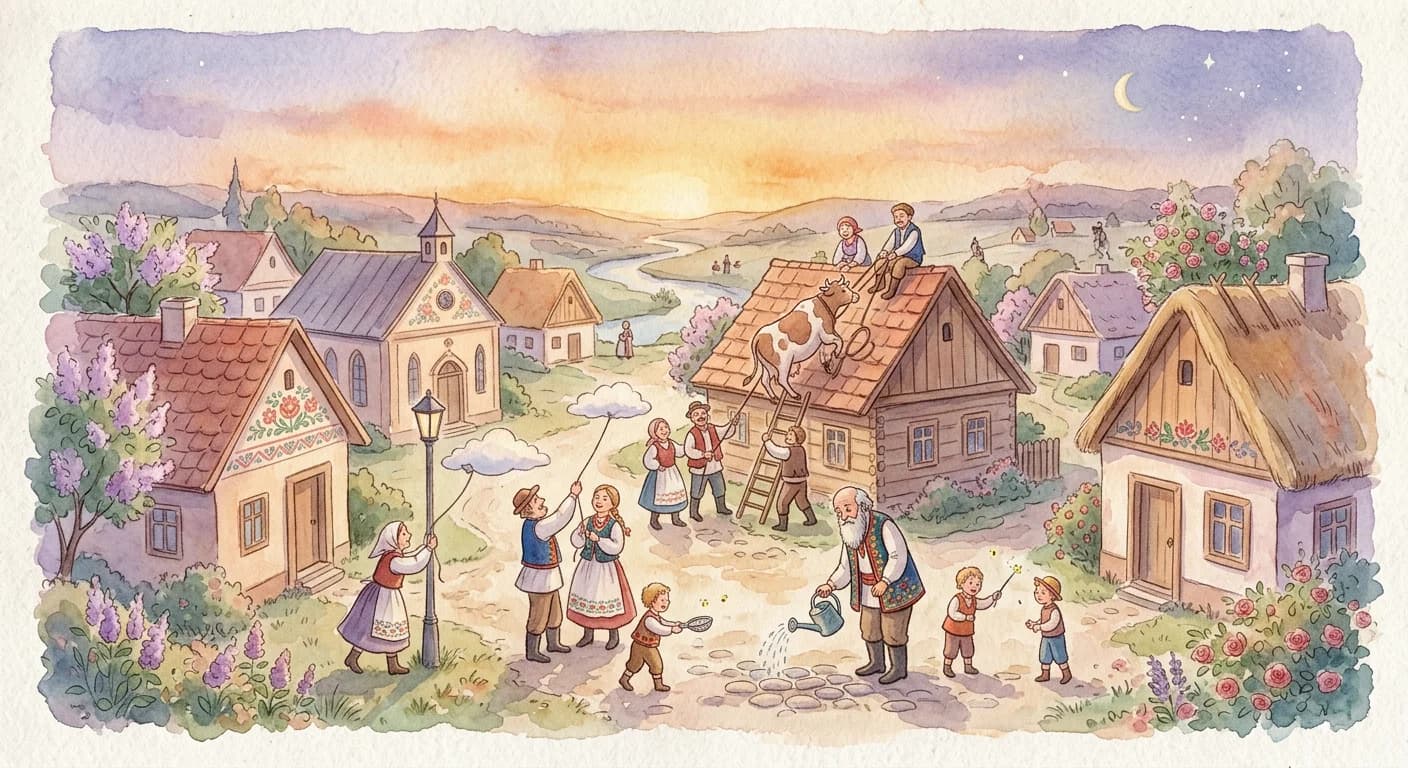
Chelm refers to a mythical town in Yiddish folklore, a whimsical realm where well-intentioned but utterly illogical decisions lead to uproarious and paradoxical outcomes. It's a universe populated by "wise fools" whose actions, though absurd, often reveal a profound, if inverted, wisdom about human nature. These tales are more than just jokes; they are a cherished cultural lens through which Ashkenazi Jews have long explored the eccentricities of life and the endearing folly inherent in the human condition, always with a touch of gentle irony and warmth.
Literal Translation
Chelm
The Story Behind the Word
The concept of Chelm is deeply rooted in the historical experience of Ashkenazi Jews in Eastern Europe. Living often in precarious circumstances, humor became a vital coping mechanism and a way to process the absurdities of life, sometimes under oppressive regimes. The Chelm stories, passed down through generations, offered a safe space for communal laughter and gentle self-critique. They reflect a worldview that values cleverness and intellectual rigor, but also acknowledges the universal presence of human error and the beauty in simplicity, even when it veers into the ridiculous. It's a testament to resilience, using wit to transform hardship into entertainment and insight, teaching lessons through the delightful missteps of its inhabitants. It reveals a culture that finds profound meaning and connection in shared narratives, even those that poke fun at imagined simpletons.
Experience It
The Chelm Moon Problem
The elders of Chelm once worried the moon was too bright, keeping everyone awake. Their ingenious solution? To send the strongest men to climb the tallest tree and cover it with a blanket, only to be baffled when it still shone. It perfectly encapsulates their well-meaning but ultimately absurd logic.
Lost in the Forest
When a Chelmite got lost in a dense forest, he decided the only way to get out was to turn his coat inside out. His reasoning: since he got lost in a normal coat, a reversed coat must surely lead him home. This highlights the peculiar Chelm brand of inverted reasoning.
The Deeper Meaning
Chelm stories offer a philosophical commentary on the nature of wisdom itself, suggesting that true insight can sometimes be found in the most unexpected, even foolish, places. They challenge rigid logic, celebrating a kind of intuitive, if flawed, reasoning that often mirrors the unpredictable nature of life. It’s a gentle reminder that sometimes, the most profound truths are revealed through laughter at our own collective human foibles.
Did You Know?
The real town of Chełm in Poland actually exists, and its residents are said to have embraced their folkloric reputation, even featuring the 'Wise Men of Chelm' in local tourism.
How It's Used
The term 'Chelm' is used to refer to the legendary town and its inhabitants, often in the context of telling jokes or anecdotes that illustrate foolish or absurd behavior. It can also be used metaphorically to describe a situation or person exhibiting such traits.