Cocido
/koh-SEE-doh/
Meaning
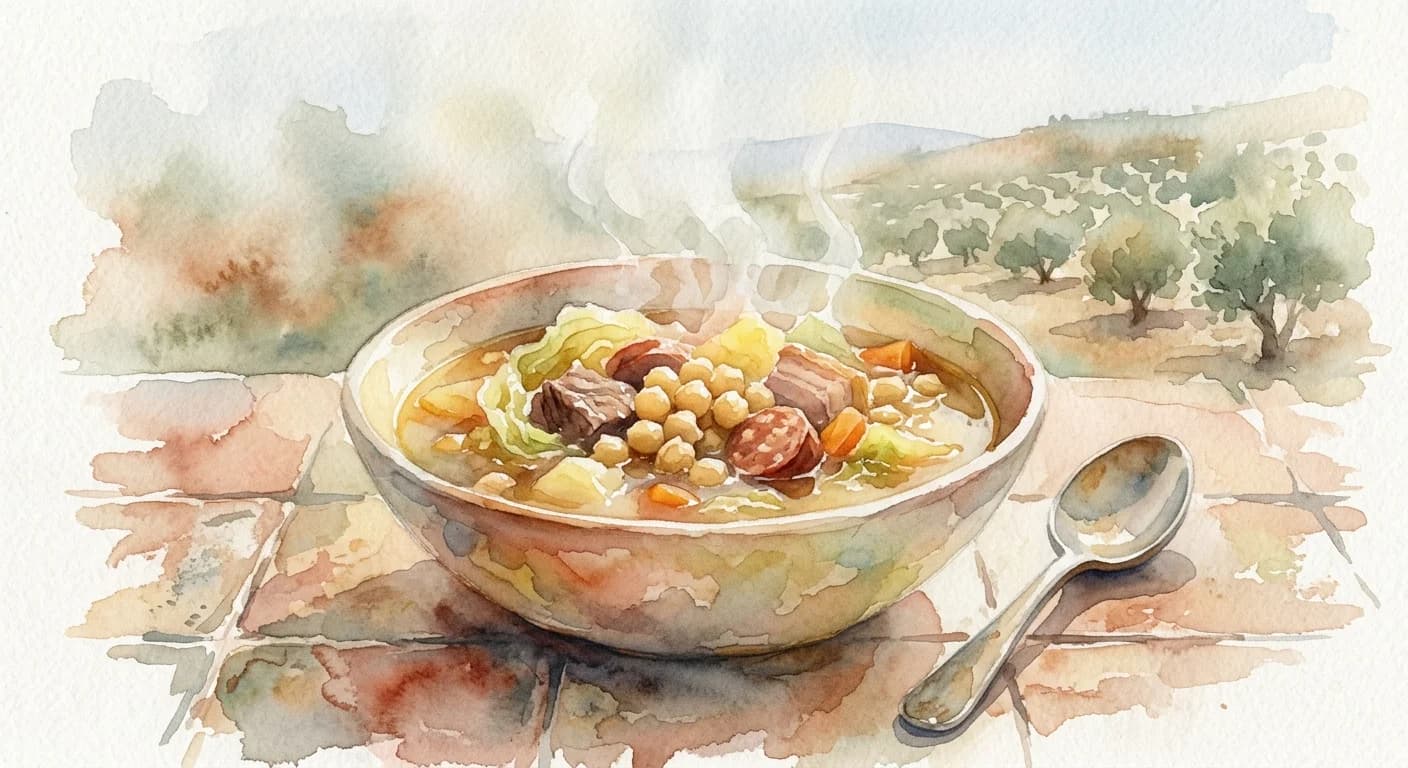
Cocido is far more than a simple 'cooked' dish; it's a quintessential Spanish culinary institution, a robust and slow-simmered stew typically featuring a rich medley of meats like beef, pork, and chicken, alongside chickpeas, potatoes, carrots, and cabbage, all bathed in a flavorful broth. It represents a warm, abundant, and comforting meal, meticulously prepared over hours, often served in stages (soup, then vegetables, then meats) and traditionally enjoyed as a centerpiece for family gatherings, especially during the colder months. Its preparation and consumption embody a deep connection to tradition, hospitality, and the communal joy of sharing a substantial, lovingly made meal.
Literal Translation
cooked
The Story Behind the Word
The cocido holds a venerable place in Spanish culinary history, evolving from medieval stews and becoming a staple, particularly in Castile. Its existence reflects a historical reliance on hearty, nutrient-dense meals capable of sustaining laborers and large families through long winters. The slow cooking process itself isn't merely a technique but a philosophy: it demands patience, forethought, and a respect for ingredients, mirroring a cultural appreciation for unhurried living and the value of time spent nurturing. Philosophically, the cocido embodies 'arraigo' (rootedness) – a deep connection to one's land, family, and heritage. It's a dish that binds generations, with recipes passed down, ensuring the continuity of a specific culinary identity and the values associated with it. The communal aspect of its consumption reinforces social bonds, making it a powerful symbol of Spanish hospitality and familial unity.
Experience It
Sunday Family Cocido
The aroma of simmering broth, chickpeas, and cured meats filled Grandma Carmen's house every Sunday. Her grandchildren knew that 'cocido day' meant hours of laughter, warm embraces, and a meal served in three glorious 'vuelcos' (courses), starting with the rich soup, then the vegetables, and finally the tender meats. It was a ritual that anchored their week.
Winter's Comfort
Outside, Madrid shivered under a grey sky, but inside, the small restaurant was a haven of warmth. A group of friends huddled over a steaming 'cocido madrileño', spooning the fragrant soup, then savoring the tender garbanzos and succulent meats. Each bite was a shield against the cold, a taste of home and shared camaraderie.
What Gets Lost in Translation
English speakers might simply translate 'cocido' as 'stew,' missing its profound cultural specificities. It's not just any stew; it implies a very particular method of slow cooking, a specific set of ingredients (chickpeas are non-negotiable), and a traditional serving style (often in courses). Furthermore, it carries a strong connotation of family, tradition, and a hearty, celebratory meal, not just an everyday dish.
Across Cultures
While cocido is distinctly Spanish, many cultures have their own versions of slow-cooked, hearty stews that serve a similar communal and comforting purpose. French 'pot-au-feu' shares the concept of boiled meats and vegetables served in stages. Portuguese 'cozido à portuguesa' is a direct cousin, featuring a similar array of meats and vegetables. Even Eastern European 'borscht' or Irish 'stew' evoke a similar sense of warmth, abundance, and tradition, albeit with different flavor profiles.
The Deeper Meaning
The cocido embodies a philosophy of 'aprovechamiento' – making the most of everything. Historically, it was a way to utilize various cuts of meat and vegetables, minimizing waste. More profoundly, it speaks to a worldview that values patience, the richness of slow processes, and the enduring strength of communal bonds over individualistic pursuits. It's a culinary meditation on abundance, generosity, and the nourishing power of tradition.
Did You Know?
Did you know some traditional cocido recipes include 'pelota' - a large, seasoned meatball or dumpling made with breadcrumbs, eggs, and various minced meats, cooked directly in the stew? It adds another layer of texture and flavor!
How It's Used
Cocido is used to refer to a specific type of Spanish stew, as well as the meal itself, which is often a central part of family gatherings or a comforting dish during winter.