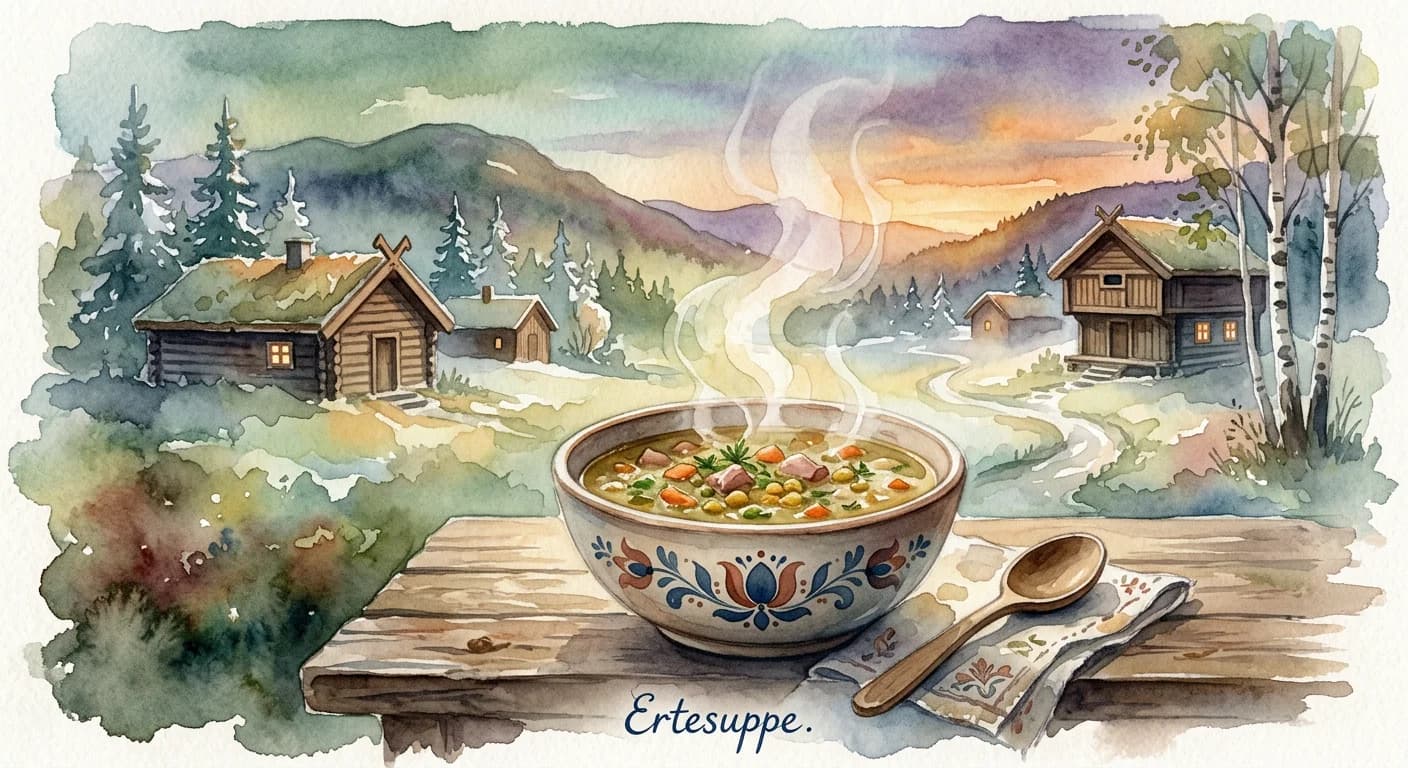
Ertesuppe
/AIR-teh-soop-peh/
Meaning
Ertesuppe, a hearty pea soup, transcends its simple ingredients to become a cherished Norwegian symbol of warmth, sustenance, and communal gathering. Traditionally enjoyed during the long, dark winter months and especially around Shrovetide, its rich, savory aroma fills homes, signaling comfort and the promise of spring's eventual arrival. It's a culinary embrace that nourishes both body and soul, fostering a sense of belonging and continuity through shared meals and enduring traditions.
Literal Translation
Pea soup
The Story Behind the Word
The existence of "Ertesuppe" as a cultural touchstone in Norway is deeply rooted in the country's historical reliance on preserved, readily available ingredients and the need for high-energy, comforting food during harsh winters. Peas, dried and stored, along with salted pork, were staples that could sustain communities when fresh produce was scarce. Its association with Shrovetide and the transition from winter to spring reflects ancient pagan and later Christian traditions of feasting before fasting, marking a period of abundance and anticipation. This dish embodies a pragmatic resilience, a celebration of simple, wholesome sustenance, and the profound importance of gathering indoors to share warmth and connection when the outside world is cold and unforgiving. It reveals a culture that values steadfastness, community, and finding comfort in the familiar rhythms of nature and tradition.
Experience It
Winter Evening Comfort
Outside, the snow fell steadily, blanketing the fjord in white. Inside, the warm, comforting scent of Ertesuppe wafted from the kitchen, drawing the family to the table. "Just what we need on a night like this," Grandpa Fredrik murmured, ladling generous portions into bowls, a smile creasing his weathered face.
Shrovetide Feast
The children, bundled in their winter gear, burst through the door, rosy-cheeked from playing in the snow. Aunt Ingrid had prepared a large pot of Ertesuppe, a traditional Shrovetide treat. "Come, come, eat up!" she called, "Plenty of energy needed for tomorrow's festivities!" The rich soup was a perfect prelude to the coming spring celebrations.
The Deeper Meaning
Ertesuppe encapsulates a philosophy of finding profound joy and sustenance in simplicity and community, especially when facing adversity. It reflects a stoic appreciation for basic, nourishing elements and the human need for connection. The act of preparing and sharing this meal reinforces the idea that true wealth lies not in extravagance, but in shared warmth, tradition, and the enduring bonds of family and friends against the backdrop of challenging seasons.
Did You Know?
Did you know that traditional Ertesuppe often includes a 'saltkjøtt' (salted meat) knuckle, which is simmered with the peas to impart its distinctive savory flavor and tender texture?
How It's Used
Ertesuppe is a traditional Norwegian dish, a thick pea soup often made with pork, commonly eaten during the colder months, particularly in late winter and early spring. It's a staple comfort food that signifies the transition from winter to spring and is often associated with family gatherings and traditional holidays.