Farbregen
/FAR-breh-gen/
Meaning
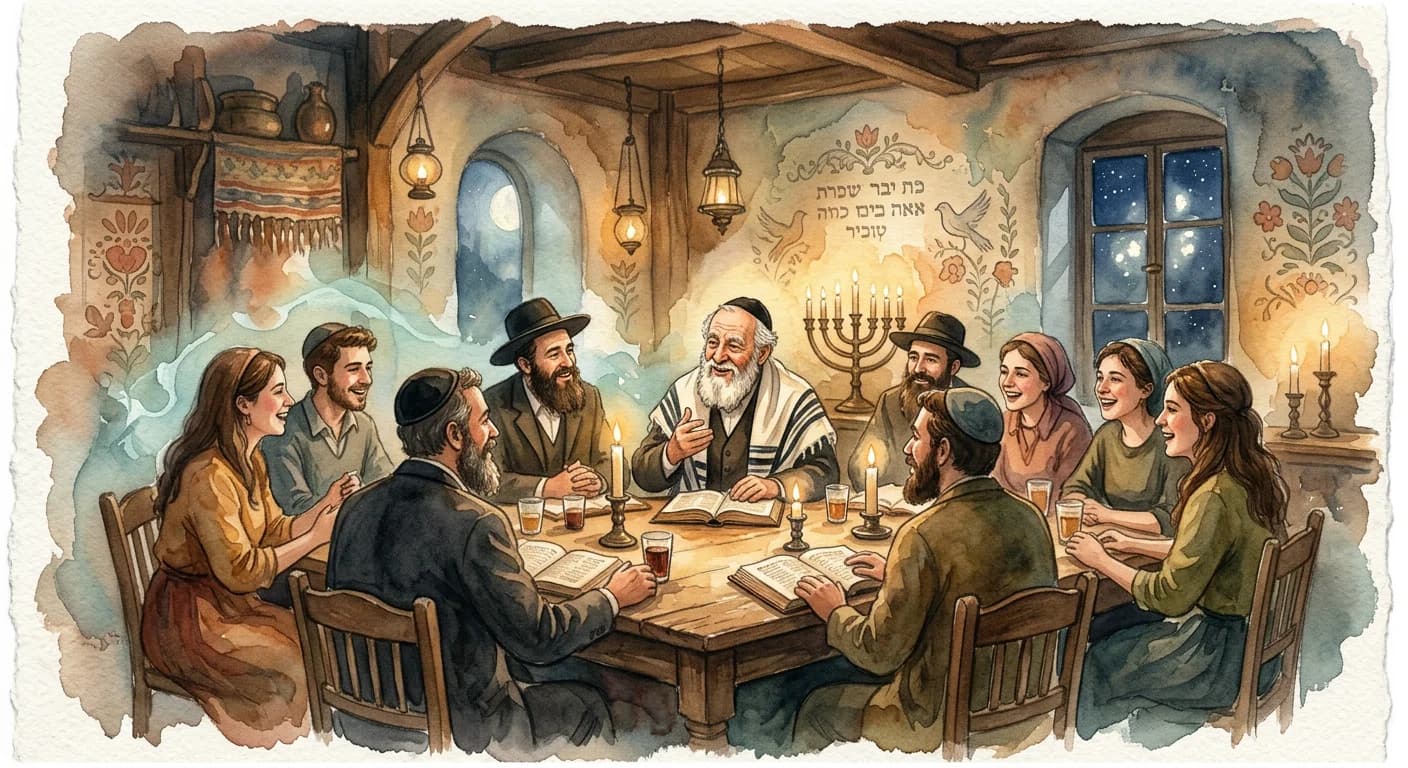
A farbregen is a deeply spiritual and communal gathering, particularly within Hasidic Judaism, characterized by an outpouring of joy, song, storytelling, and Torah insights. It's an immersive experience where participants transcend ordinary concerns, fostering an intense sense of unity and shared purpose. The atmosphere is one of uninhibited spiritual effervescence and collective delight, where heart-to-heart conversations and soulful melodies create a profound bond, elevating the mundane into the sacred.
Literal Translation
Joyful rain
The Story Behind the Word
The concept of a farbregen is deeply rooted in Hasidic philosophy, which emphasizes joy and fervor in divine service, contrasting with earlier, more ascetic forms of Jewish piety. Originating with the Baal Shem Tov and further developed by subsequent Rebbes, farbregens became central to community building and spiritual guidance. They embody the Hasidic belief that spiritual elevation is best achieved collectively, through shared inspiration and brotherly love (ahavat Yisrael). The Rebbe's presence, or the recounting of their teachings, instills a sense of direct connection to the spiritual lineage, making the farbregen a vital mechanism for transmitting tradition, strengthening faith, and fostering communal identity and resilience, especially in diaspora settings like the United States.
Experience It
Chassidic Wedding Farbregen
After the chuppah, the men gathered around tables laden with refreshments. Reb Shmuel began a niggun (melody) that everyone immediately joined, swaying and singing with closed eyes. Soon, stories of the Rebbe's wisdom were shared, interspersed with lively debate and heartfelt blessings for the young couple, stretching late into the night.
Pre-Holiday Inspiration
On the eve of Rosh Chodesh, a small group of yeshiva students initiated a farbregen. One student shared a profound teaching from a Hasidic text, sparking a passionate discussion. As the hours passed, they found themselves singing with renewed vigor, feeling a deep spiritual preparation for the upcoming month, strengthening their resolve to live with greater purpose.
What Gets Lost in Translation
English speakers often mistake a farbregen for merely a party or social event. However, it's distinct from a secular celebration; its primary purpose is spiritual growth, communal strengthening, and the transmission of Hasidic values and teachings, often guided by a spiritual leader or elder. The joy isn't just entertainment, but a means to connect with the divine.
Across Cultures
While unique in its specific religious context, the farbregen shares echoes with other communal gatherings focused on spiritual elevation and bonding. Sufi 'dhikr' circles, with their chanting and shared devotion, or certain forms of evangelical Christian 'fellowship' gatherings, aim for similar collective effervescence and spiritual connection. The Irish 'céilí' or Scottish 'ceilidh' also evoke a sense of joyous, informal communal gathering through music and storytelling, though without the explicit spiritual emphasis.
The Deeper Meaning
The farbregen embodies the Hasidic philosophy that God is best served with joy (simcha), and that spiritual elevation is a collective endeavor. It reveals a worldview where communal bonding through shared spiritual experience is paramount, fostering a sense of interconnectedness (achdus) essential for overcoming personal and communal challenges. It's a testament to the power of collective spiritual energy to transcend individual limitations.
Did You Know?
The Yiddish word 'farbrengen' literally means 'to spend time' or 'to bring together,' but its deeper connotation in Hasidic circles evokes 'to bring to a spiritual boiling point' or 'to inspire joy.'
How It's Used
Typically used to describe informal gatherings, celebrations, or social events within Hasidic communities, often involving singing, storytelling, and spirited conversation.