Fazenda
/fah-ZEN-dah/
Meaning
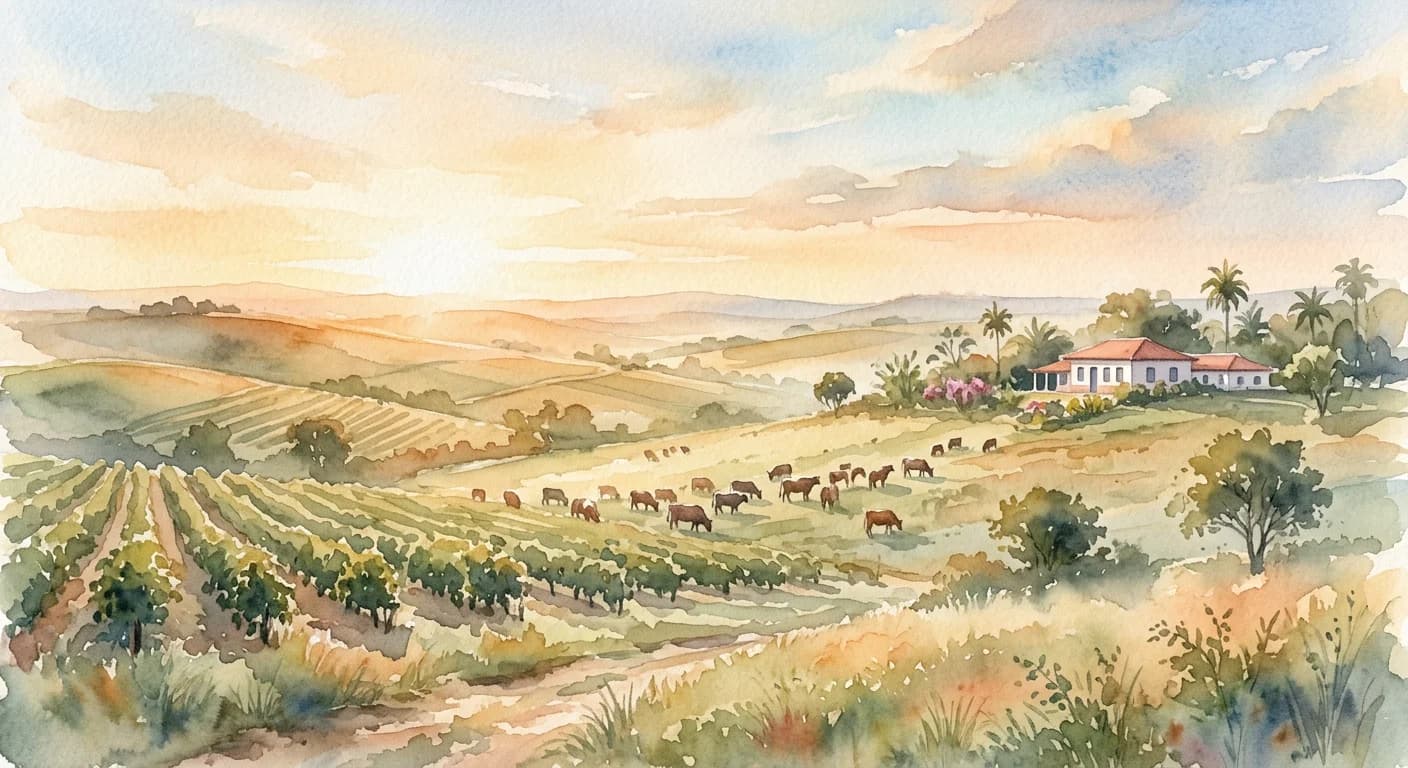
Beyond a mere 'farm' or 'estate,' 'fazenda' in Brazil conjures a vast, often ancestral rural domain, deeply woven into the nation's historical fabric and economic identity. It evokes images of sprawling coffee plantations, immense cattle ranches, or sugar cane fields, representing not just agricultural production but a profound connection to the land and a traditional way of life. This term embodies a sense of scale, heritage, and economic power, often signifying a foundational pillar of regional prosperity and Brazilian culture.
Literal Translation
Farm, estate
The Story Behind the Word
The 'fazenda' is more than land; it's a living monument to Brazil's colonial and imperial past, particularly the cycles of sugar, coffee, and cattle. Its existence reflects the country's vast territorial expansion and its reliance on large-scale agricultural exploitation, often built upon slave labor in earlier centuries. The fazenda system shaped social hierarchies, economic structures, and even political power, with 'coronelismo' (local political bosses) often emerging from powerful fazendeiro families. It reveals a Brazilian worldview deeply rooted in land ownership as a symbol of wealth, status, and self-sufficiency, where the cycles of planting and harvesting dictate life's rhythm, and the land itself holds generations of stories and labor. Even today, the romanticized image of the fazenda evokes a connection to tradition, natural beauty, and a certain grandeur, despite the complex history it carries.
Experience It
Inheriting the Legacy
After his grandfather's passing, João returned to Minas Gerais to take over the family fazenda. He knew the vast coffee plantations, dating back to the late 19th century, were not just a business but a profound responsibility, a piece of his family's and Brazil's history.
Rural Weekend Escape
A group of friends decided to spend the long weekend at a restored fazenda in the interior of São Paulo. They enjoyed horseback riding through the pastures, savoring home-cooked meals, and feeling the tranquility of a bygone era, far from the city's hustle.
The Deeper Meaning
The 'fazenda' embodies a deep philosophical connection to 'terra' (land) as a source of identity, sustenance, and legacy in Brazil. It reflects a worldview where time is often measured by agricultural seasons, and human endeavor is inextricably linked to the rhythms of nature. It also subtly hints at the enduring tension between progress and tradition, and the complex relationship Brazilians have with their colonial past and the vast, untamed beauty of their country.
Did You Know?
Many historic fazendas, particularly in states like Minas Gerais and São Paulo, have been meticulously preserved and converted into charming boutique hotels or museums, offering a glimpse into Brazil's rich agricultural past.
How It's Used
Used to refer to a large rural property, farm, ranch, or plantation in Brazil. It can also refer to the agricultural business or enterprise associated with such a property.