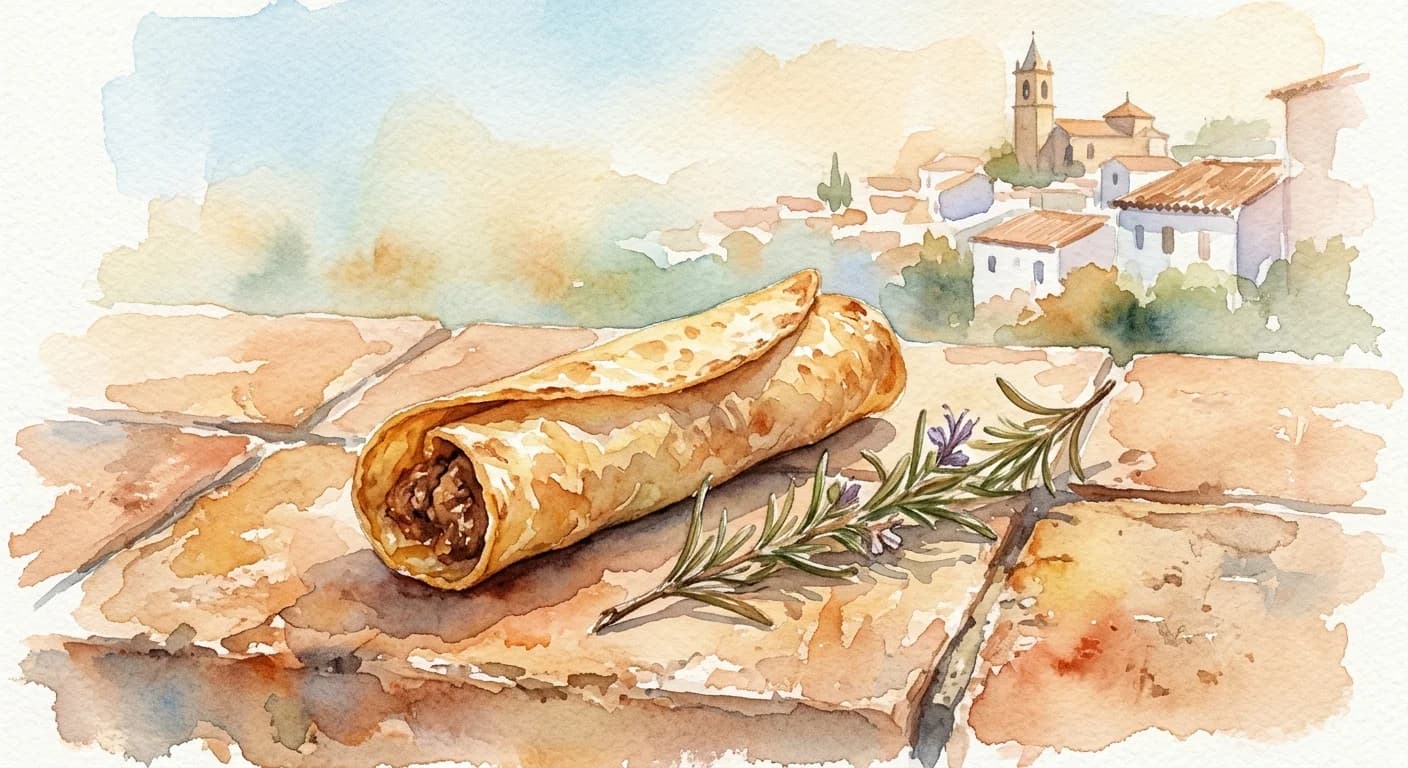
Flauta
/FLOW-tah/
Meaning
While "flauta" literally translates to "flute" or "recorder," in Spanish-speaking cultures, particularly Mexico, it predominantly refers to a beloved culinary delight: a long, slender, deep-fried rolled tortilla, typically filled with savory ingredients like seasoned chicken or potato. This crispy, golden-brown snack evokes memories of bustling street food stalls, lively family gatherings, and the simple, satisfying comfort of a quick, flavorful bite. Its shape, reminiscent of its musical namesake, has cemented its place in the gastronomic lexicon, completely distinct from any orchestral meaning.
Literal Translation
Flute
The Story Behind the Word
The culinary use of "flauta" is deeply embedded in Mexican street food culture, reflecting a history of ingenious and flavorful cooking that prioritizes accessibility and communal enjoyment. Its existence speaks to a pragmatic approach to food, transforming humble tortillas and fillings into a satisfying and portable meal. The flauta embodies the spirit of antojitos—little cravings—that are central to Mexican cuisine, offering a burst of flavor and texture that can be enjoyed on the go or as part of a larger feast. It reveals a culture that values resourcefulness, vibrant flavors, and the social ritual of sharing food, often in informal, lively settings. The playful appropriation of a musical instrument's name for a food item also highlights a cultural tendency towards descriptive and often whimsical naming conventions.
Experience It
Street Food Treat
At the bustling market, Mariana eagerly watches as the vendor expertly fries a fresh batch of flautas. The aroma of crispy tortillas and seasoned chicken fills the air. She orders three, dousing them generously with crema, salsa verde, and crumbled cheese, ready for a delicious, handheld lunch.
Family Dinner Staple
Abuela's kitchen is alive with the sound of sizzling oil as she prepares a large platter of potato flautas for the family gathering. Her grandchildren rush in, their eyes lighting up at the sight of the golden, crispy rolls, knowing they're in for a comforting and delicious treat that always signals a special occasion.
The Deeper Meaning
The "flauta" as a food item subtly reflects a philosophy of joyful resourcefulness and the art of transformation. It demonstrates how simple, staple ingredients (tortillas, fillings) can be elevated through preparation (rolling, frying) into something immensely satisfying and culturally significant. It speaks to the idea that comfort and culinary delight don't always require elaborate ingredients, but rather clever techniques and a shared appreciation for flavorful, accessible food experiences.
Did You Know?
Despite its musical namesake, the culinary "flauta" is rarely, if ever, associated with music. Its name purely describes its long, thin, flute-like shape, making it a visual pun in the food world!
How It's Used
Used primarily in culinary contexts to refer to a specific type of fried snack, especially in Mexico and other Latin American countries. It can also refer to the musical instrument.