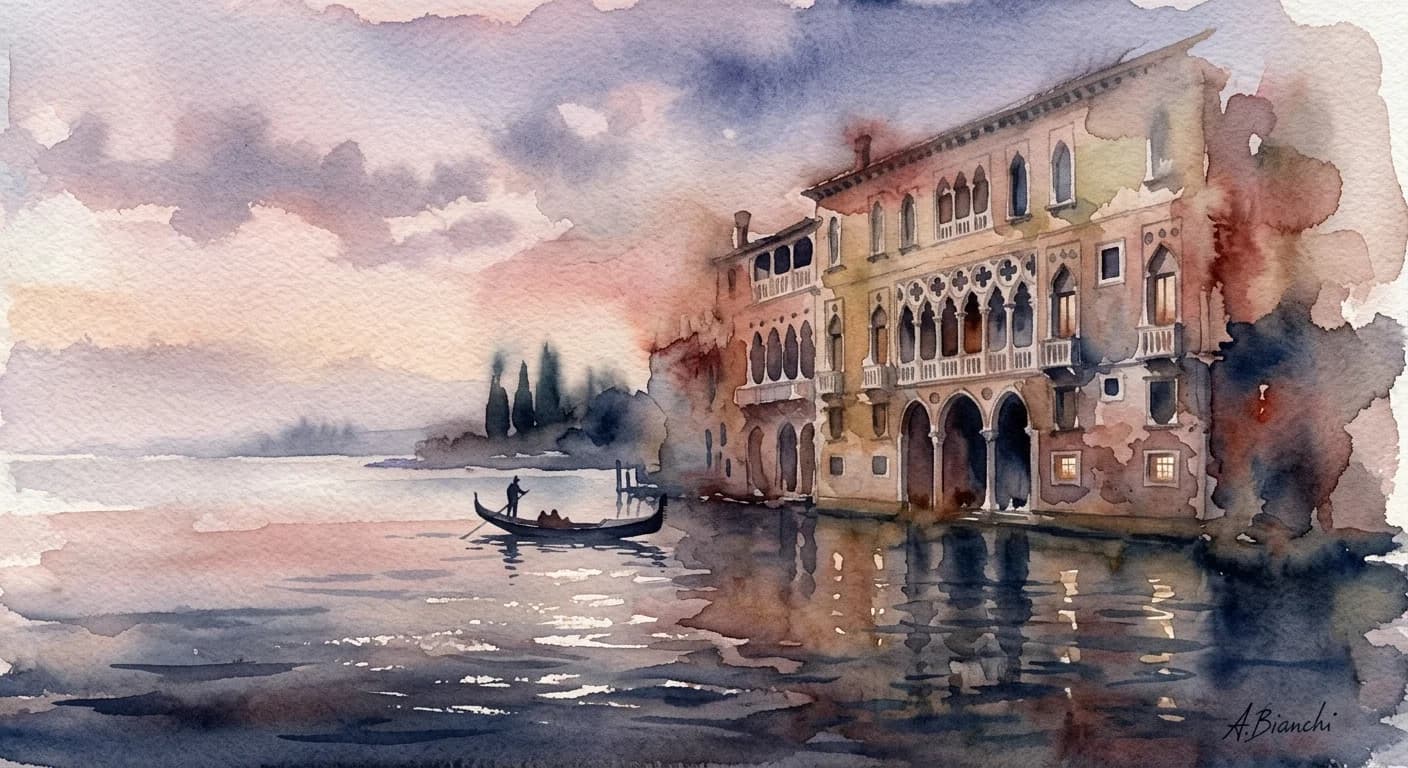
Fondaco
/fon-DAH-koh/
Meaning
A "fondaco" was more than just a warehouse; it was a vibrant, self-contained universe for foreign merchants in historical Italian port cities, particularly Venice and Genoa. Derived from the Arabic 'funduq,' these grand structures served as a combined inn, secure customs house, marketplace, and social hub. Here, merchants lived, stored their precious goods, negotiated deals, and maintained their cultural traditions, fostering an unparalleled fusion of commerce and cross-cultural exchange that profoundly shaped Mediterranean trade routes.
Literal Translation
warehouse/inn for merchants
The Story Behind the Word
The existence of the 'fondaco' speaks volumes about the pragmatic and cosmopolitan nature of medieval and Renaissance Italian city-states. Faced with a constant influx of foreign traders, these republics, driven by commercial ambition, devised a system that offered security and regulation while facilitating maximum trade. The 'fondaco' represented a sophisticated solution to managing international commerce, allowing foreign merchants – often from diverse and sometimes rival cultures – to operate within a controlled environment. It reflects a society that prioritized economic prosperity through openness, albeit carefully managed, revealing a worldly perspective where cultural differences were acknowledged and accommodated for mutual gain. These buildings became microcosms of global trade, embodying the intricate dance between protectionism and free exchange, and showcasing Italy's historical role as a bridge between East and West.
Experience It
A Venetian Trade Morning
Sunrise paints the Grand Canal as a Turkish merchant, newly arrived, directs porters unload spice-laden crates into the secure depths of the Fondaco dei Turchi. Later, he'll negotiate prices in the bustling courtyard, sharing news from Constantinople over strong coffee before retiring to his lodging within the very same walls.
Genoese Silk Exchange
Inside the Fondaco dei Genovesi in Tunis, a Genoese merchant meticulously inspects bales of raw silk from North Africa, preparing them for shipment back to Italy. He eats his evening meal with fellow countrymen in the fondaco's communal dining hall, discussing market trends and political whispers from home.
The Deeper Meaning
The 'fondaco' embodies a historical philosophy of regulated cosmopolitanism. It reflects a worldview where economic prosperity is inextricably linked to openness to foreign cultures, yet within carefully defined and controlled parameters. It suggests that while distinct cultural identities are preserved, the common ground of commerce can create unique spaces of interaction and mutual benefit, highlighting a pragmatic approach to globalization centuries before the term existed.
Did You Know?
Venice's most famous 'fondaco,' the Fondaco dei Tedeschi (for German merchants), was so grand it even housed a post office and a hospital, functioning as a complete mini-city for its residents.
How It's Used
The term is primarily used in historical contexts when discussing trade, architecture, and social history of Italian port cities, particularly Venice.