Gemeinschaft
/geh-MYN-shafft/
Meaning
Gemeinschaft evokes a profound sense of organic unity, a social fabric woven from deep, intimate, and often inherited bonds. It describes a community where individuals are intrinsically connected through shared values, mutual understanding, and a collective identity that transcends personal gain. This isn't merely a group of people, but a soulful communion, where belonging is felt in the core of one's being, fostering unwavering loyalty and an almost familial interdependence. It stands as an idealized counterpoint to modern, impersonal societal structures, representing a cherished, almost primal form of human connection.
Literal Translation
community
The Story Behind the Word
The concept of Gemeinschaft was famously articulated by German sociologist Ferdinand Tönnies in the late 19th century, reflecting a yearning for a perceived lost harmony amidst the rapid industrialization and urbanization of Germany. Tönnies contrasted Gemeinschaft, characterized by natural will, tradition, and close-knit relationships, with Gesellschaft, driven by rational will, contracts, and individualistic pursuits. This distinction became a cornerstone of German sociology and philosophy, influencing thinkers like Max Weber and Georg Simmel. It speaks to a deep-seated German cultural appreciation for rootedness, belonging, and the integrity of a collective identity, often seen in historical village structures, family traditions, and even the idealized romanticism of the German forest. The word reveals a cultural predisposition to value deep, authentic connection over superficial interaction, and a skepticism towards the atomizing effects of pure individualism.
Experience It
Village Harvest Festival
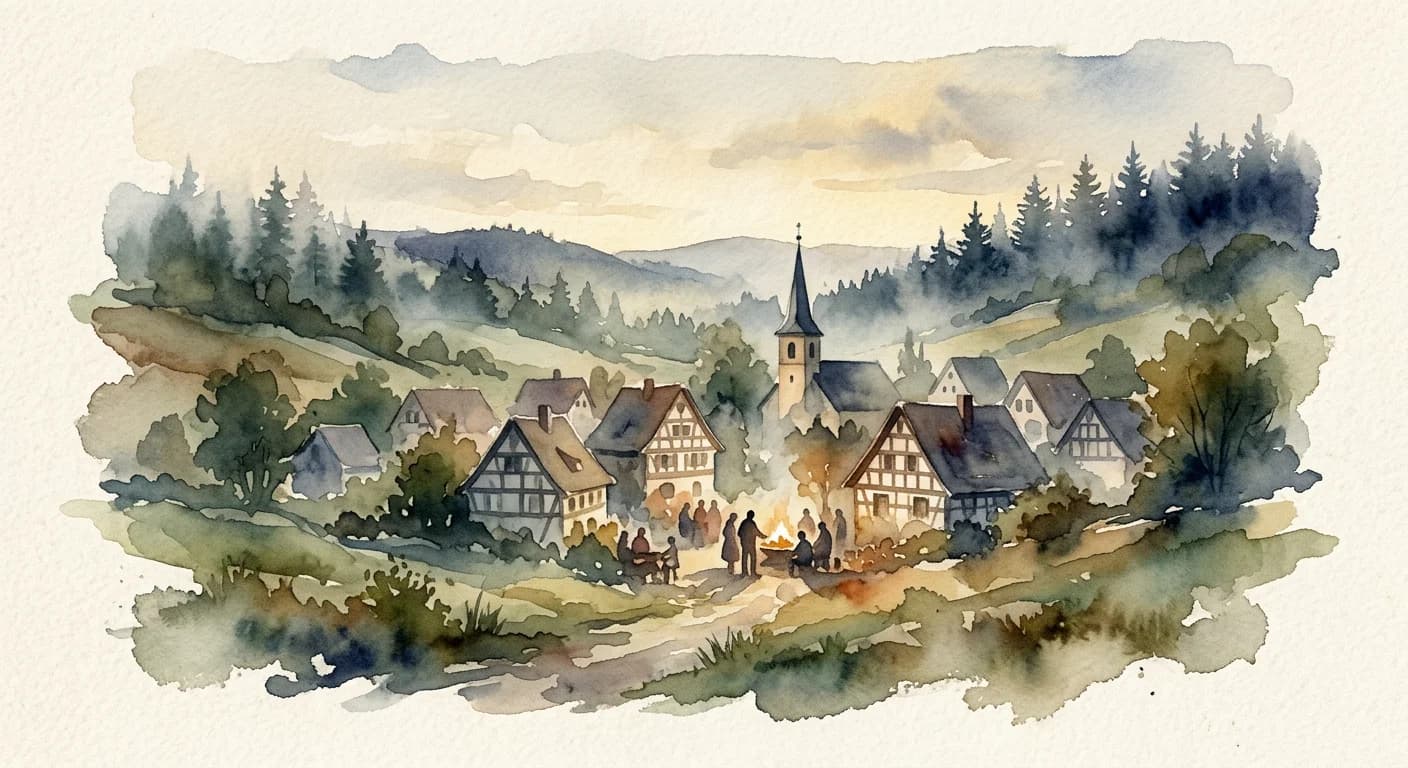
In a small Bavarian village, the annual harvest festival is more than just a celebration; it's a profound expression of Gemeinschaft. Generations work side-by-side, sharing stories and laughter, as the entire community gathers to process the bounty of the land. Each person feels an indispensable part of the collective effort, their individual contributions weaving into the shared prosperity and enduring traditions of their ancestral home.
Family Business Legacy
The Müller family bakery, passed down for five generations, embodies Gemeinschaft. Decisions aren't made for individual profit alone, but for the legacy and well-being of the entire family and their loyal customers, many of whom have been patrons for decades. There's an unspoken understanding and mutual support amongst the family members, a shared destiny tied to the success and continuity of their collective enterprise.
The Deeper Meaning
Gemeinschaft reflects a philosophical longing for a world where human existence is inherently communal, not merely aggregated. It posits that true fulfillment comes from being deeply embedded in a collective, where identity is forged through shared experience and mutual obligation, rather than solely through individual achievement. This worldview prioritizes organic growth and enduring bonds over the transient and contractual nature of modern societal interactions, hinting at a critique of pure Enlightenment individualism.
Did You Know?
Ferdinand Tönnies, who coined the sociological distinction between Gemeinschaft and Gesellschaft, actually published his seminal work, 'Gemeinschaft und Gesellschaft,' in 1887, long before many of his contemporaries recognized its profound implications.
How It's Used
Used in sociology and cultural studies to describe traditional, close-knit communities and intimate social relationships, often contrasted with more impersonal, contractual 'Gesellschaft' (society).