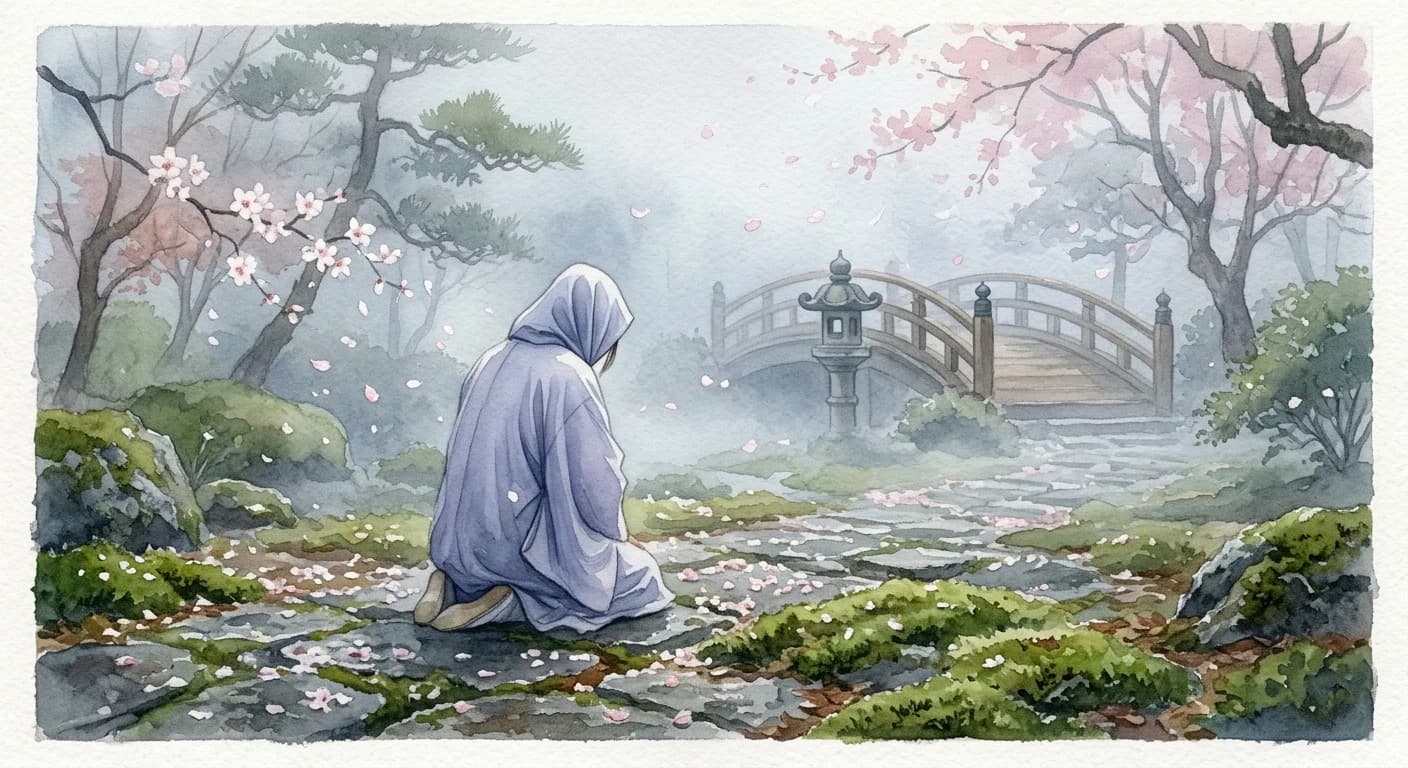
Gomenasai
/go-meh-nah-SAI/
Meaning
Gomenasai is not merely an admission of fault, but a profound expression of regret that acknowledges the disruption caused to social harmony and the emotional burden placed on another. It conveys a sincere desire to restore balance and mend the interpersonal fabric, often implying a commitment to prevent future recurrences. This apology carries the weight of personal accountability, recognizing the impact of one's actions on the collective good and the delicate balance of relationships.
Literal Translation
Forgive me / I am sorry
The Story Behind the Word
The deep significance of "Gomenasai" is rooted in Japan's hierarchical society and the paramount cultural value of 'wa' (harmony). This word reflects a worldview where individual actions are always considered in the context of the group and the preservation of smooth social interactions. Apologizing is not a sign of weakness, but a demonstration of strength and empathy, a willingness to prioritize the well-being of the relationship over individual pride. Historically, apologies could even carry legal or social weight, demonstrating a commitment to rectify wrongs and prevent further discord. It underscores a collective consciousness where maintaining face (both one's own and others') and avoiding shame are crucial, making a sincere apology a powerful tool for reconciliation and social cohesion.
Experience It
Late for Meeting
Tanaka-san rushes into the meeting room, a few minutes past the start time. Bowing slightly to his colleagues and superior, he says, 'Gomenasai,' acknowledging not just his tardiness but the inconvenience he caused by delaying the proceedings.
Accidental Spill
While serving tea, a waitress accidentally spills a drop on a customer's sleeve. Immediately, she bows deeply, saying, 'Gomenasai!' Her tone conveys genuine remorse for the small mishap and the momentary discomfort it caused.
The Deeper Meaning
Gomenasai embodies the Japanese philosophical emphasis on interconnectedness and the ethical imperative to maintain 'wa' (harmony) within society. It reflects a worldview where individual actions have ripple effects, and personal responsibility extends to the emotional and social well-being of others. The act of apology is a ritualized performance of humility and respect, essential for restoring equilibrium and reinforcing communal bonds.
Did You Know?
The 'nasai' in 'Gomenasai' is an imperative form of 'nasaru,' a polite verb meaning 'to do,' implying a request for forgiveness or understanding for one's actions.
How It's Used
Used to apologize for mistakes, inconveniences, or causing trouble to someone. It's a common, polite way to say 'I'm sorry' in Japanese, suitable for most everyday situations.