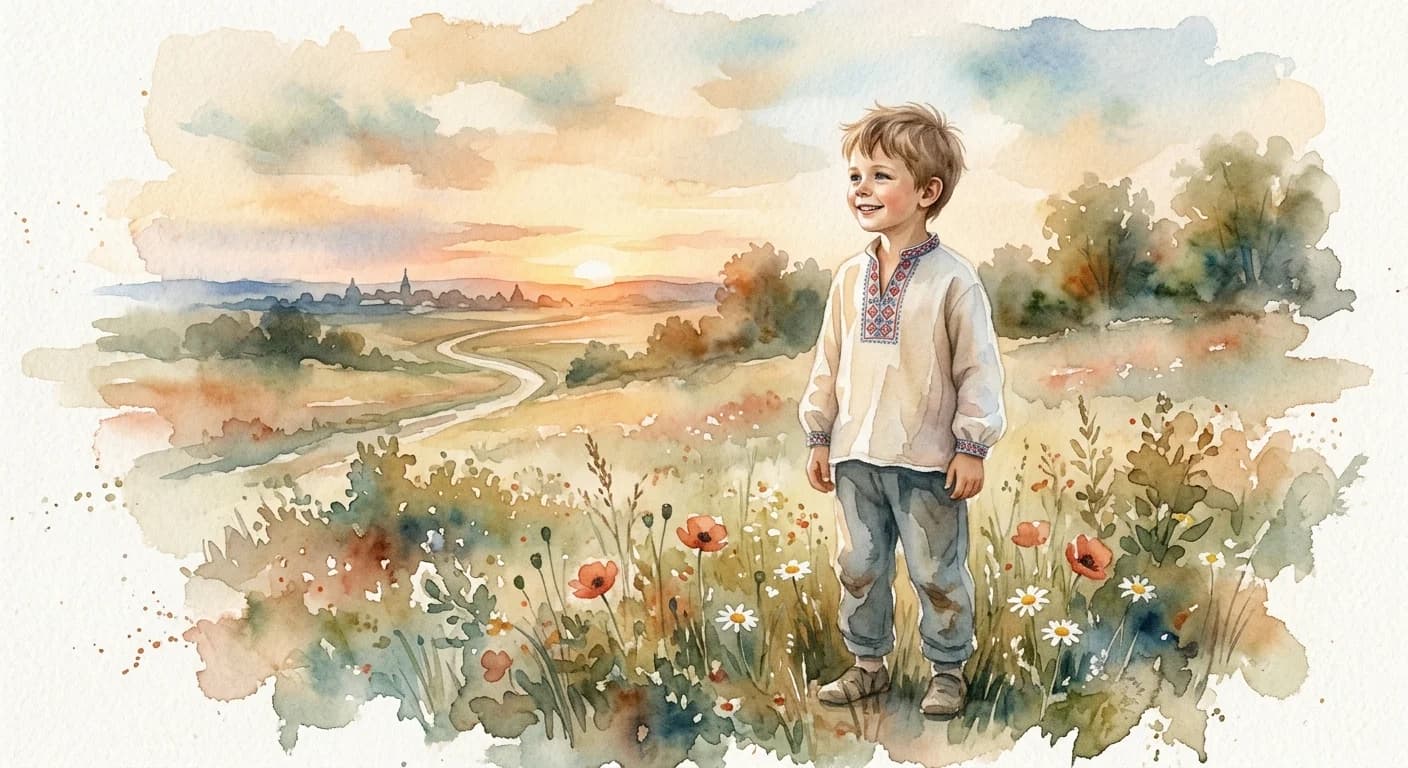
Gopchik
/GOP-chick/
Meaning
Gopchik refers to a lively young boy, typically in his pre-teen years, often characterized by boundless energy and a mischievous, sometimes unruly, spirit. It evokes the image of a spirited lad, perhaps with scraped knees and dishevelled hair from outdoor adventures, embodying the uninhibited freedom and innocent impishness of childhood. While suggesting a slight lack of strict adherence to rules, the term is overwhelmingly affectionate, capturing a cherished stage of boyhood marked by curiosity, playfulness, and a burgeoning sense of independence, before the full weight of adult responsibilities descends.
Literal Translation
boy (diminutive/affectionate)
The Story Behind the Word
The term 'gopchik' is deeply embedded in Ukrainian family warmth and the cultural appreciation for childhood's fleeting, boisterous phase. Its existence reflects a society that, despite historical hardships, values the natural ebullience of youth and often tolerates, even finds charm in, a certain degree of boyish mischief. It speaks to a collective memory of simpler times, where children played freely outdoors, and their spirited antics were seen less as disobedience and more as a healthy expression of life. The diminutive '-чик' (-chyk) suffix itself is a common Ukrainian endearment, transforming a neutral 'gop' (which can have negative connotations in other contexts, referring to street thugs) into a term of affection, highlighting the cultural inclination to soften and cherish the young. This linguistic transformation underscores a worldview where even a 'rascal' can be loved and understood within the family unit.
Experience It
Grandma's Delight
Grandma watches her grandson, Mykola, chase a ball through the garden, narrowly missing her prize-winning hydrangeas. With a fond chuckle, she calls out, 'Oh, look at that gopchik, full of energy! He'll tire himself out eventually.'
Playground Antics
Two mothers sit on a park bench, observing their sons climbing a tree. One boy dangles precariously from a branch. 'Yours is quite the gopchik today,' one mother remarks with a smile, 'always finding the highest spot!'
The Deeper Meaning
The word 'gopchik' reveals a profound cultural appreciation for the raw, unpolished beauty of childhood. It embodies a philosophy that sees youthful energy, even when it borders on unruly, as a natural and even desirable state, rather than something to be immediately suppressed. It suggests a societal understanding that a certain amount of 'mischief' is essential for development, fostering resilience and independence, and that love can temper even the most spirited of young souls.
Did You Know?
The root 'gop' in 'gopchik' is ironically similar to the term 'gopnik,' which refers to a street hooligan, yet 'gopchik' retains its affectionate, innocent meaning through its diminutive suffix.
How It's Used
The term 'gopchik' is used informally to refer to a young boy, typically between childhood and adolescence. It can be used affectionately by parents, grandparents, or other family members, or sometimes by peers. It's often associated with a boy who is active, energetic, and perhaps a little unruly.