U.
HomeRegionsLanguagesEmotionsCollections
Find Your Word

“The limits of my language mean the limits of my world.”

— Ludwig Wittgenstein, Philosopher

Untranslatable

A curated collection of the world's most beautiful expressions—words that remind us language is humanity's greatest invention.

  • Home
  • Collections
  • Regions
  • Countries
  • Emotions
  • Tags
  • Contexts
  • Finder
  • Europe
  • Asia
  • Americas
  • Africa
  • Middle East
  • About
  • Contact
  • Privacy Policy
  • Terms of Service

2026 © Untranslatable. All rights reserved.

    /
    /
    1. Home
    2. /
    3. Europe
    4. /
    5. Grünkohl
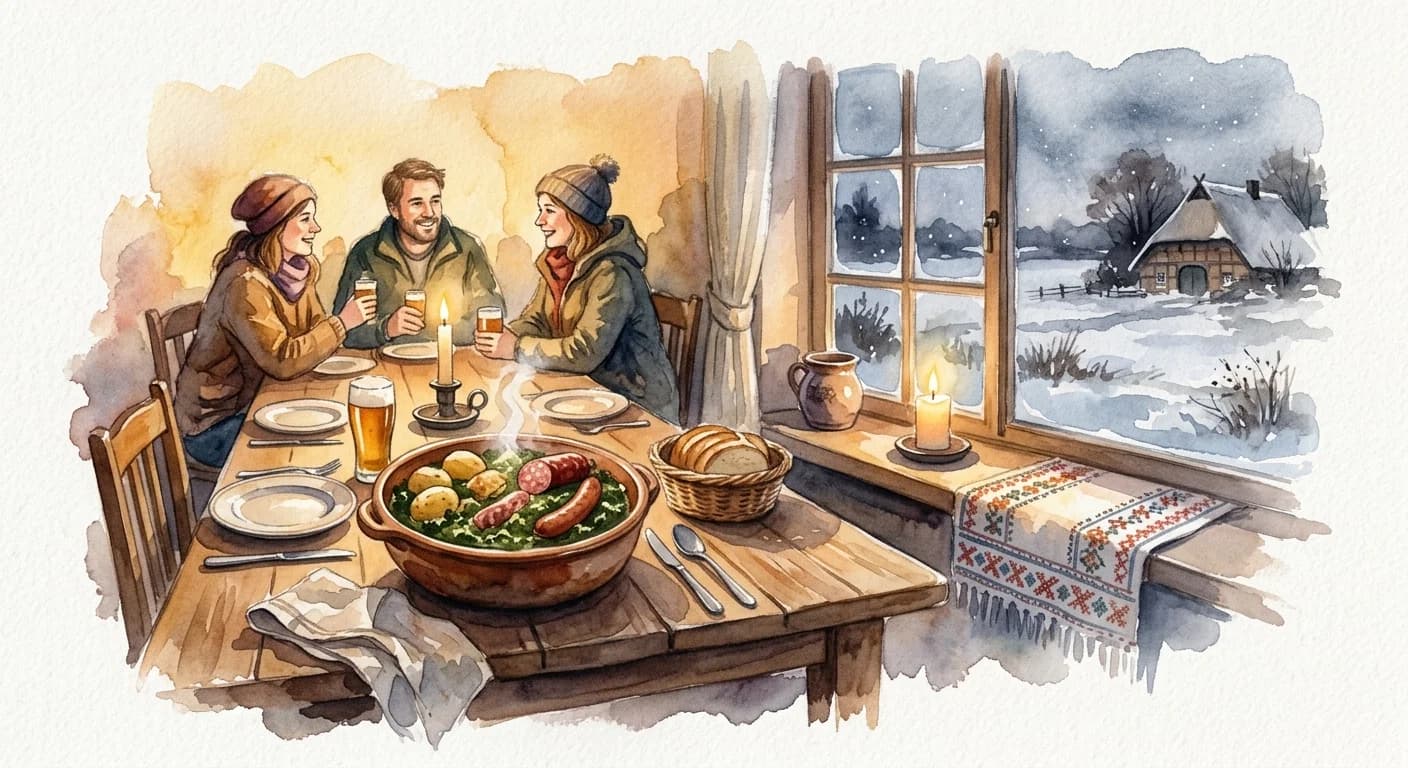
    Artistic representation of Grünkohl
    German•
    🇩🇪Germany

    Grünkohl

    /GROON-kohl/

    Meaning

    Grünkohl, while literally "green kale," transcends its humble vegetable origins in Germany, particularly in the north. It embodies a cherished winter ritual, a robust and deeply satisfying dish that offers solace and warmth during the coldest months. Prepared through long, slow simmering with smoked meats like Kassler, sausages, and bacon, alongside potatoes, it transforms into a rich, savory comfort food. More than just a meal, Grünkohl signifies communal gathering, tradition, and the cozy conviviality of German winter culture.

    Literal Translation

    green cabbage

    The Story Behind the Word

    The cultural significance of Grünkohl is deeply rooted in Germany's agricultural history and the need for hearty, sustaining meals during the harsh winters. Originating as a staple for rural communities, its resilience to cold weather made it an invaluable crop. Over centuries, the preparation evolved, incorporating preserved meats and fats, reflecting a pragmatic approach to food security and flavor development. Grünkohl gatherings, or 'Kohlfahrten,' where groups embark on a walk before enjoying a large Grünkohl meal, reveal a cultural emphasis on community, tradition, and celebrating the turn of seasons. It speaks to a German appreciation for robust, unpretentious fare that brings people together and provides physical and emotional sustenance.

    Experience It

    Winter Kohlfahrt Celebration

    The biting January wind whipped at their scarves as the group laughed, pulling a handcart laden with schnapps and music through the frosted fields. Their destination: the Gasthaus, where a steaming pot of Grünkohl awaited. "Endlich Grünkohlzeit!" someone cheered, anticipating the rich, savory warmth and camaraderie.

    Grandma's Sunday Dinner

    The aroma of slow-cooked Grünkohl filled Oma's kitchen, a comforting scent that signaled Sunday lunch. Grandchildren eagerly gathered around the table, knowing that the tender kale, smoky Kassler, and plump Pinkel sausages were a delicious, time-honored tradition that brought the whole family together.

    The Deeper Meaning

    Grünkohl subtly reveals a German appreciation for the cyclical nature of life and the wisdom of seasonality. It’s a dish that embraces the limitations of winter and transforms them into an occasion for warmth, nourishment, and community. It speaks to a practical philosophy where simple, robust ingredients, prepared with care and patience, yield profound satisfaction, emphasizing endurance, collective joy, and finding comfort in tradition amidst the cold.

    Did You Know?

    In some parts of northern Germany, the first person to finish their plate of Grünkohl at a 'Kohlfahrt' is crowned the 'Grünkohlkönig' (Kale King) or 'Grünkohlkönigin' (Kale Queen)!

    How It's Used

    Used to refer to the vegetable kale, and more importantly, to the traditional German dish made from it, often eaten during autumn and winter.

    Emotions
    belonging,comfort,gratitude,warmth
    Contexts
    celebration,dining,family,seasons
    🇩🇪Germany

    by Annelise Dubois·Written Mar 14, 2026·Updated Apr 3, 2026

    Related Words

    Explore more
    HyggeDanish

    Hygge is more than mere coziness; it's a holistic embrace of comfort, warmth, and belonging that nourishes the soul. It describes the intentional creation of an intimate atmosphere where simple pleasures, genuine connection, and mindful presence converge, fostering a profound sense of contentment and well-being. It's about finding joy and peace in the small, everyday moments, often shared with loved ones.

    SaudadePortuguese

    Saudade encapsulates a profound, melancholic longing for something or someone cherished that is absent, often with the bittersweet knowledge that it may never return. It's a deep emotional state tinged with nostalgia, evoking a sense of loss for past experiences, places, or people, yet also holding a tender appreciation for the beauty of what once was. This yearning is not merely sadness, but a complex tapestry of desire, memory, and a poignant acceptance of absence, holding the beloved in a warm, persistent embrace within the heart.

    GezelligDutch

    Gezellig encapsulates a profound sense of warmth, belonging, and convivial comfort, extending beyond mere coziness to embrace the social and emotional atmosphere. It's the feeling of being truly at ease, surrounded by good company, laughter, and a shared sense of contentment. This untranslatable term describes not just a physical space, but a holistic experience where time seems to slow down, fostering genuine connection and a deep sense of well-being.

    Dolce far nienteItalian

    Dolce far niente captures the profound joy and effortless pleasure derived from simply existing without obligation or purpose. It's the art of savoring moments of pure, unadulterated idleness – lying in the sun, watching the clouds drift, or enjoying a leisurely coffee – not as a break from work, but as a valuable state in itself. This 'sweetness of doing nothing' is a conscious embrace of stillness and contentment, allowing the soul to breathe and the senses to fully engage with the present.