Aiga
/AH-ee-gah/
Meaning
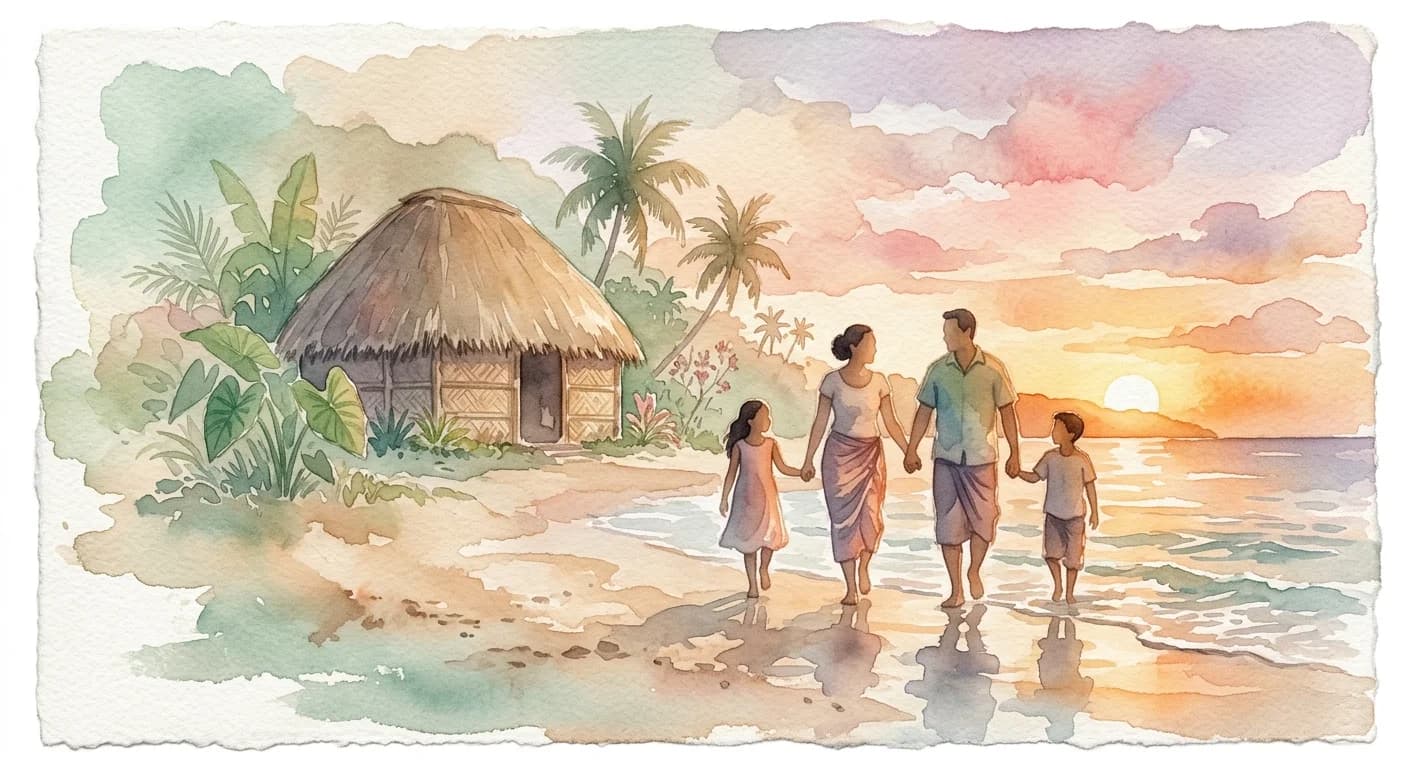
Aiga is the quintessential Samoan concept of family, far surpassing the Western nuclear unit to embrace a vast network of extended relatives—grandparents, aunts, uncles, cousins, and even cherished friends integrated into the household. It embodies an unbreakable bond of kinship, shared responsibility, and unwavering mutual support, forming the very bedrock of Samoan social structure and individual identity. This profound connection prioritizes collective well-being and demands a lifelong commitment, shaping cultural practices, daily interactions, and decision-making, truly defining belonging and interconnectedness.
Literal Translation
Family
The Story Behind the Word
The concept of Aiga is deeply rooted in Samoa's communal, hierarchical society. Historically, survival and prosperity in the islands depended on collective effort, making a robust, interconnected family unit essential. This isn't just about bloodlines; it's about a social contract where every member has a role and responsibility, from the oldest matai (chief) who guides the Aiga, to the youngest child learning respect. Aiga reveals a worldview where individualism is secondary to the group's harmony and welfare. Decisions are often made collectively, resources are shared, and support is reciprocal, reflecting a philosophy of 'fa'a Samoa' (the Samoan way) where family is paramount and provides a safety net from birth to death. This extensive family network ensures social cohesion, economic stability, and the preservation of cultural traditions.
Experience It
Fa'alavelave: Family Obligation
When a funeral (fa'alavelave) is announced, members of the Aiga drop everything. Cousins living in different villages, or even overseas, will travel back, pooling resources, food, and labor to ensure the event is honored respectfully, demonstrating their unwavering commitment and support for the grieving family within the larger Aiga.
Shared Upbringing of Children
A young couple is struggling to care for their newborn while working. Without hesitation, the baby's aunt (a member of the wider Aiga) offers to take the child into her home for a few months, raising them as her own alongside her children, knowing it's a shared responsibility and a common practice within the Aiga.
The Deeper Meaning
Aiga encapsulates a philosophy of 'we before me,' where an individual's identity and well-being are inextricably linked to the collective. It teaches that true strength and security lie in mutual dependence, emphasizing humility, respect for elders, and the fulfillment of one's duties to the group. This worldview eschews Western notions of self-reliance in favor of profound interconnectedness, where one's actions reflect on the entire family unit and its ancestors.
Did You Know?
In traditional Samoan society, it's common for children to be raised by various members of their Aiga, not just their biological parents, fostering even stronger community bonds.
How It's Used
Used to refer to one's family unit, encompassing immediate and extended relatives, and emphasizing the strong bonds and responsibilities within that unit. It's a foundational concept in Samoan culture, influencing social interactions, community life, and decision-making.