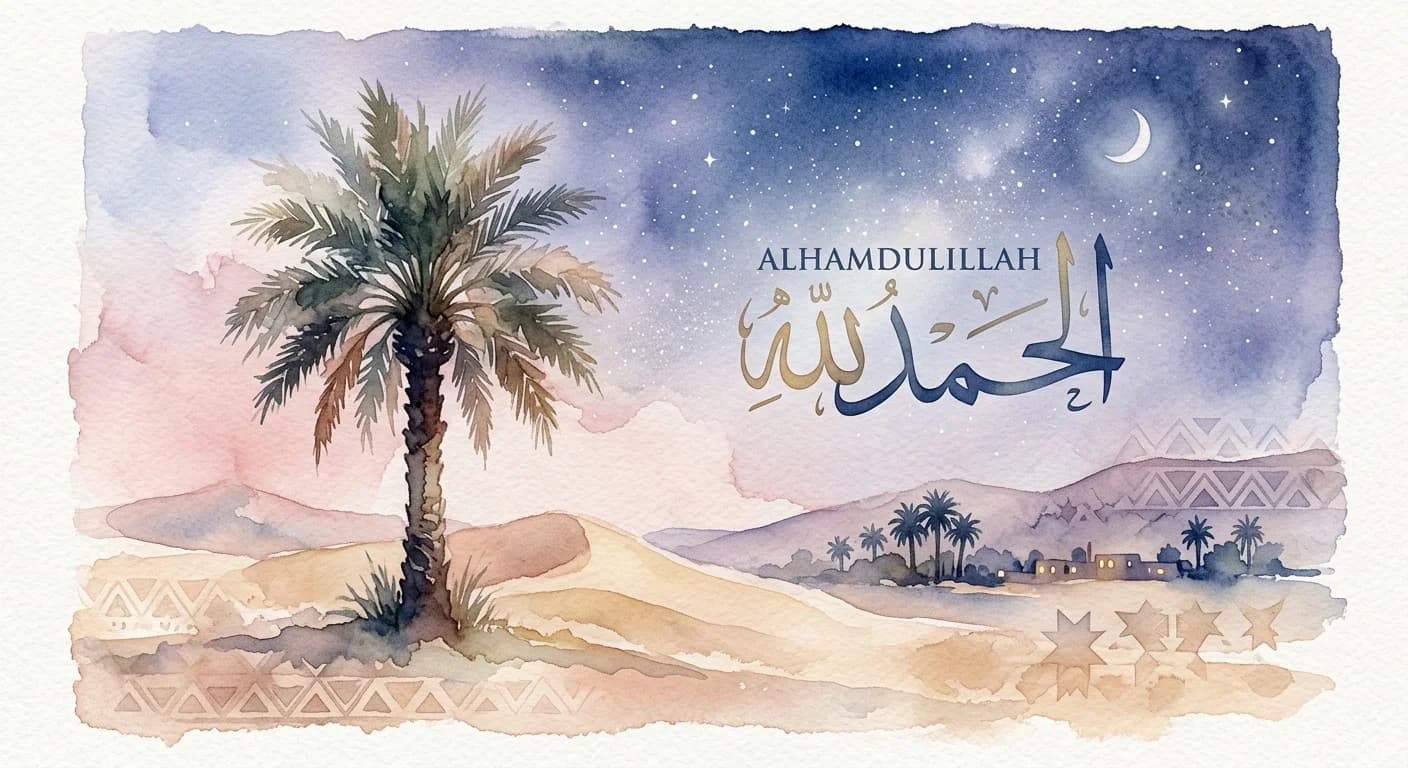
Alhamdulillah
/al-ham-doo-lil-lah/
Meaning
This profound Arabic phrase transcends a simple 'thank you,' embodying a complete surrender and acknowledgment of divine beneficence. It serves as a constant spiritual anchor, reminding individuals that every blessing, from the grandest joy to the simplest comfort, originates from God. Uttered in moments of gratitude, relief, or even acceptance, "Alhamdulillah" weaves a tapestry of contentment and humility into the fabric of daily life, fostering a worldview deeply rooted in divine providence and thankfulness.
Literal Translation
Praise be to God
The Story Behind the Word
The existence of "Alhamdulillah" is deeply rooted in Islamic theology and Arab cultural values, where the concept of Tawhid (oneness of God) and shukr (gratitude) are paramount. It reflects a worldview where every event, outcome, and blessing is ultimately attributed to God's will and generosity. This phrase is not merely a linguistic expression but a cornerstone of a spiritual practice that encourages continuous mindfulness of the divine in everyday life. It instills a sense of humility, recognizing that human efforts are always supported by a higher power, and promotes resilience, as even in adversity, there is an underlying acceptance of God's wisdom. This constant attribution of good to God shapes a culture of contentment, patience, and unwavering faith.
Experience It
Safe Arrival
After a long and turbulent flight, the plane finally lands smoothly. A passenger lets out a sigh of relief, unbuckles their seatbelt, and quietly murmurs, "Alhamdulillah." It’s an expression of gratitude for a safe journey, acknowledging divine protection.
Good News
A mother receives a phone call with excellent news about her child's academic achievement. Her face breaks into a wide smile, and she instinctively says, "Alhamdulillah!" Her joy is immediately directed in praise to God for the blessing bestowed upon her family.
The Deeper Meaning
The word "Alhamdulillah" encapsulates a profound philosophy of life centered on divine sovereignty and human humility. It promotes a continuous state of gratitude, transforming mundane experiences into spiritual acknowledgments. This constant attribution of all good to God cultivates resilience, peace, and acceptance, fostering a deep sense of contentment regardless of external circumstances, as one always finds a reason to praise the divine.
Did You Know?
The phrase "Alhamdulillah" is one of the most frequently uttered expressions in the Muslim world, often used even by non-Muslim Arabic speakers due to its deep cultural integration.
How It's Used
Uttered by Muslims and Arabic speakers in a wide range of situations, from expressing thanks after receiving good news or a gift, to acknowledging a pleasant experience, or even as a response to 'How are you?' to indicate well-being, all attributing the goodness to God.