Almuerzo
/ahl-MWEHR-thoh/
Meaning
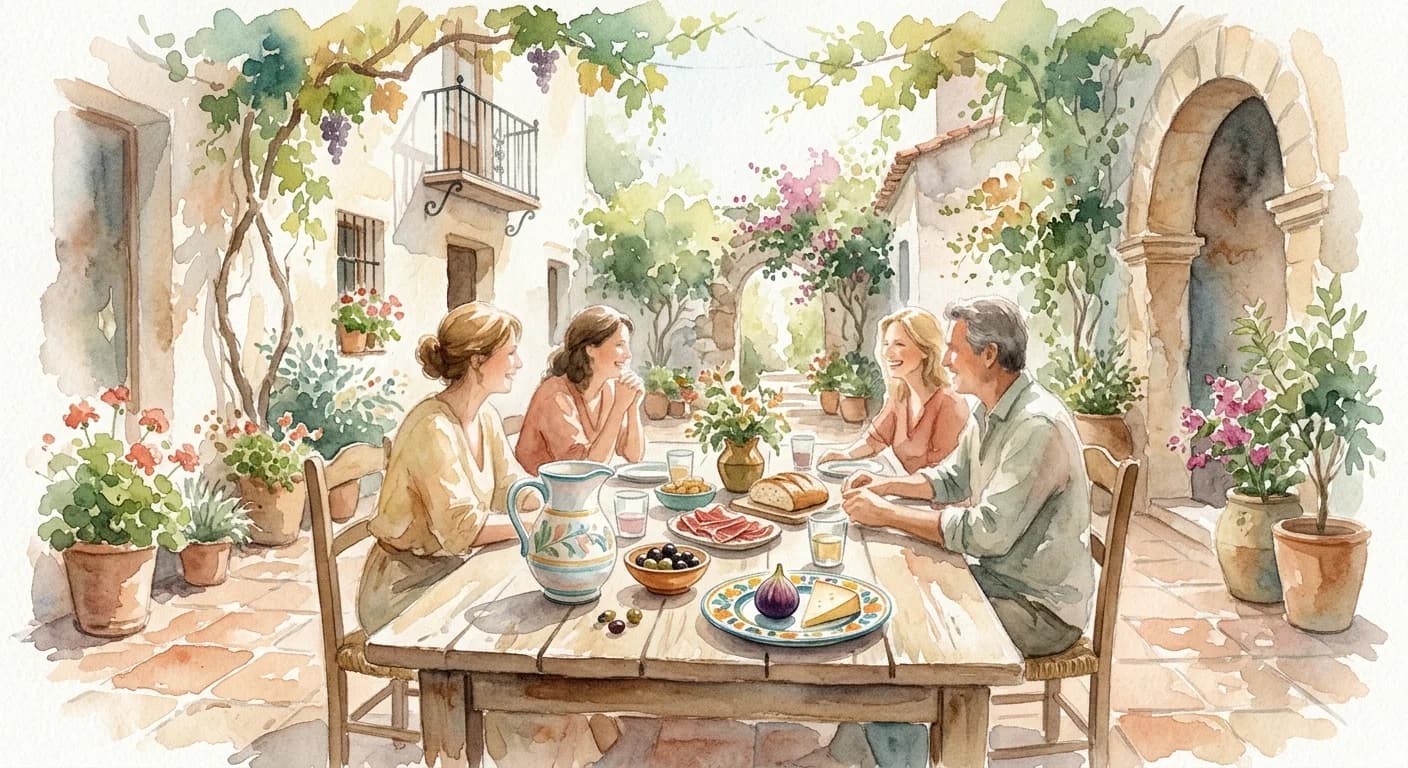
Almuerzo transcends a mere meal; it's a cherished daily ritual in Spain, a vibrant midday pause typically enjoyed between 2 PM and 4 PM. Far from a quick bite, it's often the day's most substantial repast, featuring multiple courses savored at a leisurely pace. This extended break is dedicated to genuine connection, fostering lively conversation and strengthening bonds with family, friends, or colleagues, embodying a deep cultural appreciation for shared experiences and the art of living well.
Literal Translation
lunch
The Story Behind the Word
The prominence of 'almuerzo' in Spanish culture is deeply rooted in historical work patterns and a Mediterranean rhythm of life. Traditionally, long morning work hours necessitated a significant break before resuming tasks in the cooler late afternoon. This practical need evolved into a social institution, reflecting a philosophy where sustenance is intertwined with connection and enjoyment. It underscores a societal value that prioritizes human interaction and the pleasure of the table over strict efficiency. The unhurried nature of almuerzo reveals a worldview that embraces 'dolce vita' – the sweet life – where taking time to eat, converse, and relax is not a luxury, but an essential component of well-being and community cohesion. It's a daily affirmation that life is to be savored, not rushed.
Experience It
Family Almuerzo Sunday
On Sundays, the Garcia family gathers around a large table, the aroma of paella filling the air. Grandparents, children, and grandchildren spend three hours laughing, sharing stories, and passing dishes, with no one checking their phones, fully immersed in the shared almuerzo.
Colleagues' Midday Break
During the workday, María and her colleagues leave the office for a nearby restaurant. Over three courses and a glass of wine, they discuss not just work, but life, politics, and weekend plans, returning to their desks refreshed and reconnected after their daily almuerzo.
The Deeper Meaning
Almuerzo embodies Spain's 'slow living' philosophy, where time is not merely a commodity to be optimized but a resource to be savored, especially in the company of others. It reflects a belief that true richness lies in human connection, sensory pleasure, and the deliberate act of pausing to appreciate life's simple, yet profound, moments, rather than constantly striving for productivity.
Did You Know?
Historically, 'almuerzo' was sometimes used to refer to breakfast, but over centuries, its meaning shifted definitively to the midday meal, cementing its current cultural significance.
How It's Used
Used to refer to the midday meal, most commonly eaten in the afternoon in Spanish-speaking cultures.