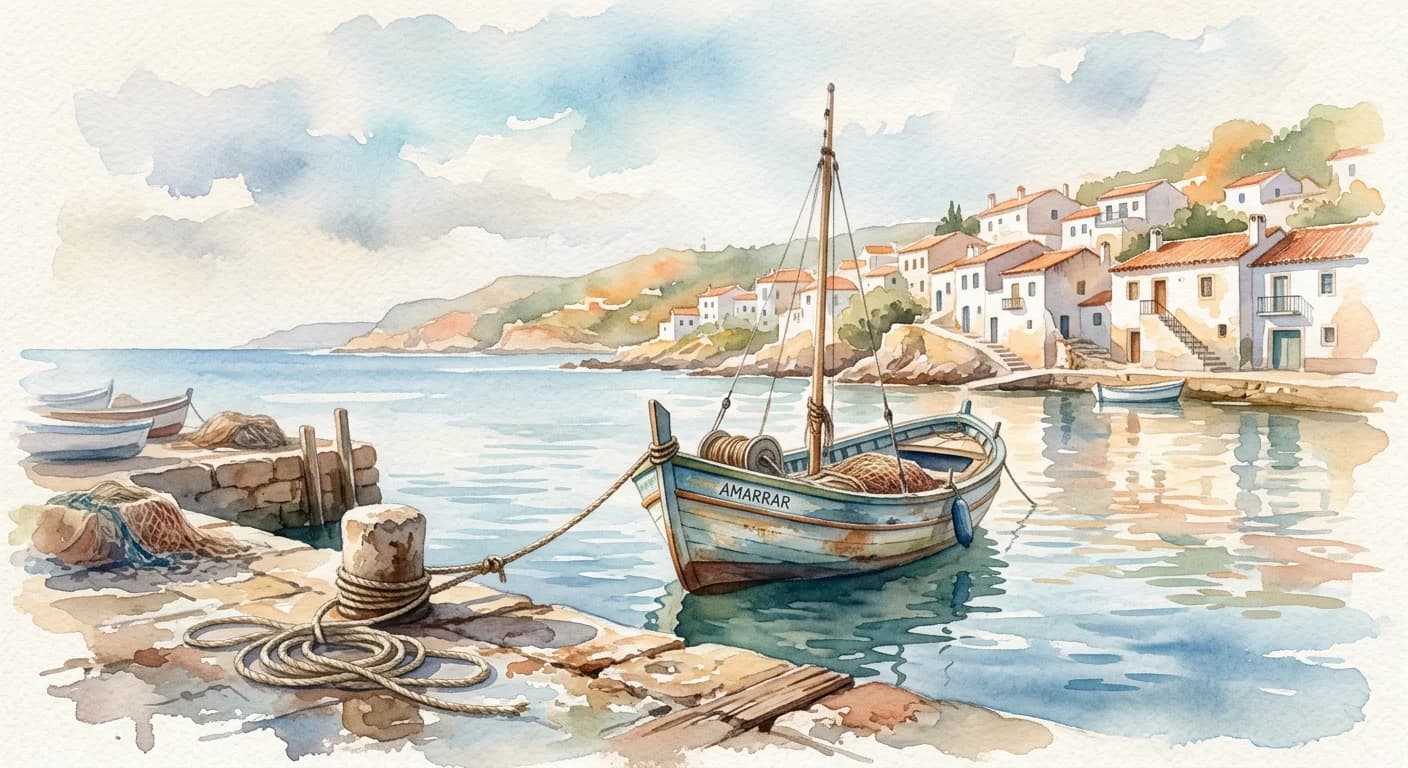
Amarrar
/ah-mah-RRAHR/
Meaning
While 'amarrar' literally translates to 'to tie' or 'to moor,' in Portuguese culture, it transcends mere physical connection. It embodies the act of securing something or someone with a profound, often enduring bond, suggesting permanence and deep entanglement. Beyond fastening a boat, it evokes the powerful emotional act of 'tying one's heart' (amarrar o coração) to another, signifying commitment, belonging, and a sense of being firmly established. This word captures the essence of creating an unbreakable link, whether tangible or intangible.
Literal Translation
to tie, to moor
The Story Behind the Word
The concept embedded in 'amarrar' is deeply rooted in Portugal's maritime history and its strong family-oriented, community-centric culture. For a nation of navigators and fishermen, the ability to 'amarrar' a vessel securely meant survival, stability, and a safe return. This practical necessity naturally extended to human relationships, where strong, enduring bonds are highly valued. The word reflects a worldview that prizes stability, commitment, and the intertwining of lives. It suggests that true connection isn't fleeting but deliberately forged and maintained, much like a sailor carefully securing his ship against the whims of the sea. This cultural emphasis on deep, lasting ties underpins many social structures and personal expectations in Portuguese-speaking societies.
Experience It
Tying the Knot
After years of dating, Maria and João decided to 'amarrar' their lives together in marriage. Their vows weren't just words; they were a public declaration of a deep, unbreakable bond they intended to nurture forever.
Securing the Future
The small village worked together to 'amarrar' their community's future by investing in local businesses and fostering strong intergenerational relationships. They believed that by supporting each other, they could weather any storm.
The Deeper Meaning
The word 'amarrar' reveals a philosophy centered on the deliberate creation and maintenance of stability. It suggests that meaningful connections, whether with a place, a person, or a purpose, are not accidental but require conscious effort, intention, and a commitment to endure. This worldview values permanence and depth over transient encounters, seeing life's true richness in the bonds that hold us fast.
Did You Know?
The phrase 'amarrar o burro onde o dono quer' (to tie the donkey where the owner wants) is a common Portuguese saying, meaning to comply or adapt to someone else's wishes, even if you disagree.
How It's Used
Used in both literal and figurative contexts to describe the act of tying, binding, or mooring. Figuratively, it signifies forming a strong emotional connection, commitment, or attachment.