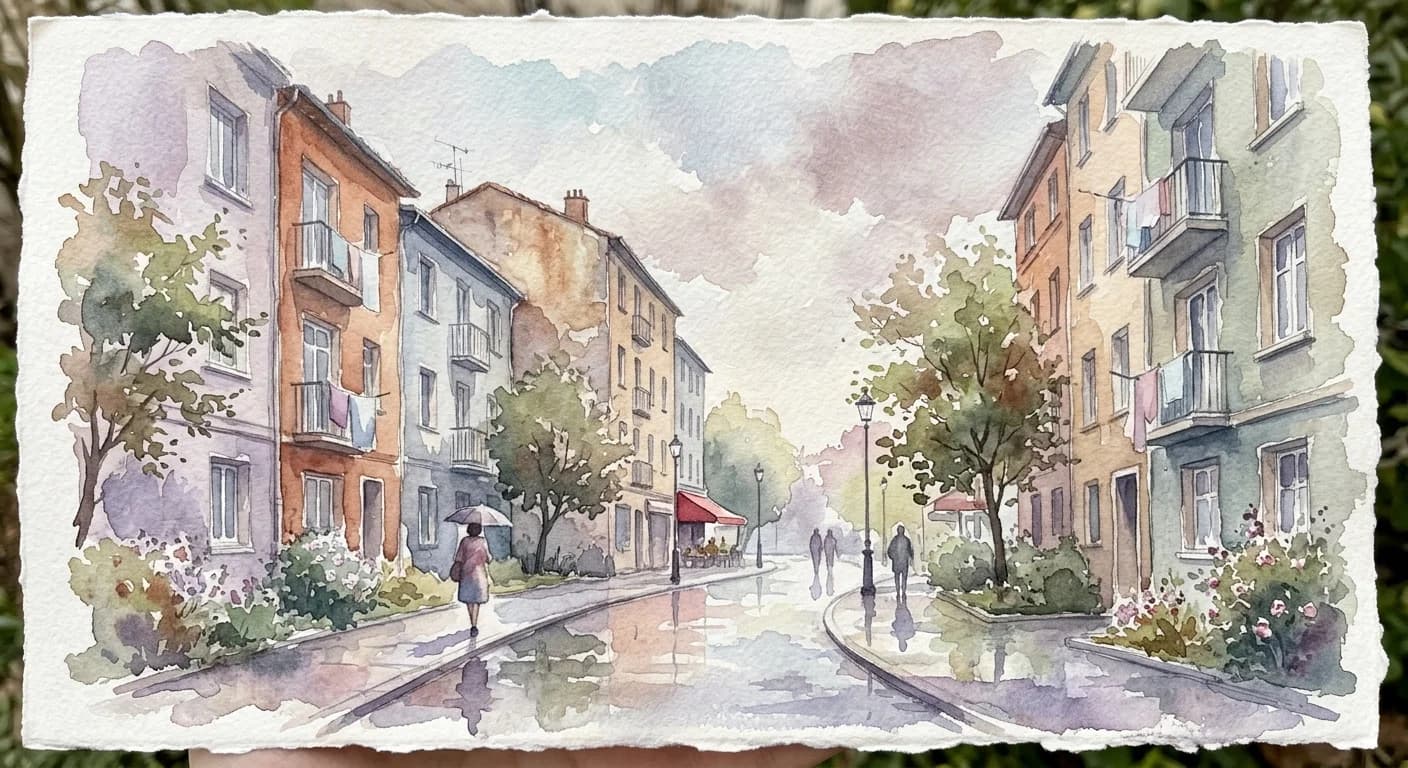
Banlieue
/bahn-LYOO/
Meaning
The "banlieue" in France is far more than just a geographical suburb; it's a vibrant, often challenging, socio-cultural landscape on the periphery of major cities. These areas are frequently characterized by high-rise housing estates, diverse immigrant communities, and a distinct working-class identity. While they can be hubs of creativity and resilience, they are also commonly associated with socio-economic disparities, youth unemployment, and a sense of being culturally and politically marginalized from the glittering city centers they abut. It signifies a complex tapestry of community, struggle, and unique identity.
Literal Translation
suburb, outskirts
The Story Behind the Word
The concept of the "banlieue" emerged prominently in France post-WWII, as rapid urbanization and the influx of immigrant labor led to the construction of large, planned housing projects (HLMs) on city outskirts. Initially conceived as modern solutions to housing shortages, these areas gradually became synonymous with social segregation, economic inequality, and cultural difference. The word reflects a deep-seated French societal tension between the idealized, historic city center and its often-overlooked, yet vital, periphery. It highlights how French society grapples with integration, identity, and the legacy of colonialism, embodying a space where diverse cultures converge, sometimes clashing, sometimes creating new, dynamic forms of expression in music, art, and language. The word's existence reveals a national consciousness acutely aware of its internal divisions and the lived realities of those on the margins.
Experience It
A Young Artist's Dream
Léa, growing up in a banlieue outside Paris, found inspiration in the vibrant street art and diverse music styles around her. Her art often depicted the resilience and camaraderie of her neighborhood, a world away from the Louvre, yet equally rich in stories.
Navigating Daily Life
Monsieur Diallo commutes daily from his banlieue apartment to his job in central Lyon. He appreciates the strong community ties and affordability of his neighborhood, but laments the longer travel times and the occasional feeling of being overlooked by city planners.
The Deeper Meaning
The "banlieue" embodies a critical philosophical tension in French society: the ideal of republican universalism versus the reality of socio-economic and cultural particularisms. It challenges the notion of a monolithic French identity by foregrounding spaces where diverse histories and experiences converge, often outside the traditional narratives of national belonging. It prompts reflection on inclusion, exclusion, and the very definition of what constitutes 'Frenchness' in a multicultural landscape.
Did You Know?
The word "banlieue" literally translates to "ban-mile," referring to the historical area around a medieval town where the lord's ban, or authority, extended.
How It's Used
Used in French to refer to the suburbs or outer areas of a city, often carrying socio-economic connotations.