Barnama
/BAR-nah-mah/
Meaning
Barnama transcends mere musical performance; it embodies a profound, traditional Iranian musical experience characterized by intricate melodies, deep emotional improvisation, and a palpable connection between artist and audience. It's a holistic immersion, where the music evokes introspection, spiritual contemplation, and a deep reverence for Persia's rich cultural and historical tapestry. This untranslatable term captures the essence of a shared heritage, resonating with spiritual, historical, and emotional dimensions unique to Persian identity.
Literal Translation
The word 'Barnama' itself doesn't have a direct literal translation in Persian that captures its musical connotation. It is derived from 'barnāmeh' which means 'program' or 'schedule', but in the context of music, it has evolved to signify this particular style.
The Story Behind the Word
The concept of Barnama is deeply rooted in Iran's rich artistic and spiritual heritage, particularly its classical music traditions which have evolved over millennia, influenced by Sufism and ancient Persian poetry. It’s not just entertainment but a form of meditation and storytelling, where each note and improvisation carries the weight of history and collective memory. The word's evolution from 'program' to denote this specific musical style reflects how these performances are carefully structured yet allow for profound emotional freedom. Barnama reveals a cultural emphasis on inner experience, beauty, and the power of art to connect individuals to a deeper, often spiritual, understanding of existence and their ancestral legacy. It underscores the Persian appreciation for nuance, tradition, and the expressive power of sound to convey the ineffable.
Experience It
Evening of Soulful Barnama
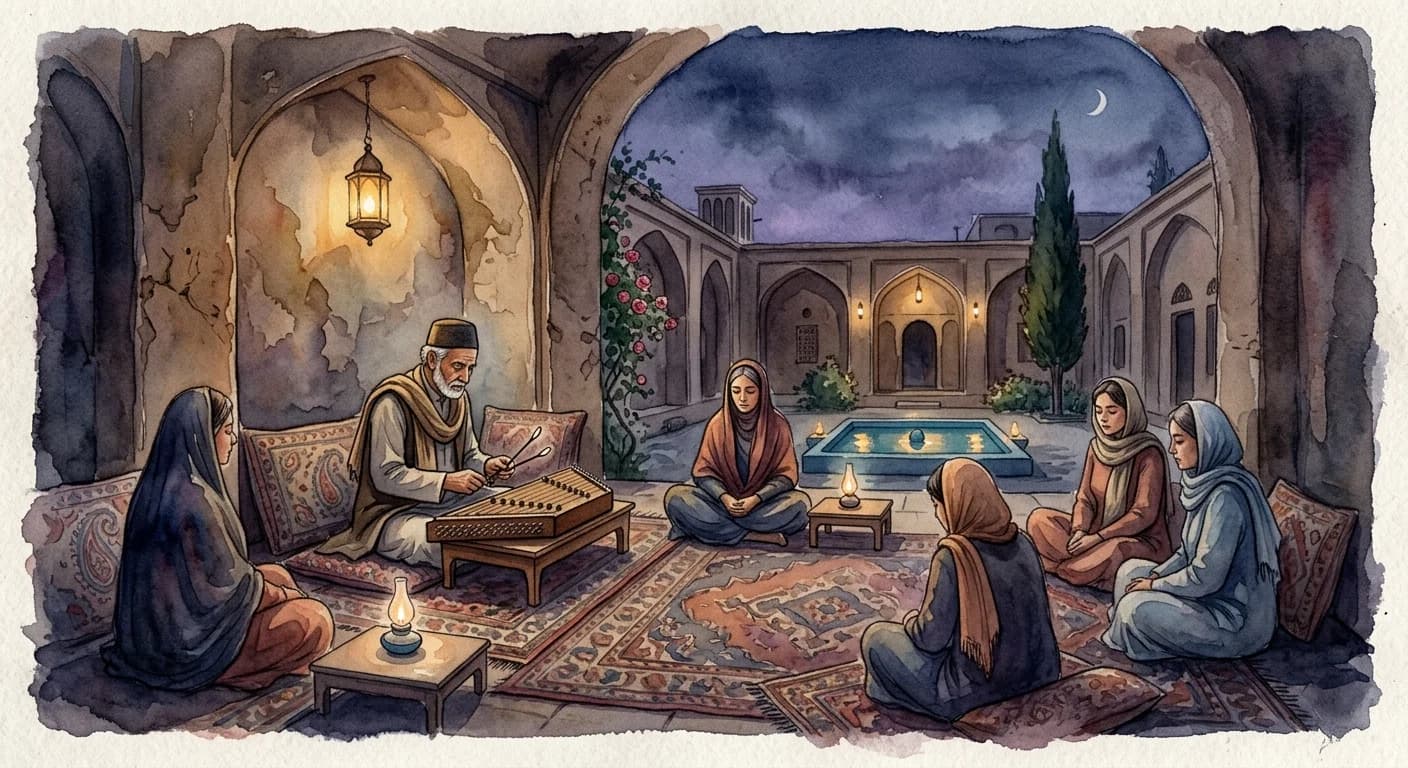
The lights dimmed in the ancient teahouse as the setar player began, each delicate plucking of the strings weaving a tapestry of sound. The audience sat in hushed reverence, their eyes closed, absorbing the melancholic yet hopeful melodies that unfolded, a true Barnama that transported them through time and emotion.
Learning the Barnama
Young Reza spent hours with his ustad, not just learning scales but understanding the 'dastgah' and the spirit of improvisation. His teacher stressed that playing Barnama wasn't about perfect notes, but about pouring one's soul into the music, connecting with the tradition, and conveying a story without words.
What Gets Lost in Translation
English speakers might mistake 'Barnama' simply as 'Persian traditional music.' However, it's far more specific, referring to the *experience* and *spirit* of a particular style, not just the genre. It's not just the notes, but the improvisational journey, the emotional depth, and the cultural resonance that define it, often lost when translated merely as 'a concert.'
Across Cultures
Similar concepts of profound, spiritually resonant musical traditions exist in other cultures. Indian classical music, particularly 'Raga', shares Barnama's improvisational depth and emotional storytelling. Turkish 'Makam' music also emphasizes intricate melodic modes and expressive improvisation, aiming to evoke specific moods and spiritual states, much like Barnama's quest for introspection and cultural connection.
The Deeper Meaning
Barnama reflects a worldview that values emotional depth, historical continuity, and the spiritual power of art. It reveals a culture that sees music not merely as entertainment, but as a vehicle for self-discovery, collective memory, and a connection to something transcendent. It underscores the Persian belief in the profound intertwining of beauty, tradition, and the human soul.
Did You Know?
While 'barnama' literally means 'program' or 'schedule' in modern Persian, its musical connotation as a deep, traditional performance is unique, highlighting how language can evolve to imbue common words with profound cultural significance.
How It's Used
Barnama is used to refer to the performance or appreciation of a specific style of traditional Persian music. It can describe a musical piece, a concert, or the general genre itself.