Batey
/BAH-tay/
Meaning
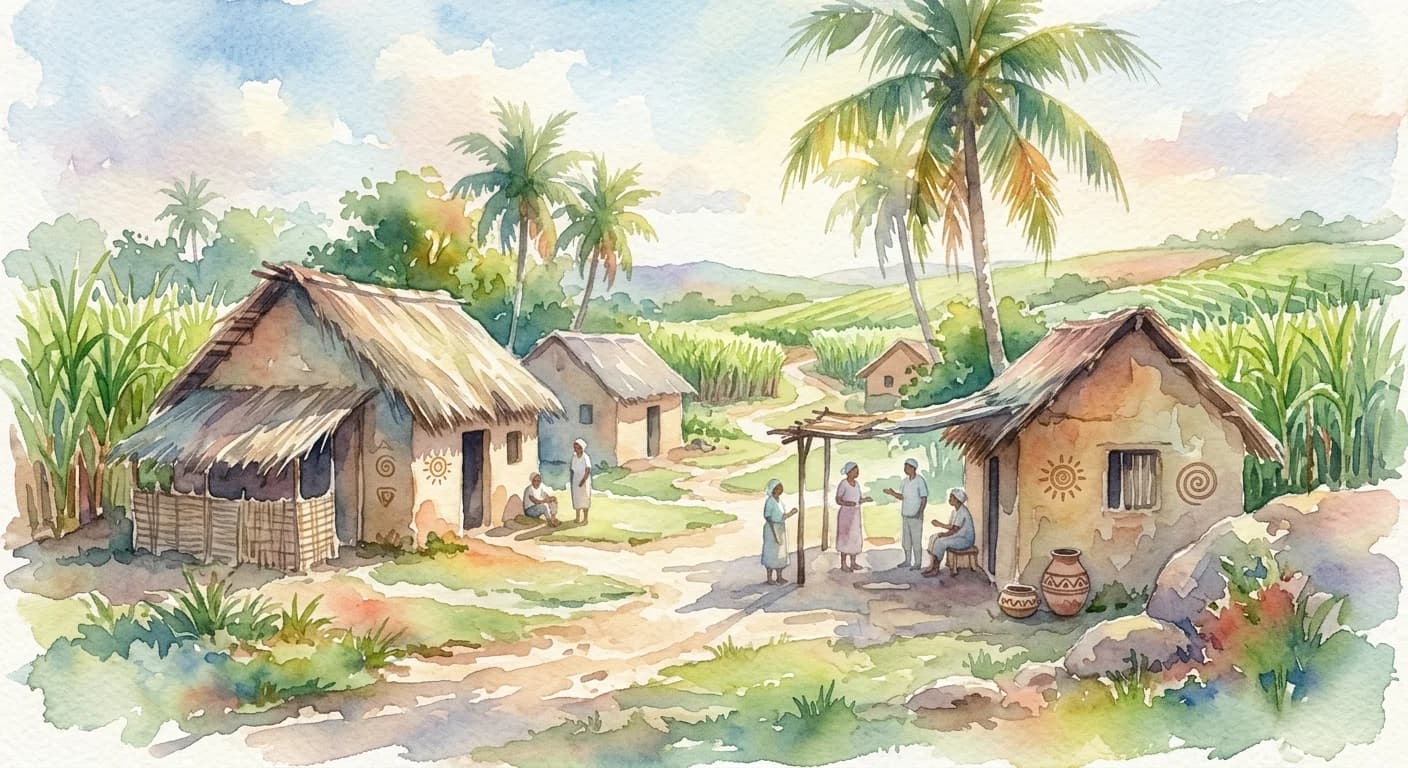
A 'batey' is a distinctive rural settlement, predominantly found in the Dominican Republic, Cuba, and Puerto Rico, deeply rooted in agricultural life. Beyond a mere collection of dwellings, it represents a vibrant community where inhabitants often share labor, resources, and a collective identity tied to the land. It evokes a simpler, traditional existence, intrinsically linked to the rhythms of nature and the cycles of cultivation, often existing as a microcosm of heritage and communal resilience outside bustling urban centers.
Literal Translation
Village or settlement
The Story Behind the Word
The word 'batey' has deep historical roots, stemming from the Taíno language, where it originally referred to a ceremonial ball game field and, by extension, the surrounding village. After the arrival of Europeans and the subsequent sugar industry boom, the term evolved to describe the settlements established around sugar cane plantations, housing the laborers. This transformation highlights the enduring connection of the word to communal living and labor, even as its context shifted from indigenous ceremony to colonial agriculture. It reveals a cultural emphasis on community resilience and adaptation, where shared experience and collective identity are forged through common work and a profound connection to the land, often in challenging circumstances. The batey became a symbol of both exploitation and enduring cultural identity for those who lived within them.
Experience It
Harvest Celebration
In the heart of a Dominican batey, the air hums with excitement. After a grueling sugar cane harvest, families gather for a communal feast, children playing lively games while elders share stories under the starlit sky, their voices weaving through the sounds of traditional music. It's a moment of shared relief and deep connection, celebrating their collective effort and the bounty of the land.
Community Meeting
The community elders of a Cuban batey convene under the shade of a large mango tree. They discuss the upcoming planting season, the need for a new well, and how to support a family whose roof was damaged in the recent storm. Decisions are made collectively, reflecting the strong bonds and mutual responsibility that define life in this close-knit agricultural settlement.
What Gets Lost in Translation
English speakers might simply translate 'batey' as 'village' or 'settlement,' missing its crucial historical and socio-economic connotations. It's not just any rural village; it specifically implies a community often tied to agricultural labor, historically sugar cane, and carries a legacy of shared struggle and resilience, distinct from a general rural town.
Across Cultures
Similar concepts of close-knit agrarian communities exist globally. In Mexico, a 'ejido' refers to communal land used for agriculture, often with a village at its center. Japan has 'mura', traditional villages deeply connected to rice cultivation. While the specific historical context varies, all these terms denote settlements where community, livelihood, and identity are inextricably linked to the land and shared agricultural practices.
The Deeper Meaning
The concept of 'batey' underscores a worldview where collective existence and interdependence are paramount. It reveals a philosophy where human identity is deeply intertwined with labor, the land, and the communal bonds forged through shared adversity and celebration. It speaks to a resilience that finds strength in unity, reflecting a profound understanding of life as a shared journey rather than an individual pursuit.
Did You Know?
Did you know that in its original Taíno context, 'batey' not only referred to a village but also specifically to the rectangular plaza or court where the ancient Taíno people played their ceremonial ball game, a central aspect of their social and religious life?
How It's Used
Used to refer to a rural village or settlement, particularly in the context of agricultural communities in Cuba, Puerto Rico, and the Dominican Republic.