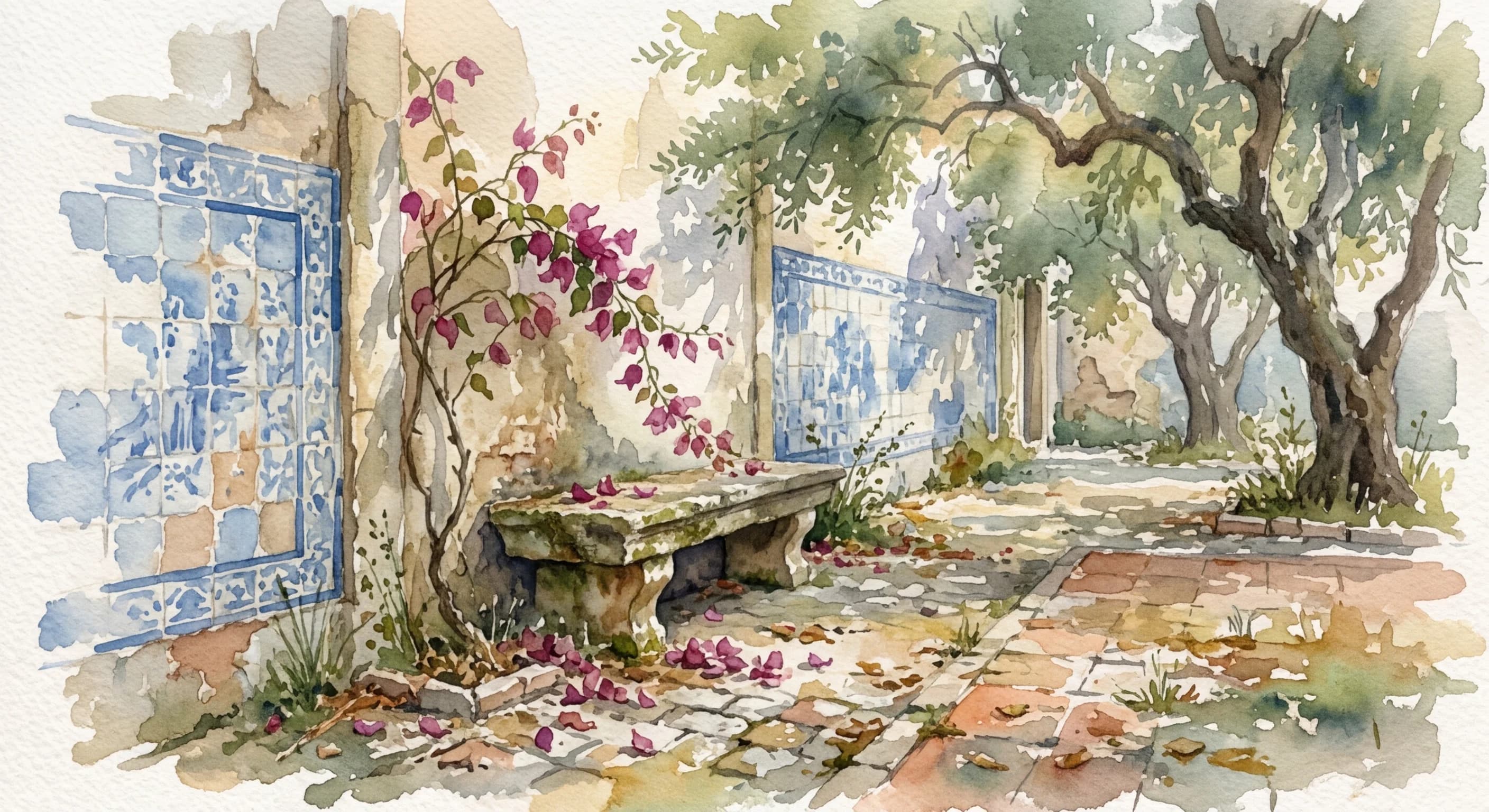
Desmazelo
/dez-mah-ZAY-loo/
Meaning
Desmazelo encapsulates a state of mild, yet noticeable, disarray or neglect stemming from a pervasive indifference rather than malice. It describes the subtle decline of a space, object, or even a personal presentation into untidiness, often due to a lack of sustained attention or a general messiness. This feeling carries a quiet resignation, a sense of things passively slipping into a less orderly state, evoking a gentle melancholy rather than sharp alarm. It's the unkemptness that accumulates when care simply fades away, leaving behind a subtle but pervasive sense of disorder.
Literal Translation
Dis-care / Lack of care
The Story Behind the Word
The existence of 'desmazelo' in Portuguese culture speaks to a nuanced appreciation for the subtle decay that absence of sustained care can bring, reflecting a society that values a certain order and diligence, yet acknowledges the human tendency towards passive allowing. It highlights an awareness of the unspoken contract of maintenance, not just of physical things but also of relationships and personal presentation. This word suggests a cultural sensitivity to the gradual erosion of tidiness and attentiveness, viewing it as a distinct state worthy of its own descriptor. It points to a worldview where the absence of care is as impactful as its presence, and where a quiet resignation to disarray is a recognized human condition. It's less about strict adherence to rules and more about the delicate balance of mindful upkeep.
Experience It
The Forgotten Garden
António's once-vibrant backyard had fallen into a state of 'desmazelo.' Weeds now tangled around overgrown rose bushes, and the once-neat paths were barely visible under a carpet of fallen leaves, reflecting his recent lack of enthusiasm for gardening.
A Life Unkempt
Her apartment, once meticulously kept, now showed signs of 'desmazelo' after a period of intense stress. Laundry piled up in a corner, books lay scattered on the floor, and a thin layer of dust covered everything, a quiet testament to her pervasive weariness.
What Gets Lost in Translation
English speakers might mistake 'desmazelo' for mere sloppiness or outright neglect. However, it lacks the deliberate intention of 'neglect' (which can be malicious) and is more profound than simple 'messiness.' It implies a deeper, almost existential, lack of sustained care, a passive allowing of decay rather than an active creation of disorder. It's not just a messy room; it's the subtle erosion of order due to absent mindfulness.
Across Cultures
While not a perfect match, concepts like the Japanese 'wabi-sabi' share a reverence for the beauty of imperfection and transience, though 'desmazelo' lacks the aesthetic appreciation and leans more towards a passive decline. The German 'Schlampigkeit' (sloppiness) or 'Unordnung' (disorder) come close but often lack the underlying sense of resigned indifference. 'Laissez-faire' in a personal context might touch on the 'allowing' aspect, but without the negative connotation of disarray.
The Deeper Meaning
Desmazelo offers insight into a philosophy that recognizes the constant effort required to maintain order in a world naturally tending towards entropy. It suggests that absence of active engagement leads, not to stasis, but to a subtle yet undeniable decline. This word underscores a worldview where human agency is crucial for upholding structure, and where a lack of 'doing' is itself a form of 'allowing' that carries its own quiet implications.
Did You Know?
The root 'mazelo' itself is uncommon, making 'desmazelo' a unique construction emphasizing the *absence* or *undoing* of care, rather than simply 'bad care.'
How It's Used
Used to describe a state of disarray, neglect, or general untidiness in physical spaces, objects, or even in the way someone presents themselves. It can also refer to a lack of enthusiasm or care in an activity or relationship.