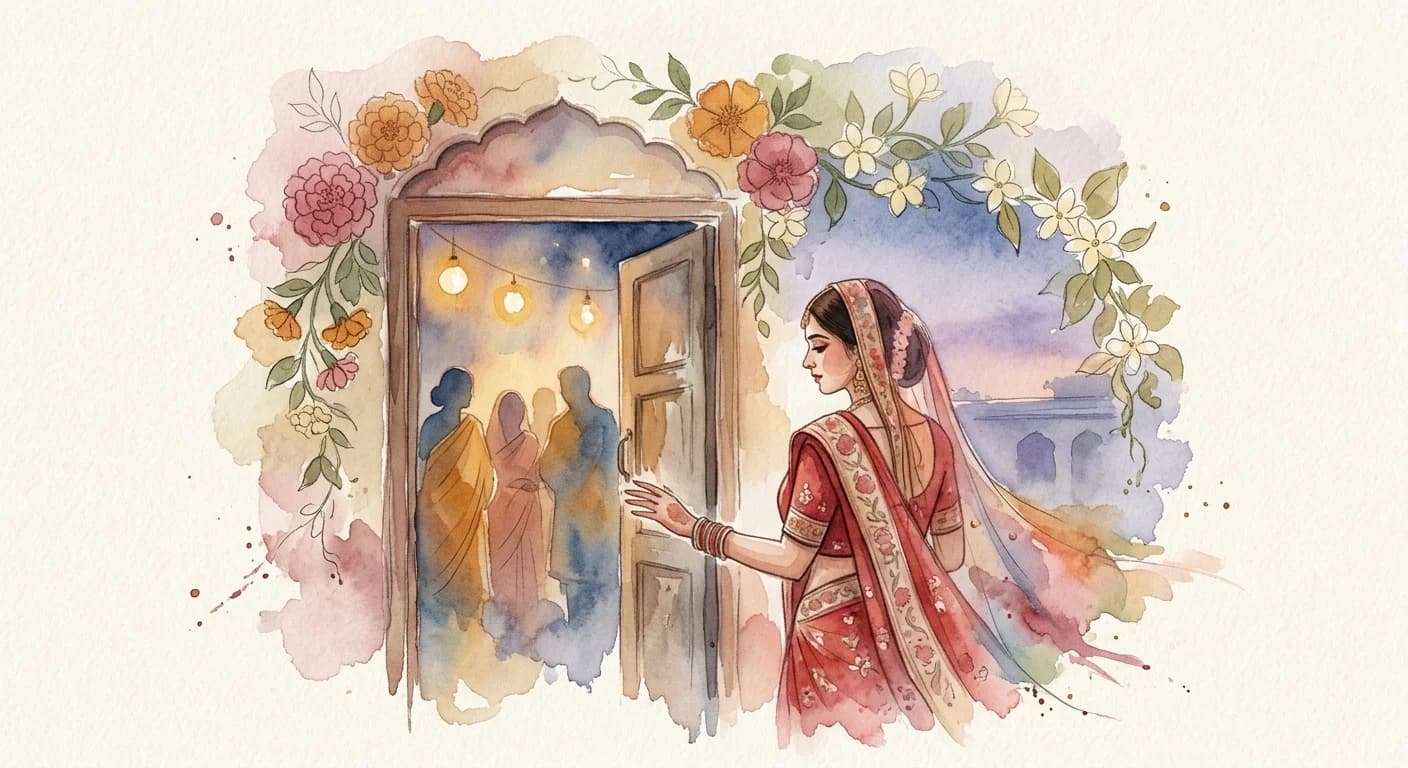
Bidaai
/bi-DAAI/
Meaning
Bidaai signifies the profoundly emotional ritual where a bride bids a tearful farewell to her parental home, transitioning from daughter to wife. It is a moment steeped in bittersweet paradox: immense joy for her new beginning intertwines with the poignant grief of separation, as she leaves behind her childhood sanctuary and the unconditional love of her birth family. This ceremony encapsulates a primal human experience of letting go, marking a new chapter while honoring the indelible bonds that shaped her.
Literal Translation
Departure or farewell
The Story Behind the Word
The existence of 'Bidaai' in Indian culture is deeply rooted in the patriarchal societal structure prevalent for centuries, where a daughter is traditionally seen as 'paraya dhan' (another's wealth) – someone raised only to be given away. This philosophy underscores the impermanence of a daughter's stay in her birth home and highlights the profound transition she undergoes. It's a public acknowledgment of her new identity and allegiance to her husband's family, reflecting a worldview where family honor, duty, and lineage continuation through marriage are paramount. The tears shed during Bidaai are not just of sadness, but also an expression of the immense love and sacrifice involved in this life-altering passage, symbolizing the emotional cost of upholding social traditions and the cyclical nature of life's transitions.
Experience It
The Bride's Tears
As the car slowly pulled away from her childhood home, Maya's Bidaai turned into a cascade of tears. Her father, his voice thick with emotion, gently reminded her, 'Our blessings are always with you, beta (daughter).' The raw emotion of the moment was palpable, a testament to the depth of their bond.
A Mother's Embrace
Sarita, the bride's mother, held her daughter close during the Bidaai, whispering blessings and advice for her new life. Though her heart ached, she knew this was a sacred rite of passage, a beautiful, albeit painful, culmination of years of love and upbringing, preparing her daughter for her destiny.
The Deeper Meaning
Bidaai embodies the ancient philosophical concept of 'samsara' – the cycle of birth, death, and rebirth, or more broadly, the continuous flow of life's changes. It highlights the transient nature of relationships and roles, emphasizing acceptance of inevitable transitions. The ceremony underscores the idea that life is a series of farewells and new beginnings, each carrying its own weight of joy and sorrow, ultimately leading to growth and the continuation of the human journey.
Did You Know?
Traditionally, the bride throws handfuls of rice and coins over her head during Bidaai, symbolizing her repayment of all her parents' debts and wishing prosperity upon her birth family as she leaves.
How It's Used
The term 'Bidaai' is specifically used during Hindu wedding ceremonies in India, marking the moment the bride leaves her family home. It's an integral part of the wedding rituals, often occurring at the end of the celebrations.