Bleigießen
/BLAY-gee-sen/
Meaning
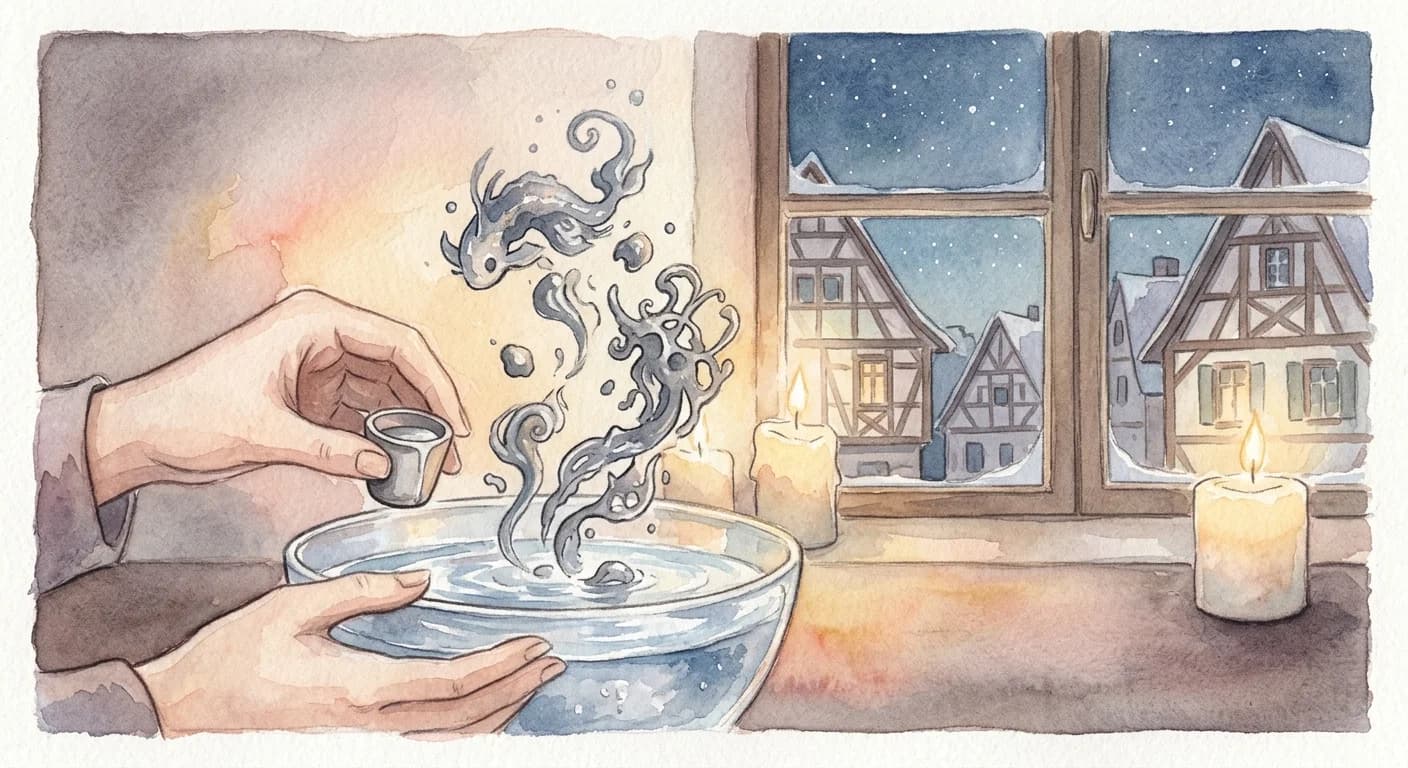
Bleigießen, or lead pouring, is a cherished German New Year's Eve tradition, transforming molten lead into abstract, solidified shapes when dropped into cold water. These unique forms are then collectively interpreted, offering whimsical prophecies for the coming year's fortunes and events. It's a moment of communal anticipation and playful divination, blending a healthy skepticism with an underlying current of hopeful curiosity. The often bizarre and intricate shapes defy easy categorization, making the interpretation a shared, imaginative act that beautifully encapsulates the uncertainty and excitement of the unknown future.
Literal Translation
lead pouring
The Story Behind the Word
Bleigießen has roots in ancient divination practices, particularly prevalent in Germanic cultures, where observing melted substances was believed to reveal glimpses of the future. While originally using lead, which was easily melted, the tradition evolved to become a lighthearted, festive ritual, especially embraced in the late 19th and 20th centuries. It reflects a German cultural inclination towards structured festivity and a penchant for symbolism, even when approached with a playful, ironic detachment. The act of collectively interpreting the shapes fosters social bonding, emphasizing shared experience and imaginative storytelling over rigid belief. It reveals a worldview that acknowledges the capriciousness of fate while embracing the human desire for foresight, however whimsical, as a way to engage with the passage of time and the promise of a new beginning.
Experience It
Family New Year's Eve
The Müller family gathers around the table, the scent of raclette still lingering. Little Anna giggles as her father carefully melts a piece of lead, then gasps as it splashes into the water, forming a spiky, vaguely bird-like shape. 'It's a dragon!' she exclaims, while her grandmother suggests, 'Perhaps a journey by air?'
Friends' Silvester Party
At Sarah's New Year's Eve party, a group of friends huddle around a bowl of water, laughing as one friend's lead creation resembles a tiny, misshapen car. 'Looks like you'll be buying a new car next year!' jokes another, while the 'pourer' optimistically declares, 'Or going on a road trip!'
The Deeper Meaning
This tradition subtly underscores a human need for narrative and meaning, even in randomness. It's a playful acknowledgment of the unknown future, where the act of 'predicting' is less about certainty and more about communal storytelling, hope, and the shared human experience of stepping into a new year with curiosity and a touch of lighthearted superstition. It highlights how cultural rituals can provide comfort and connection in the face of uncertainty.
Did You Know?
Due to lead's toxicity, modern Bleigießen kits in Germany now often use non-toxic tin or wax, making the tradition safer and more environmentally friendly while retaining its whimsical charm.
How It's Used
Practiced primarily on New Year's Eve (Silvester) as a festive activity, often following a celebratory meal. It's a common household tradition, especially among families and friends looking for a fun way to ring in the new year.